
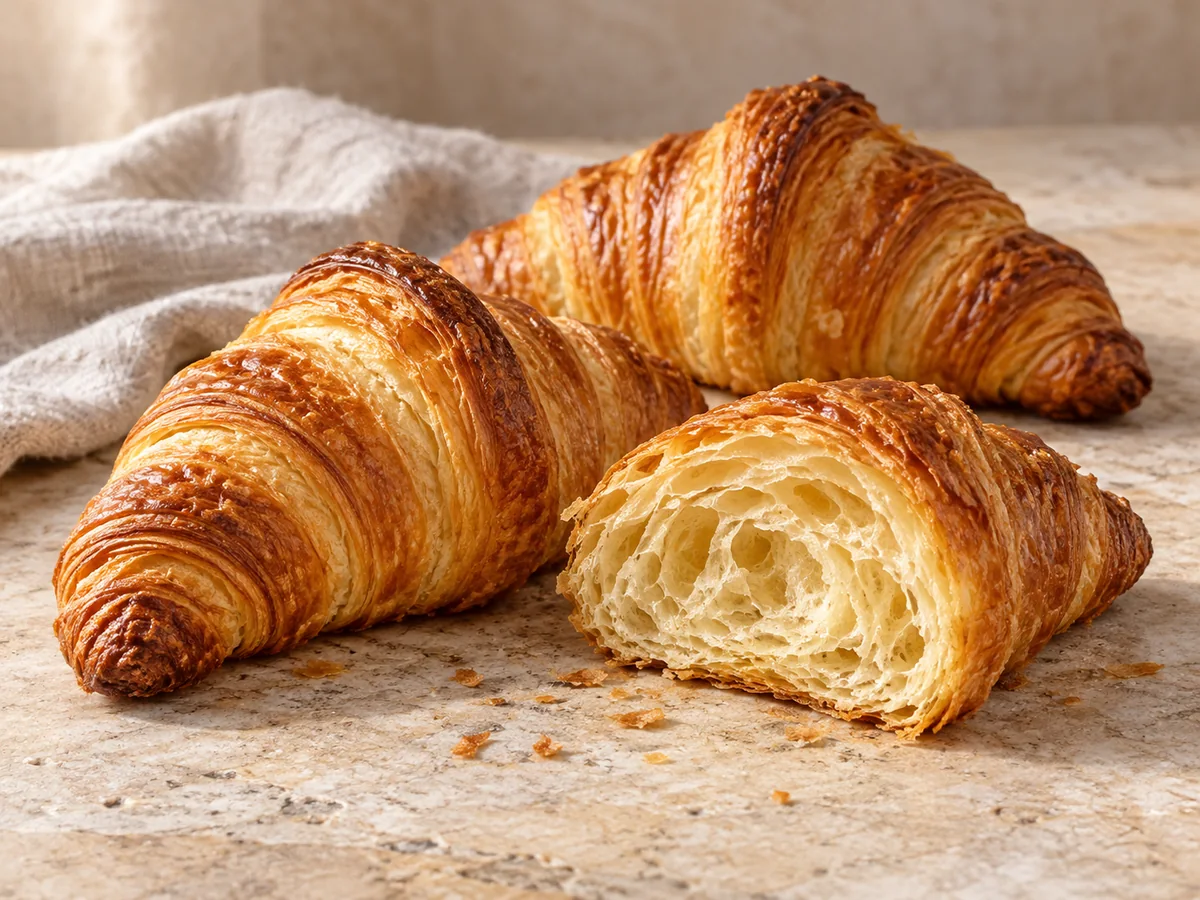
Croissant vs. Brioche
Compare laminated pastry with enriched bread: layers, crumb, butter distribution, serving style, and common allergens.
VS
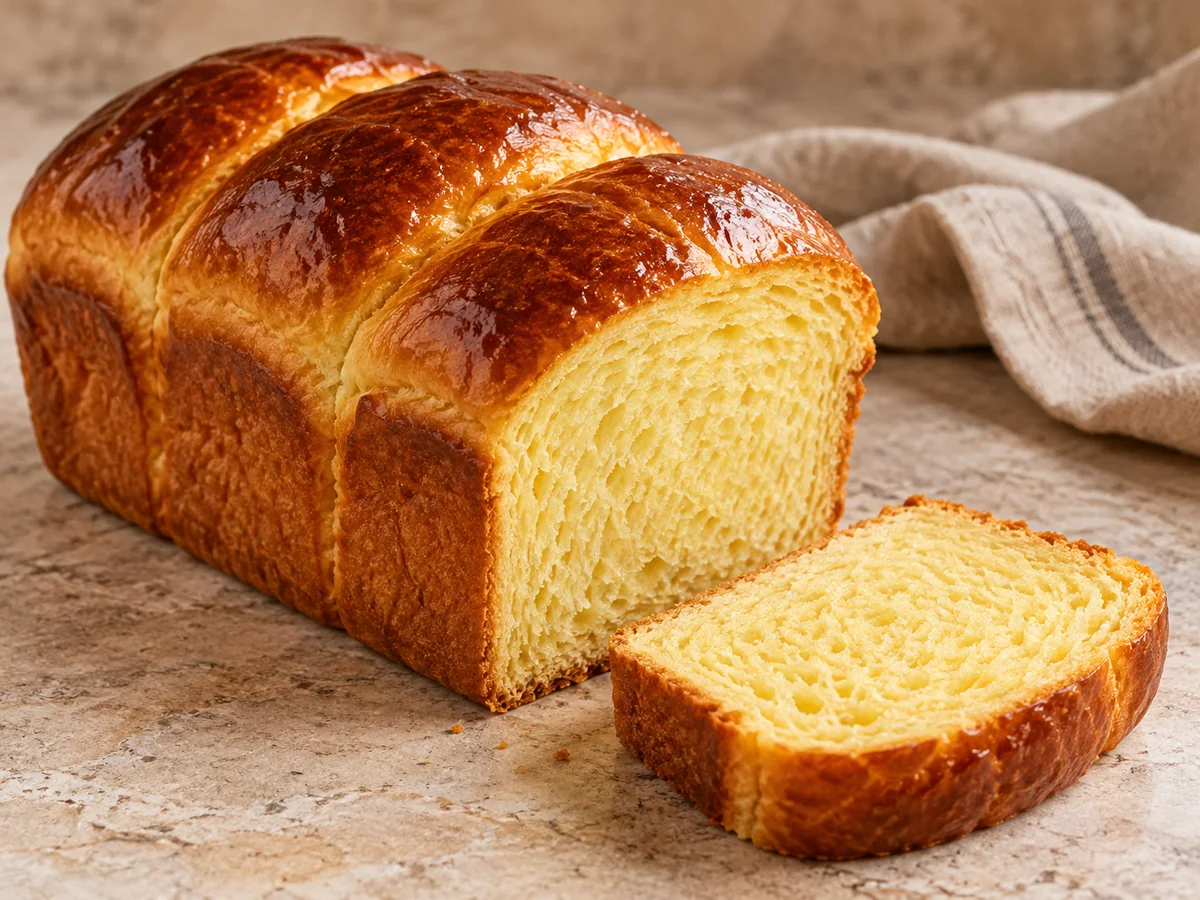
Brioche
Decision fieldCroissantBrioche
FlavorButtery, toasted, and mildly sweet to savory.Buttery, lightly sweet, and rich.
TextureCrisp, flaky exterior with a tender layered interior.Soft, fine, tender crumb with a glossy crust.
Typical ingredientsWheat flour, Butter or another lamination fat, Yeast, Water or milk, Sugar, Salt, Egg wash in many bakeriesWheat flour, Butter, Eggs, Yeast, Sugar, Salt, Milk or water depending on recipe
Allergen contextUsually contains wheat and milk; egg is common. Filled versions may add nuts, soy, or other allergens.Typically contains wheat, milk, and egg. Soy may appear in commercial ingredients.
Energy referenceAbout 380–460 kcal per 100 g as a planning rangeAbout 330–410 kcal per 100 g as a planning range
Serving contextIndividual croissants vary widely in weight, filling, and butter content.Rolls and slices vary greatly; compare the actual item weight.
How to chooseLook for distinct flaky layers and a light interior rather than a heavy, greasy, or bread-like center.Look for a tender crumb and a balanced buttery flavor rather than excessive greasiness or dryness.
StorageBest fresh. Re-crisp briefly in an oven; avoid sealed warm storage that softens the crust.Wrap well because enriched breads stale when exposed. Freeze slices or rolls for longer storage.
How to choose
Choose croissant for a flaky layered pastry and brioche for a soft, rich bread. Both commonly contain wheat, milk, and egg, but the bakery recipe controls the details.
Ranges are for comparison planning, not named bakery items. Check actual recipes, weights, labels, and bakery handling.