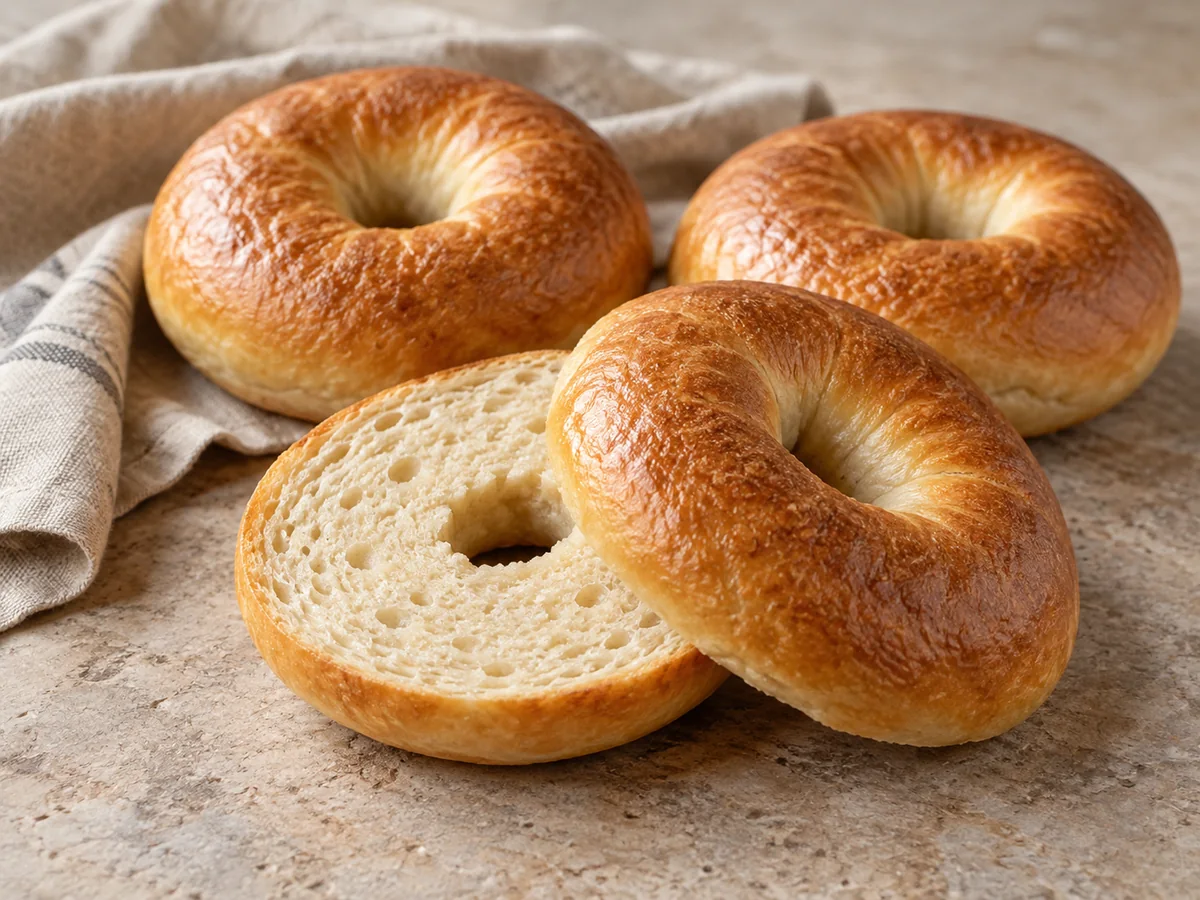
A ring-shaped yeast bread traditionally boiled before baking, creating a firm crust and chewy crumb.
Typical energy referenceAbout 250–310 kcal per 100 g as a planning rangeTypical serving contextA whole bagel can vary from roughly 70 g to well over 140 g, making portion weight important.
Important: This is general category knowledge. The search uses name/type signals and does not prove that a bakery currently offers this product. Confirm the menu, recipe, serving size, allergens, and availability directly.
TASTE & TEXTURE
What to expect
Flavor
Wheaty and lightly malty; toppings and inclusions change the profile.
Texture
Dense, substantial, and chewy rather than light and flaky.
How to choose
Decide whether you prefer a compact chewy bagel or a softer bread-like version; size often matters more than appearance for total energy.
Storage
Use fresh or freeze pre-sliced. Toasting restores texture but does not change the underlying serving size.
TYPICAL FORMULA
Ingredients and allergens
Wheat flour
Water
Yeast
Salt
Malt or another sweetener in many recipes
Optional sesame, poppy, onion, or other toppings
Common allergen context
Contains wheat and gluten. Toppings may include sesame; egg, milk, soy, or shared-equipment exposure varies.
GOOD FOR
Common ways people use it
BreakfastSandwichesPortable substantial snack
CONFIRM BEFORE YOU BUY
Questions to ask the bakery
01
What is the approximate weight or size?
02
Which toppings and sweeteners are used?
03
Are dairy, egg, sesame, or shared equipment involved?
Nutrition ranges are planning references based on comparable records in USDA FoodData Central. Recipes and item weights vary. Allergen questions follow FDA consumer guidance.