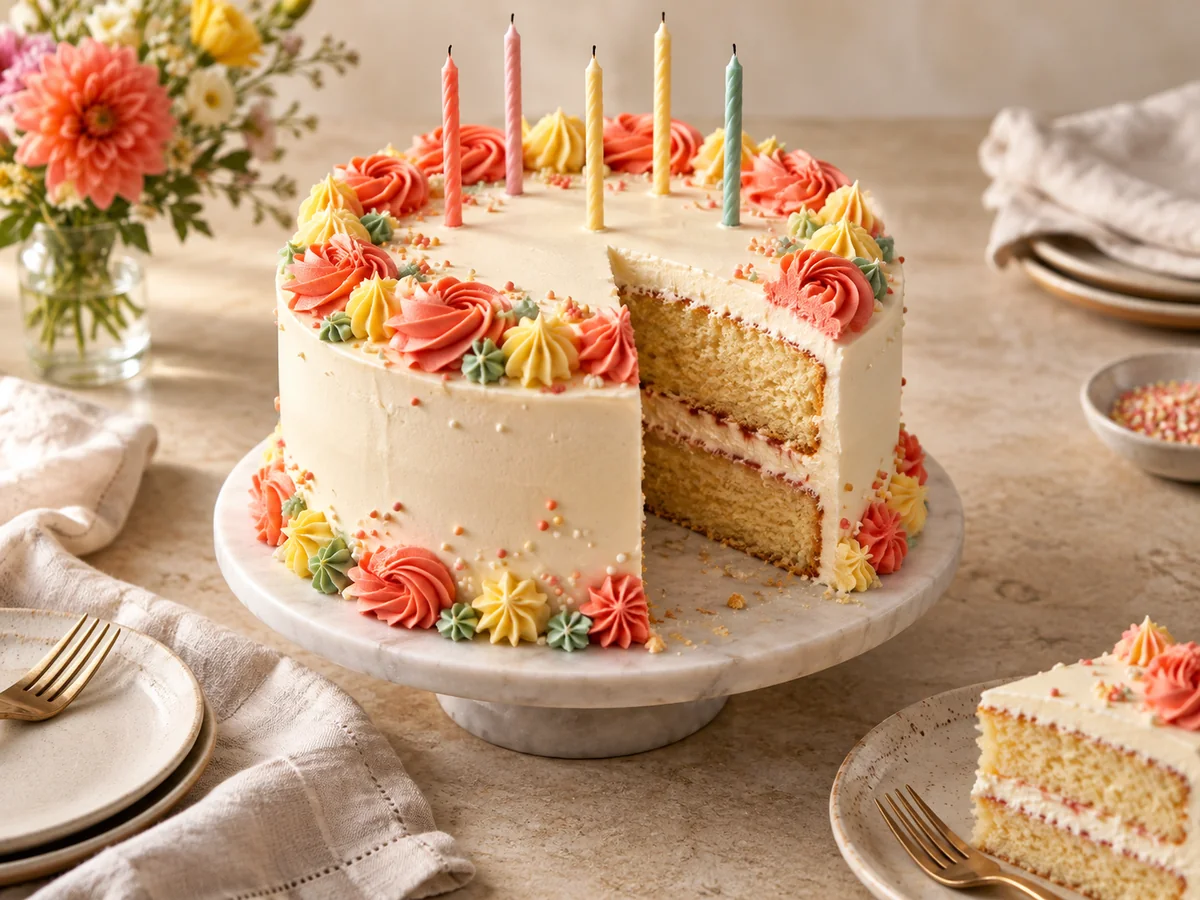
A decorated celebration cake planned around guest count, flavor, design, serving method, and pickup or delivery timing.
Typical energy referenceAbout 330–450 kcal per 100 g as a broad planning rangeTypical serving contextPlan by the bakery’s stated finished-cake serving chart; slice size, height, and shape change the count.
Important: This is general category knowledge. The search uses name/type signals and does not prove that a bakery currently offers this product. Confirm the menu, recipe, serving size, allergens, and availability directly.
TASTE & TEXTURE
What to expect
Flavor
Highly recipe-dependent: vanilla, chocolate, fruit, spice, and filled layer cakes are common.
Texture
From light sponge to dense butter cake, usually paired with frosting or filling.
How to choose
Start with guest count and serving style, then choose flavor, filling, frosting, design complexity, and transport needs.
Storage
Follow the bakery’s instructions, especially for cream, custard, fresh-fruit, or temperature-sensitive fillings.
TYPICAL FORMULA
Ingredients and allergens
Wheat flour is common
Sugar
Eggs
Butter or oil
Milk or another liquid
Frosting, filling, color, and decorations vary
Common allergen context
Wheat, milk, and egg are common. Soy, peanuts, tree nuts, sesame, and other allergens may be present in fillings, decorations, or shared production.
GOOD FOR
Common ways people use it
BirthdaysSmall celebrationsPersonalized messages or themes
CONFIRM BEFORE YOU BUY
Questions to ask the bakery
01
How many event-size servings does this exact size provide?
02
What lead time, deposit, design approval, and cancellation rules apply?
03
Which allergens and cross-contact conditions apply to the cake, filling, frosting, and decorations?
Nutrition ranges are planning references based on comparable records in USDA FoodData Central. Recipes and item weights vary. Allergen questions follow FDA consumer guidance.