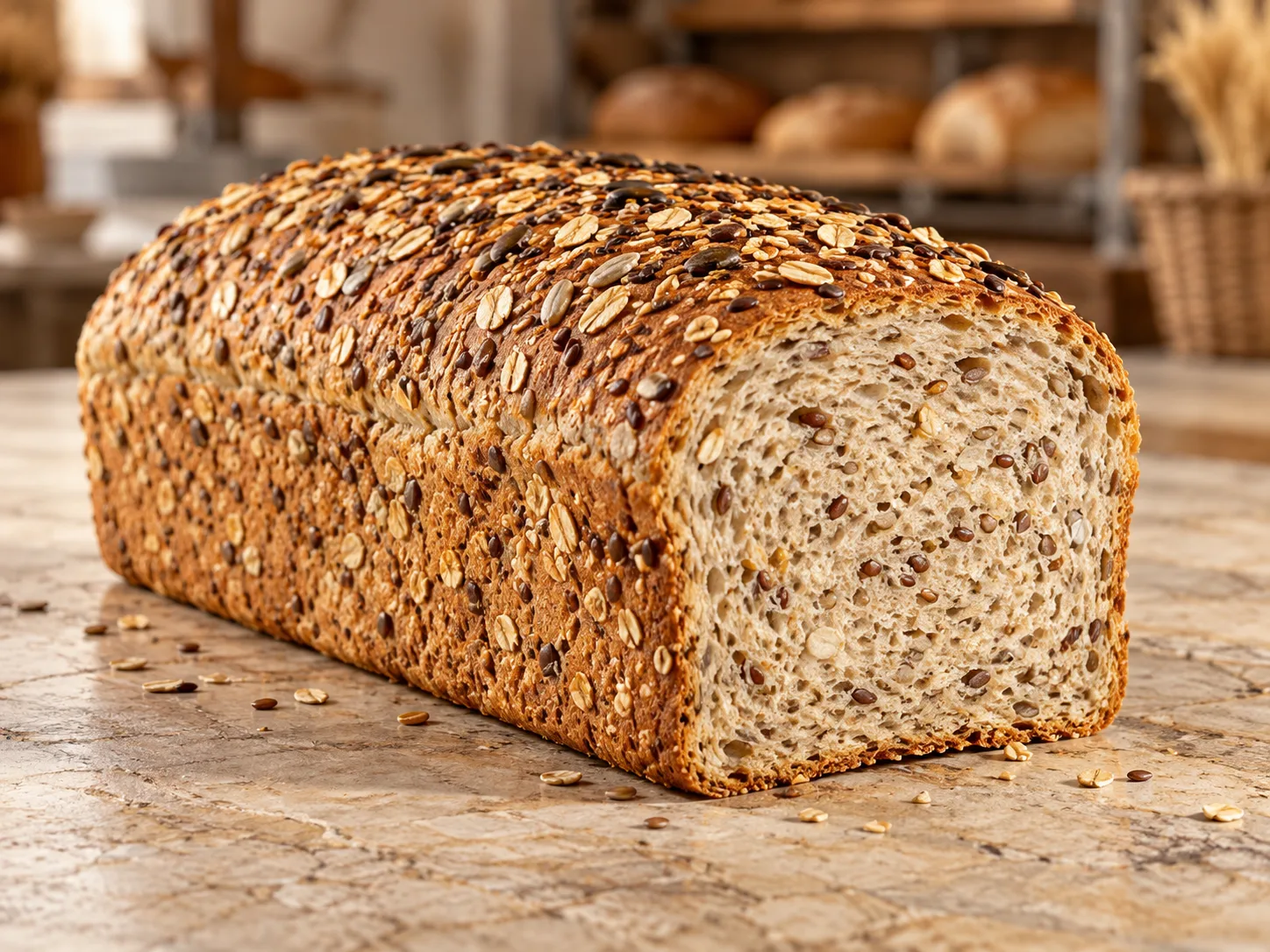
Bread made with more than one grain or seed; the name does not establish whole-grain percentage.
Typical energy referenceVaries by recipe, filling, topping, and item weight; use a bakery label or recipe-specific information when precision matters.Typical serving contextItem sizes differ by bakery. Compare the actual piece or slice weight and how it will be served.
Important: This is general category knowledge. The search uses name/type signals and does not prove that a bakery currently offers this product. Confirm the menu, recipe, serving size, allergens, and availability directly.
TASTE & TEXTURE
What to expect
Flavor
Nutty and grain-forward, depending on the blend.
Texture
Soft to hearty, with visible grains or seeds in many styles.
How to choose
Ask which grains are whole and what percentage of the flour they represent.
Storage
Seal to reduce drying; freeze slices if needed.
TYPICAL FORMULA
Ingredients and allergens
A wheat-flour base is common
Oats, rye, barley, corn, millet, or other grains
Seeds may be added
Water
Yeast or starter
Salt
Common allergen context
Often contains wheat and gluten; may include sesame, soy, seeds, nuts, milk, or egg.
What ingredients and major allergens are used in this exact item?
02
What is the item or serving size?
03
When was it made, and how should it be stored?
Reference basis
Nutrition ranges are planning references based on comparable records in USDA FoodData Central. Recipes and item weights vary. Allergen questions follow FDA consumer guidance.