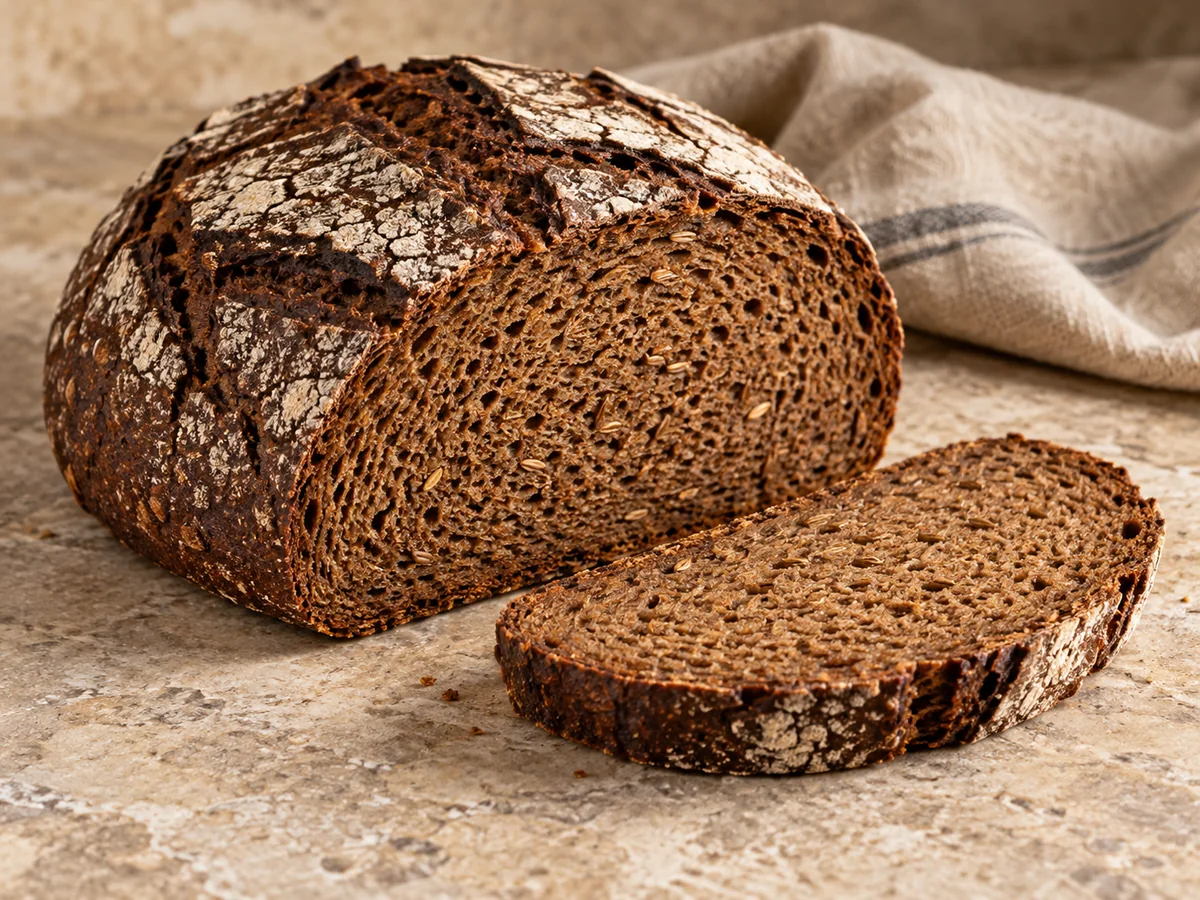
A bread made with some or all rye flour; styles range from light wheat-rye loaves to dense dark rye.
Typical energy referenceAbout 240–280 kcal per 100 g as a planning rangeTypical serving contextA slice commonly falls around 30–55 g depending on density and cut.
Important: This is general category knowledge. The search uses name/type signals and does not prove that a bakery currently offers this product. Confirm the menu, recipe, serving size, allergens, and availability directly.
TASTE & TEXTURE
What to expect
Flavor
Earthy, malty, and sometimes tangy; caraway is common but not universal.
Texture
Can range from soft and light to compact, moist, and dense.
How to choose
Ask about the rye percentage and whether the loaf is light rye, dark rye, seeded rye, or pumpernickel-style.
Storage
Dense rye often keeps moisture well; wrap after cooling and freeze sliced portions for longer storage.
TYPICAL FORMULA
Ingredients and allergens
Rye flour
Often wheat flour
Water
Yeast or starter
Salt
Caraway, molasses, or malt in some styles
Common allergen context
Rye contains gluten. Many rye breads also contain wheat; seeds or enriched formulas add other possible allergens.
GOOD FOR
Common ways people use it
Deli sandwichesSmoked fish or cheeseHearty toast
CONFIRM BEFORE YOU BUY
Questions to ask the bakery
01
How much of the flour is rye?
02
Does it contain wheat, caraway, sesame, milk, or sweeteners?
03
Is the dark color from whole rye, malt, molasses, or another ingredient?
Reference basis
Nutrition ranges are planning references based on comparable records in USDA FoodData Central. Recipes and item weights vary. Allergen questions follow FDA consumer guidance.