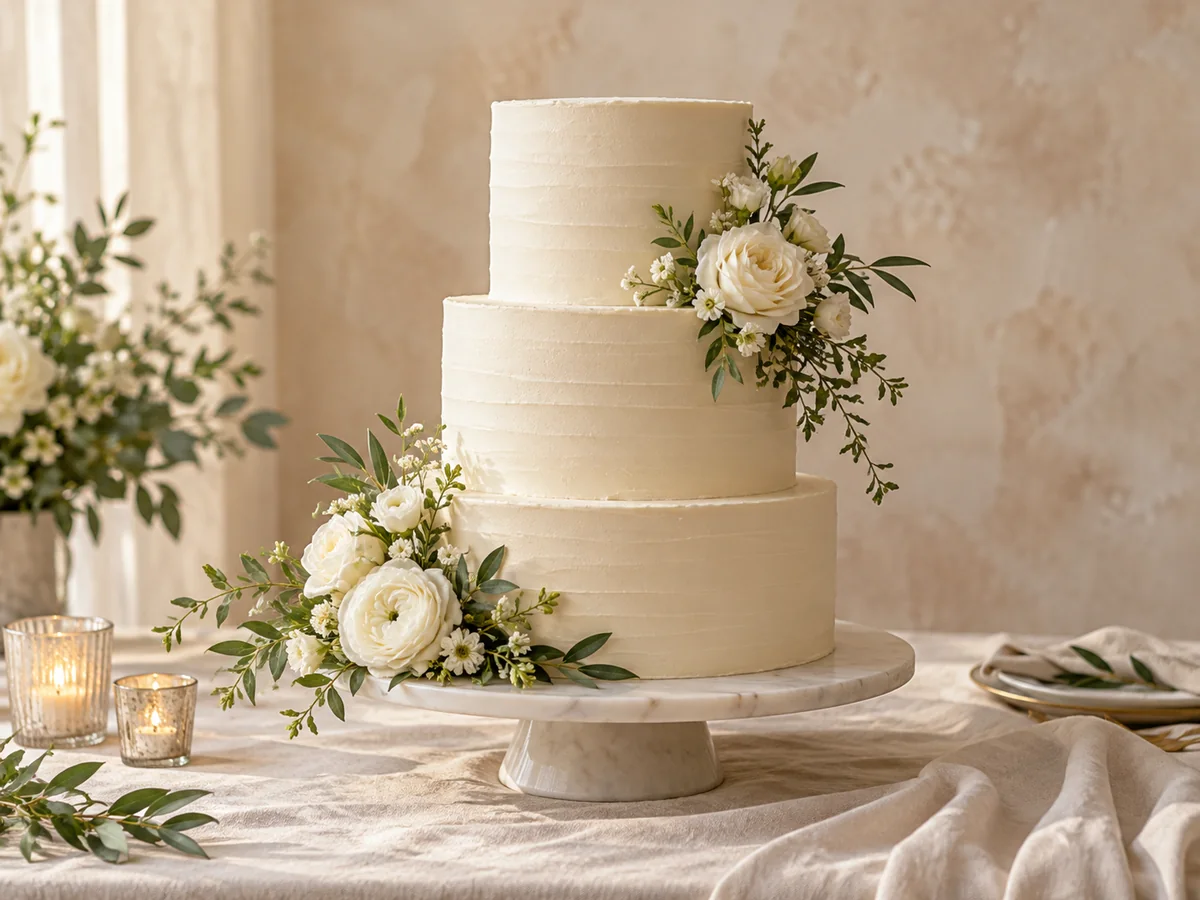
A formal event cake whose structure, servings, finish, delivery, setup, venue conditions, and cutting plan must work together.
Typical energy referenceAbout 330–460 kcal per 100 g as a broad planning rangeTypical serving contextUse the baker’s event-serving chart and confirm whether a separate kitchen-cutting cake is included.
Important: This is general category knowledge. The search uses name/type signals and does not prove that a bakery currently offers this product. Confirm the menu, recipe, serving size, allergens, and availability directly.
TASTE & TEXTURE
What to expect
Flavor
Often offered as a tasting menu of cake, filling, and frosting combinations.
Texture
Depends on the selected cake style and structural requirements for stacking and transport.
How to choose
Prioritize reliable servings, venue delivery and setup, stable finishes, flavor tasting, and a written design scope.
Storage
The bakery and venue should agree on delivery timing, room temperature, refrigeration, display duration, and leftover handling.
TYPICAL FORMULA
Ingredients and allergens
Cake layers commonly use wheat flour, sugar, eggs, and fat
Buttercream, ganache, fondant, or another finish
Fillings may include fruit, curd, cream, or preserves
Decorative flowers and toppers require separate handling
Common allergen context
Wheat, milk, and egg are common; nuts, soy, sesame, and other allergens depend on flavors, decorations, and production practices.
GOOD FOR
Common ways people use it
WeddingsFormal receptionsCeremonial cake cutting
CONFIRM BEFORE YOU BUY
Questions to ask the bakery
01
Who delivers, assembles, and confirms the display table and venue access?
02
Are stand rental, flowers, toppers, cutting cake, and delivery included in the quote?
03
What is the backup plan for heat, delay, damage, or a venue timing change?
Nutrition ranges are planning references based on comparable records in USDA FoodData Central. Recipes and item weights vary. Allergen questions follow FDA consumer guidance.