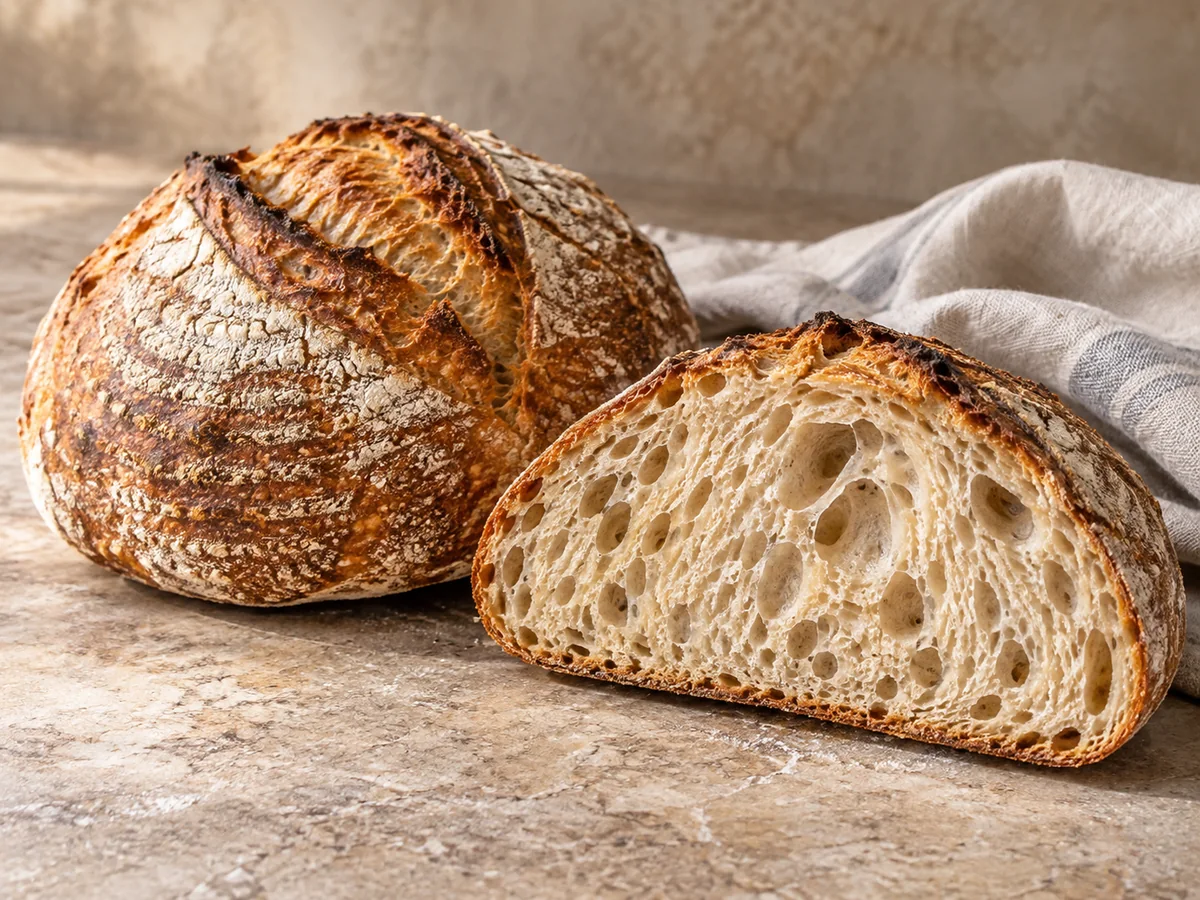
A naturally leavened bread known for a crisp crust, chewy crumb, and flavor shaped by fermentation.
Typical energy referenceAbout 230–290 kcal per 100 g as a planning rangeTypical serving contextA slice often weighs about 35–60 g; bakery cuts vary widely.
Important: This is general category knowledge. The search uses name/type signals and does not prove that a bakery currently offers this product. Confirm the menu, recipe, serving size, allergens, and availability directly.
TASTE & TEXTURE
What to expect
Flavor
Mildly tangy to deeply fermented; toasted grain and caramelized-crust notes.
Texture
Crisp crust with a chewy, often open crumb.
How to choose
Look for a well-baked crust and a crumb suited to your use: tighter for sandwiches, more open for dipping and toast.
Storage
Keep cut-side down or wrapped at room temperature for short storage. Freeze sliced bread for longer storage.
TYPICAL FORMULA
Ingredients and allergens
Wheat flour is common
Water
Salt
Sourdough starter (flour and water culture)
Common allergen context
Standard sourdough usually contains wheat and gluten. Fermentation does not make ordinary wheat sourdough gluten-free.
GOOD FOR
Common ways people use it
ToastSandwichesSoup and cheese boards
CONFIRM BEFORE YOU BUY
Questions to ask the bakery
01
Is it made primarily with wheat, rye, or another flour?
02
Does it contain milk, egg, sesame, nuts, or added sweeteners?
03
Was it produced on shared equipment if cross-contact matters?
Nutrition ranges are planning references based on comparable records in USDA FoodData Central. Recipes and item weights vary. Allergen questions follow FDA consumer guidance.