
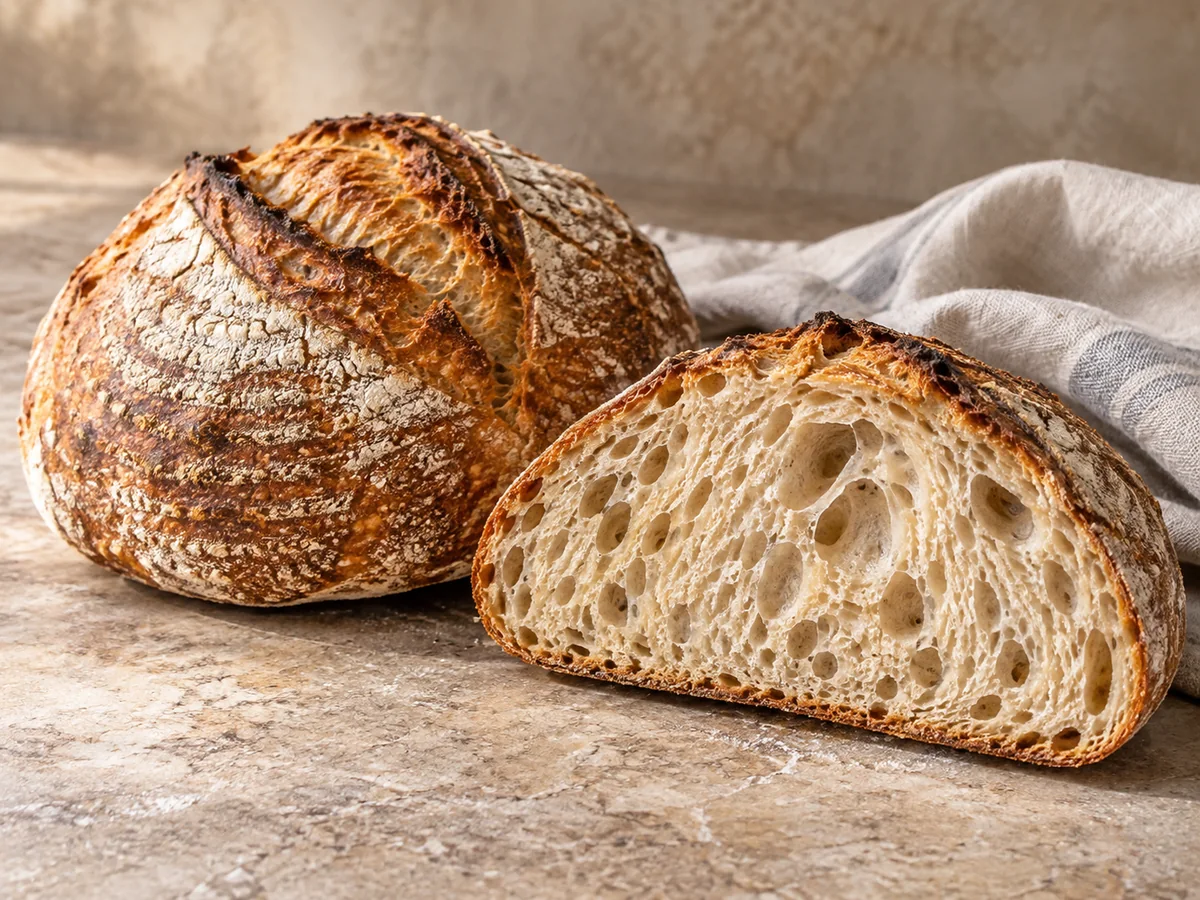
Sourdough vs. Whole-Wheat Bread
Compare fermentation style, grain choice, texture, fiber expectations, allergens, and the questions that matter at a bakery.
VS
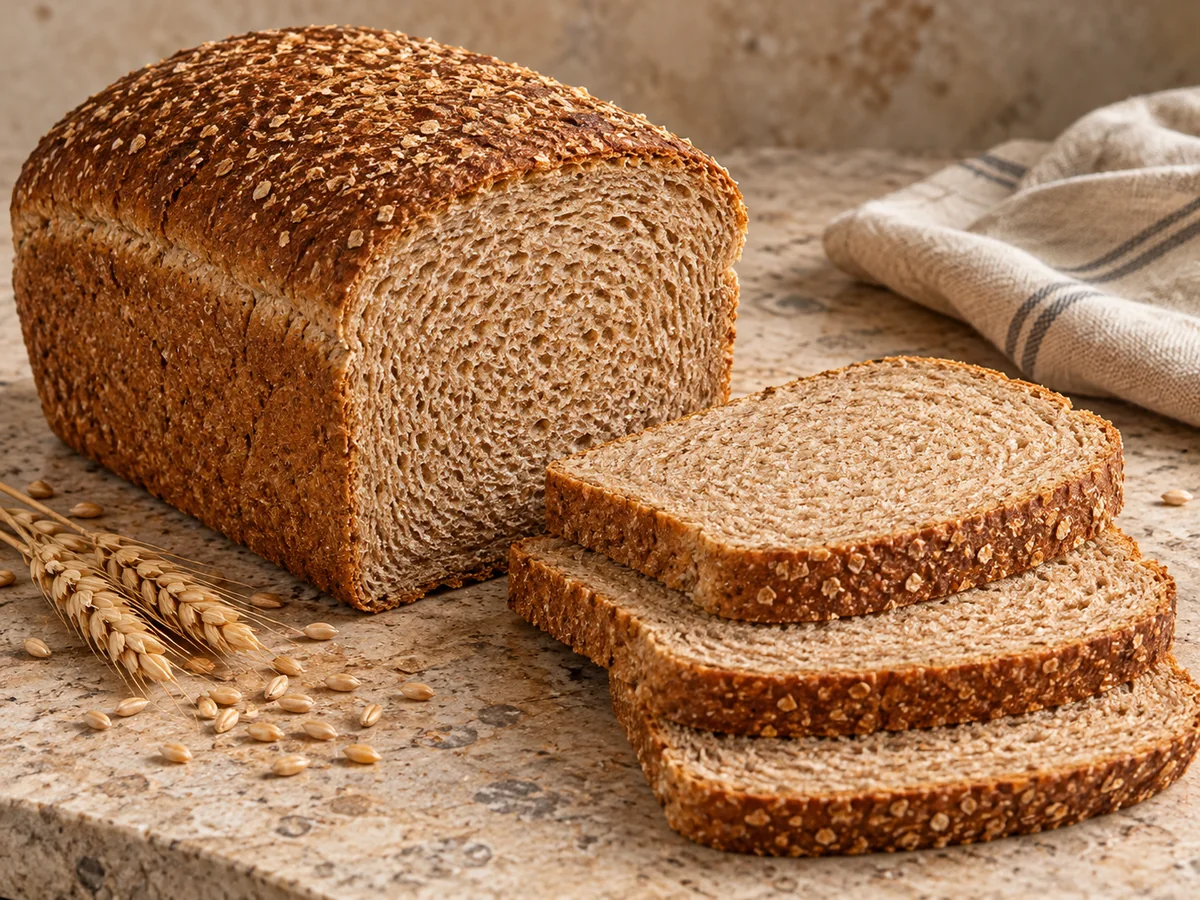
Whole-Wheat Bread
Decision fieldSourdoughWhole-Wheat Bread
FlavorMildly tangy to deeply fermented; toasted grain and caramelized-crust notes.Nutty and wheaty; sweetness and bitterness vary with flour and added ingredients.
TextureCrisp crust with a chewy, often open crumb.Usually tighter and more substantial than white sandwich bread.
Typical ingredientsWheat flour is common, Water, Salt, Sourdough starter (flour and water culture)Whole-wheat flour, Water, Yeast or starter, Salt, Recipes may add oil, sweetener, milk, seeds, or vital wheat gluten
Allergen contextStandard sourdough usually contains wheat and gluten. Fermentation does not make ordinary wheat sourdough gluten-free.Contains wheat and gluten. Seeded or enriched versions may introduce sesame, soy, milk, egg, or nuts.
Energy referenceAbout 230–290 kcal per 100 g as a planning rangeAbout 230–270 kcal per 100 g as a planning range
Serving contextA slice often weighs about 35–60 g; bakery cuts vary widely.A commercial-style slice is often about 25–45 g; artisan slices may be larger.
How to chooseLook for a well-baked crust and a crumb suited to your use: tighter for sandwiches, more open for dipping and toast.Check whether whole-wheat flour is the main flour. “Wheat bread” alone does not necessarily mean 100% whole wheat.
StorageKeep cut-side down or wrapped at room temperature for short storage. Freeze sliced bread for longer storage.Keep sealed to limit drying; freeze extra slices if the loaf will not be used soon.
How to choose
Choose by flour composition and intended use—not by a health halo. A sourdough can be white-flour based; a whole-wheat loaf can use yeast or sourdough fermentation.
Ranges are for comparison planning, not named bakery items. Check actual recipes, weights, labels, and bakery handling.