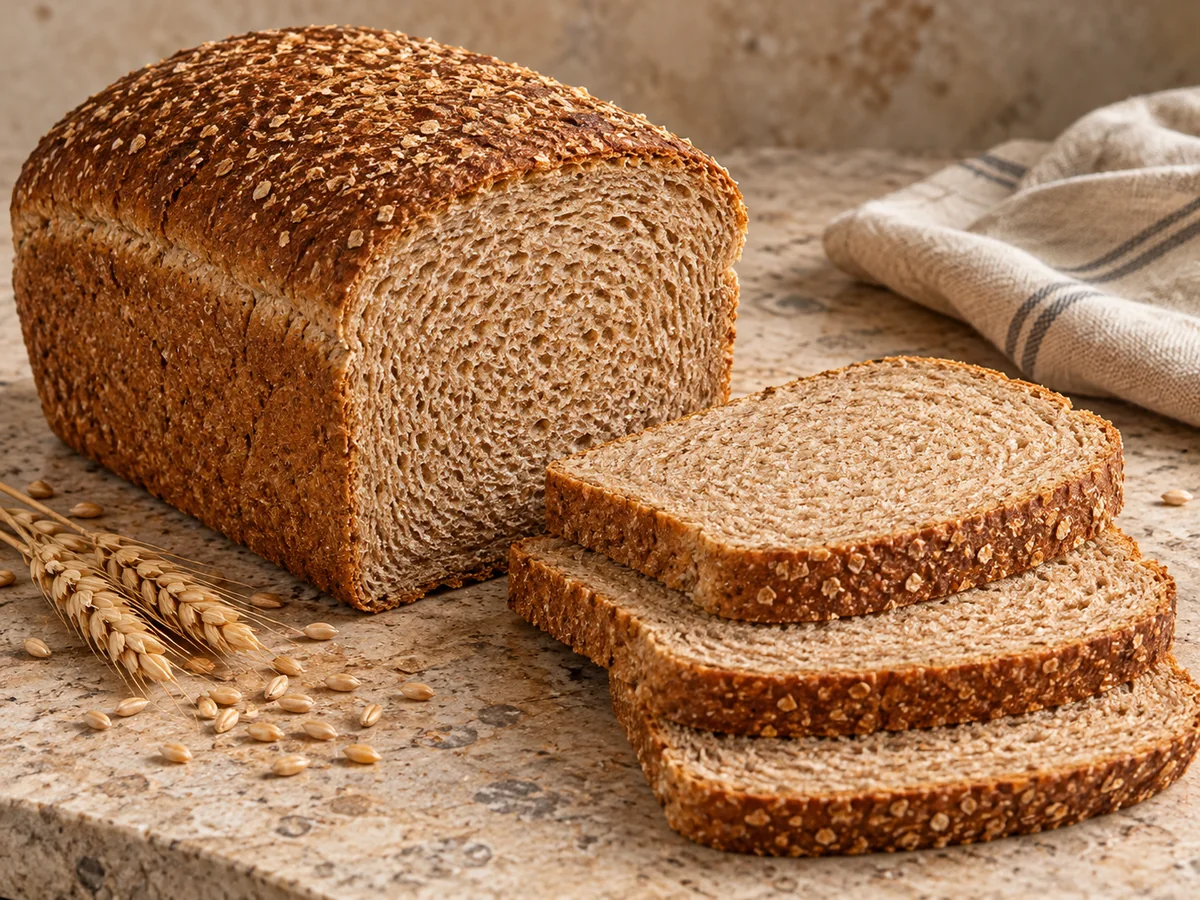
Bread made with whole-wheat flour, which retains the bran, germ, and endosperm of the wheat kernel.
Typical energy referenceAbout 230–270 kcal per 100 g as a planning rangeTypical serving contextA commercial-style slice is often about 25–45 g; artisan slices may be larger.
Important: This is general category knowledge. The search uses name/type signals and does not prove that a bakery currently offers this product. Confirm the menu, recipe, serving size, allergens, and availability directly.
TASTE & TEXTURE
What to expect
Flavor
Nutty and wheaty; sweetness and bitterness vary with flour and added ingredients.
Texture
Usually tighter and more substantial than white sandwich bread.
How to choose
Check whether whole-wheat flour is the main flour. “Wheat bread” alone does not necessarily mean 100% whole wheat.
Storage
Keep sealed to limit drying; freeze extra slices if the loaf will not be used soon.
TYPICAL FORMULA
Ingredients and allergens
Whole-wheat flour
Water
Yeast or starter
Salt
Recipes may add oil, sweetener, milk, seeds, or vital wheat gluten
Common allergen context
Contains wheat and gluten. Seeded or enriched versions may introduce sesame, soy, milk, egg, or nuts.
Nutrition ranges are planning references based on comparable records in USDA FoodData Central. Recipes and item weights vary. Allergen questions follow FDA consumer guidance.