Bakery Allergen Questions to Ask Before You Order
On this page
Quick answer
Before ordering bakery food for someone with an allergy, name the exact allergen, ask for the complete ingredient information, and ask how the item is prepared, stored, displayed, and packaged. If the staff cannot confirm ingredients or explain cross-contact controls clearly, choose a sealed, labeled alternative or do not place the order.
This checklist is for customers, parents, caregivers, and event planners in the United States. It is general shopping guidance, not a substitute for an individual allergy action plan or advice from a qualified health professional.
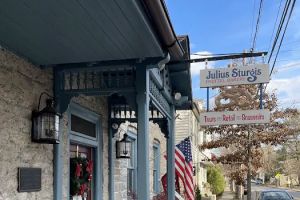
Julius Sturgis Pretzel Bakery / pretzel factory lititz pa
LititzLancaster CountyPennsylvania
219 E Main St, Lititz, PA 17543, USA
Why bakery orders need extra care
Allergen cross-contact is the unintentional transfer of an allergen to a food that was not meant to contain it. A bakery may use milk, eggs, wheat, soy, peanuts, tree nuts, sesame, or other allergens in the same kitchen. Shared mixers, trays, utensils, fryer oil, display tongs, work surfaces, toppings, and airborne flour or nut particles can all affect the answer to “Does this contain my allergen?”
Ingredient information and cross-contact risk are separate questions. A cookie recipe might not list peanuts, for example, while the cookie is still made beside peanut products or handled with shared tools. A “vegan” label also answers a different question from “allergy-safe”: it may help identify the absence of animal-derived ingredients, but it does not by itself address nuts, wheat, soy, sesame, or shared equipment.
Packaged and unpackaged foods may provide different levels of information. In the United States, labels on most packaged foods must identify major food allergens used as ingredients. Bakery items sold loose from a tray or case may not carry the same label, so a direct conversation may be necessary.
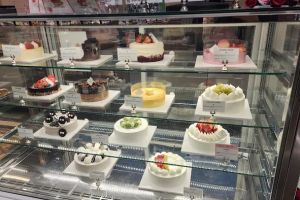
L’Ami Bakery & Cafe / bakery in h mart
48-18 Northern Blvd, Long Island City, NY 11101, USA
Questions to ask before ordering
Call or visit when staff have time to check rather than during the busiest rush. State that the question concerns a food allergy, not a preference, then work through these points.
- “Does this item contain [specific allergen]?” Name the food rather than asking only whether an item is “allergen-free.” If a tree-nut allergy is involved, name the nuts the person must avoid.
- “Can you check the recipe and the labels on prepared ingredients?” Fillings, chocolate, sprinkles, glazes, flavorings, dough conditioners, mixes, and decorations may have their own ingredient lists.
- “Has the recipe or supplier changed?” Do not rely solely on what was safe during a previous visit. Formulas, substitutes, seasonal toppings, and vendors can change.
- “Is it made on shared equipment or beside items containing the allergen?” Ask about mixers, bowls, ovens, proofing areas, fryers, cooling racks, slicers, and decorating stations as relevant.
- “What cleaning and separation steps can you use for this order?” Listen for a concrete process, such as washing hands, cleaning a work surface, using clean utensils, opening uncontaminated ingredients, and packaging the item separately.
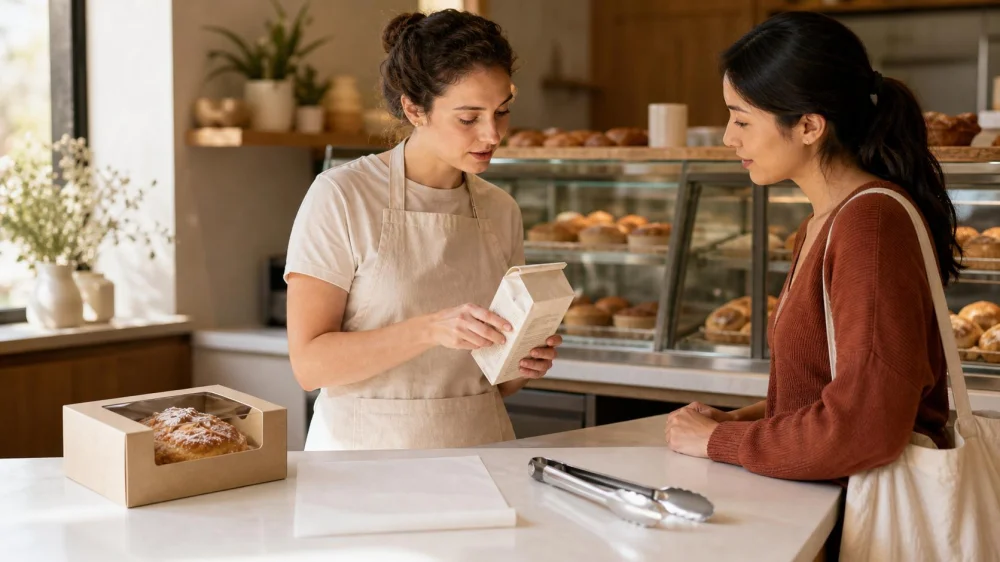
- “Could display or serving tools create cross-contact?” Shared tongs, cake servers, trays, crumbs, and closely packed products matter even when recipes differ.
- “Can the order be labeled and packaged separately?” Clear identification reduces mix-ups at pickup and at a party, office, or family table.
For a custom cake or large order, ask these questions before paying a deposit. Put the agreed allergen and handling instructions in the written order, then confirm them again before production.
How to evaluate the answer
A useful answer is specific, calm, and limited to what the bakery can verify. “Let me check the package and ask the baker” is more informative than an automatic “It should be fine.” Staff should be able to distinguish an ingredient check from a cross-contact discussion.
More reassuring signs include:
- staff check written recipes or original packaging rather than guessing;
- the bakery can describe where and how the item is made;
- the person taking the order records the allergen clearly;
- clean tools, surfaces, gloves or washed hands, and separate packaging are part of a repeatable process;
- staff acknowledge uncertainty instead of promising zero risk.
Pause or choose another option when:
- ingredients cannot be confirmed;
- the answer relies only on appearance, memory, or a broad label such as “natural,” “healthy,” or “vegan”;
- shared utensils or open displays cannot be managed;
- staff treat a severe allergy as a preference;
- the bakery guarantees safety without explaining its process.
The best choice is not necessarily the item with the longest list of special claims. It is the option whose ingredients and handling match the individual's medical guidance and acceptable risk boundary. For some people, a sealed item with a complete label is easier to assess than a custom item from an open bakery case.
Pickup and serving checklist
- Confirm the customer's name, item, and stated allergen before leaving the bakery.
- Check that the package is closed, clearly identified, and separated from other baked goods.
- Read any supplied label again, including precautionary statements and ingredient sub-lists.
- Ask before accepting a last-minute substitution, decoration, filling, or flavor change.
- Transport the allergy-aware item separately so crumbs, icing, or packaging do not touch it.
- At the destination, use a clean serving area and dedicated utensils.
- Keep the original package or ingredient information available for the person eating the food.
- Make sure guests do not swap serving tools or place other foods on the same plate.
For group events, identify the item discreetly but clearly. Ask the person with the allergy or their caregiver how they want the food handled; do not pressure anyone to eat an item simply because precautions were requested.
Important limits and safety notes
No customer checklist can prove that an unpackaged bakery item is free from every trace of an allergen. Small kitchens and open display cases may be unable to prevent cross-contact to the level an individual requires. A bakery that says it cannot safely accommodate an order is providing important information, not poor service.
Food allergy is different from food intolerance, although both deserve accurate communication. Do not test a suspected allergy by trying a small bite. People with diagnosed allergies should follow their clinician's advice and personal emergency plan. If symptoms suggest a severe allergic reaction, follow that emergency plan and seek emergency help immediately.
This article focuses on U.S. shopping decisions. Labeling practices and food-service rules can differ by product type and jurisdiction. The nine major allergens recognized for U.S. packaged-food labeling are milk, egg, fish, Crustacean shellfish, tree nuts, peanuts, wheat, soy, and sesame, but a person can be allergic to foods outside that list.
Frequently asked questions
Does “made without nuts” mean a bakery item is nut-free?
Not necessarily. It may describe the recipe without addressing shared equipment, storage, toppings, suppliers, or display tools. Ask both whether the recipe contains the specific nut and how the bakery manages cross-contact.
Is a gluten-free pastry safe for someone with a wheat allergy?
Do not assume so. “Gluten-free” and “wheat-allergy safe” answer different questions, and shared preparation still matters. The person should follow the guidance given for their specific diagnosis and ask the bakery about ingredients and handling.
Can I trust a handwritten bakery case card?
Use it as a starting point, not the entire check. Ask whether the card reflects the current recipe and whether staff can review labels for mixes, fillings, and decorations. Also ask about shared tools and display contact.
Should I order during a quiet time?
A quieter conversation can give staff more time to check details, but timing alone does not reduce production risk. Contact the bakery early, document a custom order, and reconfirm at pickup.
What if the bakery cannot guarantee zero cross-contact?
Compare what the bakery can verify with the individual's allergy plan. If the remaining uncertainty is outside that person's acceptable boundary, choose a sealed and fully labeled product or skip the order.
Sources and evidence notes
This guidance follows general food-allergy risk-management principles: verify ingredients, consider cross-contact separately, avoid unverified claims, and follow an individual's medical plan. The U.S. Food and Drug Administration explains how allergen labeling helps consumers and notes that labeling for unpackaged bakery foods may vary. Its overview of food allergies and cross-contact provides additional background. These resources do not certify any individual bakery or product.
Next steps
Write down the exact allergen and the person's non-negotiable safety requirements before contacting a bakery. Ask about ingredients, shared equipment, display handling, and separate packaging in that order. If any essential answer remains unclear, select a labeled alternative that can be evaluated more confidently.





 Nagoya Bakery4.0 (25 reviews)
 The Quantum Baker0.0 (0 reviews)
 Valerio's Tropical Bake Shop4.0 (43 reviews)
 Manny's Bakeshop & Restaurant4.0 (19 reviews)
 Nanding's Bakery4.0 (368 reviews)
 Aloha Sunrise Granola5.0 (5 reviews)
 Bakery Reservation Notes: Time, Party, Access, and Contact
 Bakery Menu Portion Chec: A Heavenly Delights Bakery Reader Guide
 Bakery Service Charge Check: Bill, Tips, and Group Split
 Bakery Texture Guide: A Practical US Checklist
 Bakery Cake Quote: Size, Design, Pickup, and Allergen Notes
 Bakery Bread Crumb Check: Freshness, Cutting, and Serving