
Bakery Bagel Guide: Crust, Chew, Slicing, and Storage
On this page
Quick answer
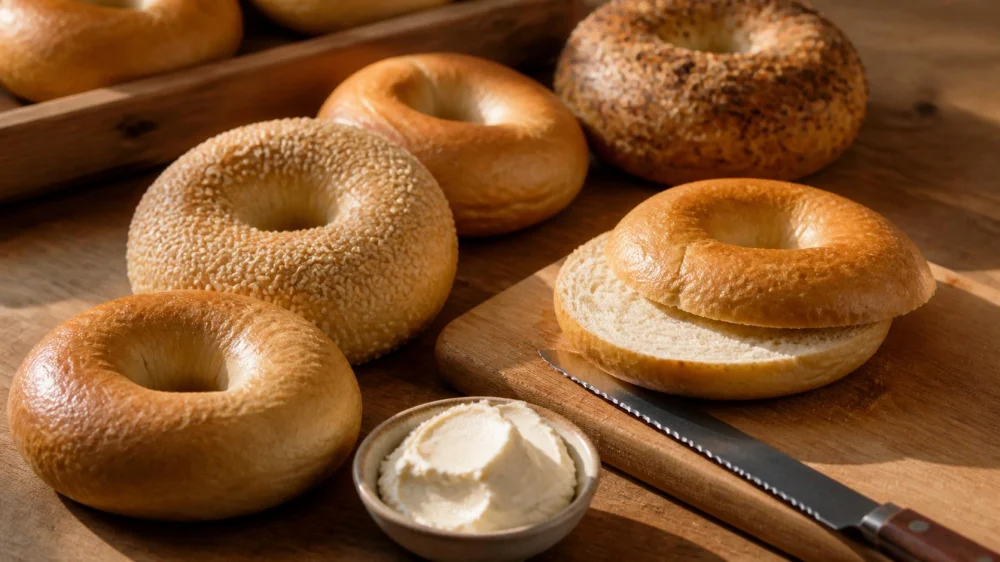
Choose bakery bagels by crust, chew, size, and intended use. A fresh bagel should feel resilient rather than brittle, with a set crust and a crumb that is dense without seeming gummy. Buy the amount you will eat promptly, slice with a stable board and serrated knife, and freeze extras before they stale.
Flavours, toppings, boiling methods, and dough recipes vary. Ask about dairy, egg, wheat, sesame, nuts, soy, shared equipment, and fillings before ordering when allergies or dietary restrictions matter.

Julius Sturgis Pretzel Bakery / pretzel factory lititz pa
LititzLancaster CountyPennsylvania
219 E Main St, Lititz, PA 17543, USA
Choose a bagel style
Plain and sesame bagels make flexible sandwich bases. Everything seasoning brings garlic, onion, seeds, and salt. Cinnamon-raisin and other sweet styles suit simple butter or cream cheese. Whole-grain appearance does not prove a particular whole-grain content; ask or read the label.
Size changes the bread-to-filling ratio. A smaller bagel highlights fillings, while a large thick bagel may need more spread and stronger flavours.

L’Ami Bakery & Cafe / bakery in h mart
48-18 Northern Blvd, Long Island City, NY 11101, USA
Check freshness and texture
Look for an even bake and a surface that is set, not wet or excessively floury. Gentle pressure should meet resistance and spring back somewhat. A hard bagel may be stale or intentionally crisp; ask when it was baked.
Warm does not always mean freshly baked, because a product may be reheated. Judge aroma, crust, and crumb together.
Slice and toast safely
Set the bagel flat on a non-slip cutting board. Keep fingers above the blade path and use a long serrated knife with controlled sawing strokes. Never hold the bagel in your palm while cutting toward your hand.
Use a toaster slot only if the halves fit without force. Dense toppings, seeds, cheese, or loose seasoning can burn; a toaster oven or oven may provide more control.
Match spreads and fillings
Dense chewy bagels handle cream cheese, smoked fish, eggs, vegetables, and substantial sandwiches. Toasting adds crunch and supports moist fillings. For a delicate fresh bagel, use a lighter spread so the crumb remains noticeable.
Keep perishable fillings refrigerated and do not leave prepared sandwiches at room temperature beyond food-safety guidance. Pack cold items with adequate ice for travel.
Store for the texture you want
For same-day eating, keep bagels in the bakery’s recommended wrap. Refrigeration can speed staling even though it may be needed for filled products. For longer storage, slice cooled bagels, wrap portions airtight, and freeze.
Toast from frozen or thaw in the wrapping to reduce moisture loss. Do not freeze a hot bagel in a sealed bag, because condensation can create an icy surface.
Ask about ingredients
Bagels commonly contain wheat and may contain or contact sesame, egg, dairy, soy, or nuts. Boiling liquid, toppings, slicers, boards, toasters, and spread knives may be shared. A missing visible seed does not establish safety.
For a serious allergy, ask for the current ingredient statement and cross-contact process. Choose a sealed labelled option if the bakery cannot provide sufficient controls.
Bagel checklist
- Choose size and chew for the planned filling.
- Ask when the batch was baked.
- Verify ingredients and shared equipment.
- Slice on a board, never in your hand.
- Refrigerate perishable filled bagels.
- Freeze extra plain bagels promptly.
- Label frozen portions with flavour and date.
Frequently asked questions
Should bagels be toasted?
Fresh bagels may not need it; toast for crunch or to refresh frozen bread.
Why is my bagel gummy?
Recipe, bake, cooling, slicing while hot, or storage can contribute.
Can I refrigerate plain bagels?
You can, but freezing often protects texture better for longer storage.
Should I pre-slice before freezing?
Yes, if you want easy toaster portions and can wrap them airtight.
Are all bagels vegan?
No. Some recipes include egg, dairy, honey, or other animal ingredients.
Is an everything bagel safe for sesame allergy?
No; everything seasoning commonly includes sesame and shared equipment may spread it.
Sources and evidence notes
The bakery’s current recipe, ingredient statement, allergen matrix, storage advice, and production process are the primary sources for a specific bagel. Recipes and shared equipment vary.
Packaged bagels should be handled according to their label. Perishable filled bagels require time and temperature control appropriate to their ingredients.
Conclusion and next steps
Pick a bagel by chew, crust, size, and filling plan. Ask about baking time and allergens, slice it safely on a board, refrigerate perishable sandwiches, and freeze extra plain bagels early. Thaw or toast only the portion you need.






 Nagoya Bakery4.0 (25 reviews)
 The Quantum Baker0.0 (0 reviews)
 Valerio's Tropical Bake Shop4.0 (43 reviews)
 Manny's Bakeshop & Restaurant4.0 (19 reviews)
 Nanding's Bakery4.0 (368 reviews)
 Aloha Sunrise Granola5.0 (5 reviews)
 Bakery Service Charge Check: Bill, Tips, and Group Split
 Bakery Texture Guide: A Practical US Checklist
 Bakery Cake Quote: Size, Design, Pickup, and Allergen Notes
 Bakery Bread Crumb Check: Freshness, Cutting, and Serving
 Bakery Cupcake Pickup: Count, Box, and Safe Transport
 Bakery Whole-Grain Bread: Ingredients, Texture, and Freshness