
Bakery Baguette Guide: Crust, Crumb, Serving, and Storage
On this page
Quick answer
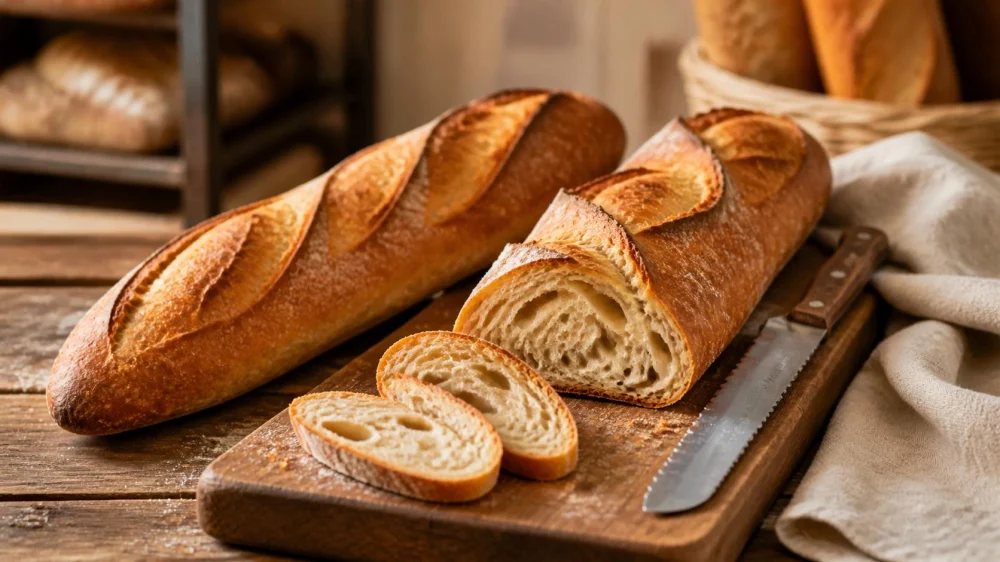
Choose a baguette by how you plan to eat it. A deeply baked loaf offers a crisp, aromatic crust for immediate serving; a thinner, lighter loaf may be easier for sandwiches. Look for a light loaf for its size, a crust that crackles gently, and an irregular crumb that feels set rather than wet.
Baguettes stale quickly because their long shape exposes much of the crumb and crust. Buy close to serving time, keep at room temperature for the day, and freeze unused portions airtight rather than refrigerating a plain loaf.

Julius Sturgis Pretzel Bakery / pretzel factory lititz pa
LititzLancaster CountyPennsylvania
219 E Main St, Lititz, PA 17543, USA
Choose by crust and crumb
Darker colour generally brings toastier flavour and a firmer crust. A pale loaf may be softer but can lack full caramelised aroma. Flour dust is a style choice, not proof of freshness.
Traditional airy crumb is useful for soaking up sauces, while a tighter crumb holds sandwich fillings neatly. Ask the baker which loaf suits cheese, soup, bruschetta, or sandwiches.

L’Ami Bakery & Cafe / bakery in h mart
48-18 Northern Blvd, Long Island City, NY 11101, USA
Read freshness clues
A fresh baguette should smell wheaty and toasted. It often feels light and gives a quiet crackle when gently squeezed. The bottom should be dry and firm, not damp or leathery.
A very hard loaf may be intentionally well baked or simply stale. Ask when it came from the oven and when the bakery expects its best texture.
Slice and serve
Use a stable non-slip board and a long serrated knife. Hold the loaf with fingertips curled above the blade path and saw without crushing. Cut diagonal slices for a larger surface, rounds for crostini, or split lengthwise for sandwiches.
Let a very warm loaf cool before sealing or slicing. Steam escaping too early can make the crumb tacky and soften the crust.
Match the meal
Thick slices suit soup, stew, butter, or cheese. Thin toasted rounds work for spreads and canapés. A sandwich loaf should be wide enough for filling but not so crusty that it is difficult to bite.
For a grazing board, slice shortly before serving to slow drying. Keep wet toppings separate until the last moment.
Store and refresh
For same-day use, a paper bag or bread bag recommended by the bakery can balance crust and moisture. Airtight plastic softens crust; open air dries the crumb. Choose based on whether you plan to toast it.
Freeze portions tightly wrapped on the purchase day. Refresh thawed bread in the oven according to bakery guidance. Do not warm bread in paper or plastic packaging unless it is explicitly oven-safe.
Check ingredients and allergens
A basic baguette may contain flour, water, yeast or starter, and salt, but recipes can add malt, enzymes, seeds, dairy, egg, soy, or other ingredients. Shared mixers, benches, ovens, and slicers can create cross-contact.
Ask for the exact ingredient and allergen information. For a serious allergy, choose a sealed labelled loaf if the bakery cannot manage the required controls.
Baguette checklist
- Choose crust depth and crumb for the meal.
- Ask the bake time and best serving window.
- Carry it without crushing the loaf.
- Slice on a stable board with a serrated knife.
- Keep wet toppings separate until serving.
- Freeze unused portions on the first day.
- Verify ingredients and shared equipment.
Frequently asked questions
Why does a baguette go hard quickly?
Its high surface area speeds moisture loss and staling.
Should I refrigerate it?
Plain bread usually keeps better through prompt freezing than refrigeration.
How do I restore crisp crust?
Use the bakery’s oven guidance and serve soon after refreshing.
Can I freeze it whole?
Yes, but portions are easier to wrap, thaw, and use.
Is darker crust burnt?
Not automatically. Deep colour can provide flavour, though black or bitter areas may be overbaked.
Is every baguette vegan?
No. Confirm the exact recipe and production process.
Sources and evidence notes
The bakery’s recipe, allergen information, bake schedule, and storage advice are the primary sources for a specific loaf. Flour, fermentation, shaping, baking, and cooling change ideal handling.
Packaged loaves should follow the printed label. Mouldy bread should be discarded rather than trimmed because contamination can extend beyond visible spots.
Conclusion and next steps
Choose a baguette by crust, crumb, and meal, then buy it near serving time. Slice safely, add wet toppings late, and freeze extra portions before the loaf stales. Confirm ingredients and cross-contact practices instead of assuming every traditional-looking loaf uses the same recipe.






 Nagoya Bakery4.0 (25 reviews)
 The Quantum Baker0.0 (0 reviews)
 Valerio's Tropical Bake Shop4.0 (43 reviews)
 Manny's Bakeshop & Restaurant4.0 (19 reviews)
 Nanding's Bakery4.0 (368 reviews)
 Aloha Sunrise Granola5.0 (5 reviews)
 Bakery Celebration Cake Pickup: Size, Travel, and Timing
 Bakery Bread Storage: Crust, Moisture, and Freezing Guide
 Bakery Reservation Notes: Time, Party, Access, and Contact
 Bakery Menu Portion Chec: A Heavenly Delights Bakery Reader Guide
 Bakery Service Charge Check: Bill, Tips, and Group Split
 Bakery Texture Guide: A Practical US Checklist