
Bakery Bread Slicing: Match Thickness to How You Eat
Table of contents
Quick answer
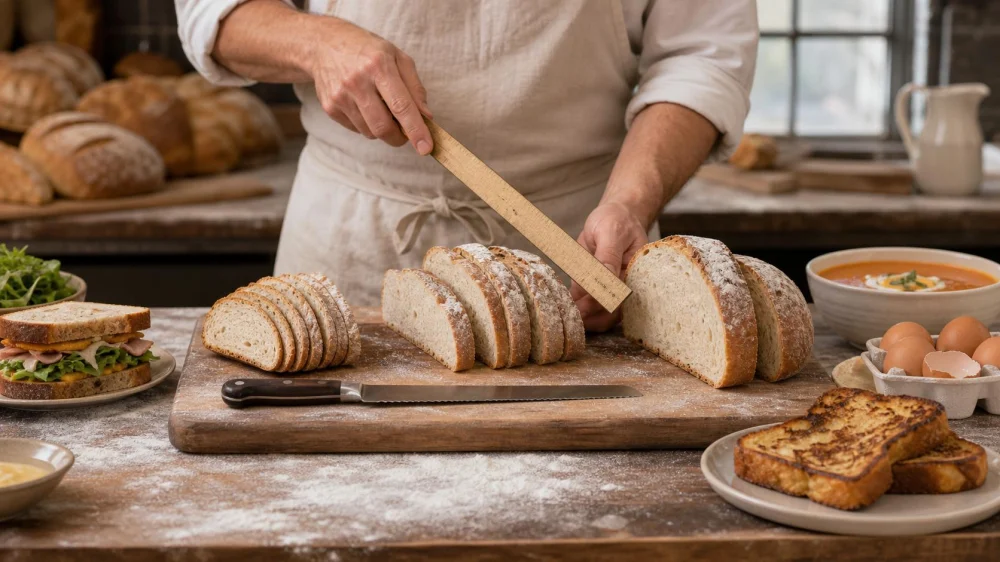
Choose bakery bread slice thickness by its job. Thin slices suit compact sandwiches and delicate toast; medium slices handle everyday sandwiches and standard toasters; thick slices support hearty toppings, French toast, dipping, and open-face meals. Also consider crumb strength, crust, inclusions, toaster width, and storage. Ask whether the loaf is cool enough for the bakery slicer, and leave part unsliced if you need several uses.

Julius Sturgis Pretzel Bakery / pretzel factory lititz pa
LititzLancaster CountyPennsylvania
219 E Main St, Lititz, PA 17543, USA
Decide before the loaf is cut
Once a loaf is machine-sliced, you cannot make the pieces thicker. Think about the next two or three meals before asking for the default setting. A family using half the loaf for sandwiches and half for soup may prefer two different sections or an unsliced loaf.
- What will you make first?
- Does the bread need to fit a toaster, pan, or sandwich press?
- Will fillings be wet, heavy, or delicate?
- Does the loaf have a tight crumb or large open holes?
- Will you freeze individual portions?
- Do you need an intact end for a bread bowl, croutons, or display?
When thin slices work
Thin slicing makes a loaf yield more portions and reduces the bread-to-filling ratio. It suits tea sandwiches, grilled cheese with modest filling, layered deli sandwiches, and crisp toast. Thin rye or seeded bread can frame strong flavours without dominating.
The tradeoff is strength. A very open sourdough crumb, heavy seeds, large fruit pieces, or a soft warm loaf may tear. Juicy tomatoes, dressings, and hot fillings can soak through quickly. Toast thin slices carefully because they brown faster.

L’Ami Bakery & Cafe / bakery in h mart
48-18 Northern Blvd, Long Island City, NY 11101, USA
Why medium is versatile
Medium slices are the useful default for lunch sandwiches, breakfast toast, panini, and serving beside a meal. They usually fit common toaster slots and provide enough crumb to hold spreads without making the sandwich too tall.
If you do not know the bakery’s machine settings, ask to see an example or request a measurement. “Medium” is relative: a sandwich bakery and an artisan sourdough shop may mean different things.
When thick slices shine
Thick slices offer a soft centre and substantial chew. They work for French toast, garlic bread, bruschetta with controlled toppings, Welsh rarebit, dipping in soup, and open-face sandwiches. They can also handle a longer toast that crisps the outside while leaving the middle tender.
Check appliance clearance. A thick slice may not fit a pop-up toaster, and forcing it can create a fire risk. Use an oven, toaster oven, or skillet only according to equipment instructions and keep food away from heating elements.
Match the loaf structure
Sandwich bread and brioche
A fine, even crumb tolerates thin or medium slicing. Rich brioche is tender, so a very fresh warm loaf may compress.
Sourdough and country loaves
Large holes and a thick crust favour medium or thick slices, especially for heavy toppings. The loaf shape may create different slice sizes from centre to ends.
Rye and dense whole grain
Thin slices can be sturdy and balanced, while thick pieces may feel heavy. Seeds and grains still affect the slicer.
Fruit, nut, olive, and cheese breads
Inclusions may tear or pull from thin slices. Ask whether machine slicing is recommended and disclose allergens when serving guests.
What to ask the bakery
- What slice settings are available, in actual measurements?
- Is this loaf cool and firm enough to slice cleanly?
- Can the loaf be divided, with one section sliced and one intact?
- Will the crust or inclusions work in the machine?
- Can you place paper between special portions for freezing?
- How was the slicer cleaned, especially for allergen concerns?
Machine slicing does not make a loaf allergen-safe. Shared equipment may create cross-contact; ask before ordering if that matters.
Slice and portion at home
- Let the loaf cool fully unless the bakery gives different product-specific guidance.
- Use a stable cutting board on a dry nonslip surface.
- Choose a long sharp serrated bread knife.
- Keep fingertips above and behind the blade path.
- Use gentle sawing strokes; do not crush down through the loaf.
- Mark thickness visually or use an adjustable guide designed for bread.
- Freeze useful meal-size portions with separators once fully cool.
Do not hold a loaf in the air or cut toward your hand. Children should use knives only with appropriate supervision and skill.
Limits and food safety
Slice thickness affects eating quality, not food safety. Keep bread clean, dry, and protected, and follow the bakery’s storage guidance. Refrigerate fillings and prepared sandwiches as required; bread does not make perishable ingredients shelf-stable. Discard mouldy bread rather than cutting around the visible spot. People with allergies must verify ingredients and shared-equipment practices with the bakery.
Frequently asked questions
Should fresh bread be sliced while warm?
Usually a cooled loaf slices more cleanly and preserves crumb structure, but follow the baker’s advice for the specific product.
What thickness is best for sandwiches?
Medium is versatile; use thinner slices for delicate fillings and thicker ones for heavy or wet fillings, provided the crumb is sturdy.
Can every artisan loaf use the shop slicer?
No. Size, crust, inclusions, moisture, and warmth may make machine slicing unsuitable.
Is pre-sliced bread less fresh?
More cut surface is exposed to air, so it may stale faster. Freeze portions you will not use soon.
Sources and evidence
Crumb structure, crust, temperature, moisture, inclusions, and exposed surface area explain the practical differences between slicing choices. Use the bakery’s product guidance and the appliance manual. FDA’s food storage guidance applies to perishable fillings and prepared foods; it does not turn a storage time into a freshness guarantee.
Next steps
Tell the bakery your first two uses, ask to see the available thickness, and consider leaving part of the loaf intact. At home, freeze meal-size portions before quality declines.






 Nagoya Bakery4.0 (25 reviews)
 The Quantum Baker0.0 (0 reviews)
 Valerio's Tropical Bake Shop4.0 (43 reviews)
 Manny's Bakeshop & Restaurant4.0 (19 reviews)
 Nanding's Bakery4.0 (368 reviews)
 Aloha Sunrise Granola5.0 (5 reviews)
 Pastry Gift Box Check: Variety, Allergens, and Transport
 Sourdough Loaf Pickup: Bake Time, Slicing, and Storage
 Bakery Celebration Cake Pickup: Size, Travel, and Timing
 Bakery Bread Storage: Crust, Moisture, and Freezing Guide
 Bakery Reservation Notes: Time, Party, Access, and Contact
 Bakery Menu Portion Chec: A Heavenly Delights Bakery Reader Guide