

Bakery Cake Servings: Confirm the Cutting Plan Before You Order
Quick answer: Give the bakery your guest count, desired slice size, event type, and whether another dessert is served. Ask which cake dimensions and cutting pattern produce that number, request a diagram, and identify who will cut it. Height, shape, filling stability, decoration, and the difference between event-size and party-size slices all affect the real yield.
A cake described as “serves 30” only works when everyone uses the same slice definition. Turning the estimate into a practical plan prevents oversized first pieces, crushed layers, and a final row that runs short.
1. Count Guests and Serving Context
Start with confirmed guests, then add a reasonable buffer for late additions, staff, or people who want cake after initially declining. Tell the bakery whether cake is the only dessert, part of a buffet, served after a full meal, or packaged as take-home favors.
Children, tasting receptions, formal dinners, and casual birthday parties may use different portions. Do not reduce the count because some guests “probably will not eat cake” unless you are comfortable running out.

Julius Sturgis Pretzel Bakery / pretzel factory lititz pa
LititzLancaster CountyPennsylvania
219 E Main St, Lititz, PA 17543, USA
2. Define the Slice Size
Ask the bakery to describe the width, depth, and height of its standard event or party slice. A tall narrow slice can contain as much cake as a short wide wedge. Request a photo or diagram when the distinction matters.
Choose one size before ordering. If guests may want larger portions, order more total cake rather than expecting the cutter to improvise. Reserve any top tier or display section before counting it as available servings.
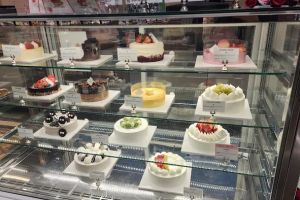
L’Ami Bakery & Cafe / bakery in h mart
48-18 Northern Blvd, Long Island City, NY 11101, USA
3. Match Shape to the Cutting Pattern
Round cakes are commonly cut into rings or straight rows rather than only long wedges. Square and sheet cakes are usually divided into a grid. Heart, hexagon, scalloped, and sculpted designs have edge pieces and interior zones that affect consistency.
Ask for a shape-specific cutting map with approximate row or ring dimensions. A generic online chart may use different cake size, height, and slice assumptions from your bakery’s product.
4. Account for Cake Height and Layers
A tall modern layer cake may need thinner slices, a horizontal split, or special plate clearance. Ask whether it is a single tall tier, two stacked cakes, or a tier supported by boards and dowels. Do not cut through hidden supports as though the whole height were one continuous cake.
Confirm the filling texture and serving temperature. Buttercream, mousse, curd, fruit, ganache, and cream-based fillings behave differently. Follow the bakery’s refrigeration and tempering instructions so slices hold without being too hard or too soft.
5. Protect Decorative and Structural Zones
Ask which flowers, toppers, wires, picks, ribbons, acrylic pieces, boards, dowels, and supports must be removed before cutting. Not every decoration is edible, even when it touches the cake.
Identify the best presentation angle and when photos will finish. Remove toppers into a clean container, not onto a guest plate. Mark any saved anniversary tier or decorative section before service begins.
6. Prepare the Right Tools
Have a long sharp knife, small offset spatula or cake server, cutting board or protected work surface, clean towels, warm water if the bakery recommends it, extra plates, forks, gloves if required by venue policy, and containers for removed decorations and leftovers.
Use a separate clean knife for an allergen-managed or specialty cake. Wipe the blade between cuts to keep layers neat, but never leave a knife soaking where it can be hidden or grabbed. Do not use a short serrated table knife for a tall supported cake unless the bakery says it is suitable.
7. Assign a Confident Cutter
Decide whether the bakery, caterer, venue, planner, or a trusted guest will cut and serve. Confirm any cutting fee, staffing time, kitchen access, and cleanup responsibility. Give the assigned person the bakery diagram before the event.
A friend who volunteers at the last moment may default to oversized wedges. If the cake is tiered, unusually tall, or structurally complex, use an experienced professional who understands supports and safe disassembly.
8. Use a Repeatable Serving Sequence
Photograph the intact cake, remove non-edible elements, separate tiers as directed, and begin with one consistent row or ring. Use the diagram to keep widths stable. Plate several slices before distribution so the cutter can maintain rhythm.
Keep the service table level and away from sun, heaters, dance-floor traffic, and children. Count plates as they leave. If portions must change, adjust at a natural row boundary rather than gradually shrinking every slice.
9. Separate Dietary Slices Clearly
Confirm which cake, filling, frosting, garnish, and topper correspond to each dietary request. Labels such as vegan, dairy-free, gluten-free, and nut-free mean different things and do not guarantee the absence of other allergens or cross-contact.
For a verified separate cake, keep it covered, labeled, and physically apart; use clean dedicated tools, plates, and hands. Cut and serve it before shared crumbs and frosting spread. If the bakery cannot verify ingredients or cross-contact controls, communicate that limitation rather than promising safety.
10. Plan Storage and Leftovers
Ask how long the cake may remain at room temperature and what refrigeration each filling requires. Prepare shallow covered containers and refrigerator space. Do not stack soft-frosted slices without dividers.
Label leftovers with flavor, dietary status, and date, then follow the bakery’s storage instructions and current food-safety guidance. Send cake home only in clean food-safe packaging. Keep a final uncut portion in reserve until all guests who want cake have been served.
Order checklist: guest count; buffer; portion definition; exact cake size and shape; cutting diagram; tier and support notes; decoration removal; serving temperature; tools; assigned cutter; dietary separation; and leftover storage.
This article provides general event-planning information. The bakery’s recipe, construction, serving chart, storage directions, and allergen information control the specific cake.





 Nagoya Bakery4.0 (25 reviews)
 The Quantum Baker0.0 (0 reviews)
 Valerio's Tropical Bake Shop4.0 (43 reviews)
 Manny's Bakeshop & Restaurant4.0 (19 reviews)
 Nanding's Bakery4.0 (368 reviews)
 Aloha Sunrise Granola5.0 (5 reviews)
 Bakery Custom Cake Handoff: Design, Allergens, and Pickup
 Bread Freezing Plan: Slicing, Wrapping, and Thawing
 Pastry Gift Box Check: Variety, Allergens, and Transport
 Sourdough Loaf Pickup: Bake Time, Slicing, and Storage
 Bakery Celebration Cake Pickup: Size, Travel, and Timing
 Bakery Bread Storage: Crust, Moisture, and Freezing Guide