
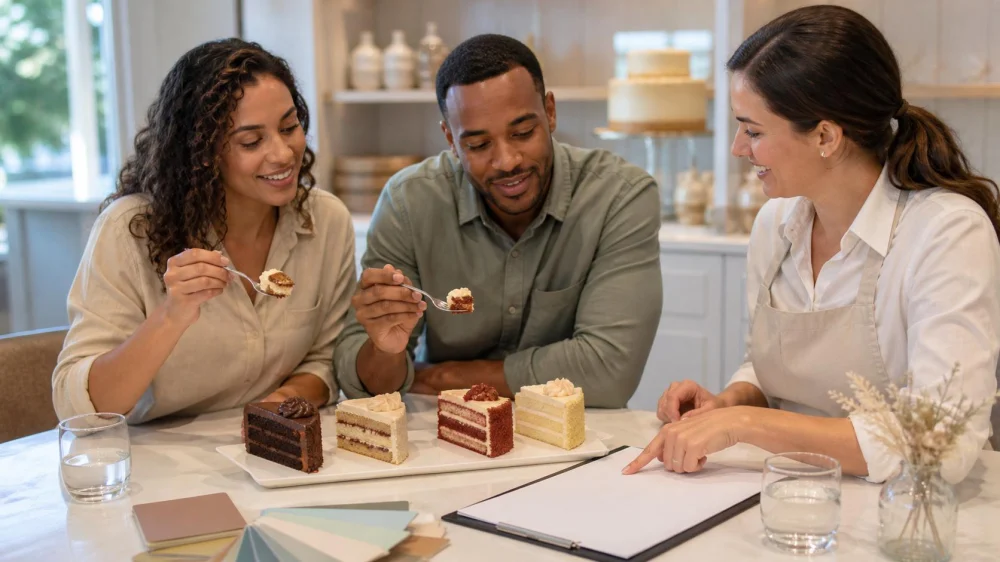
Bakery Cake Tasting: Compare Flavours and Confirm the Brief
On this page
Quick answer
Use a bakery cake tasting to compare combinations that can actually be produced for your date, size, design, transport, and venue. Taste a small number from light to intense, use water and neutral pauses, and score cake, filling, frosting, sweetness, texture, and balance separately. Before paying, convert the favourite into a written order showing portions, tiers, flavours, allergens, appearance, delivery, setup, storage, fees, and change deadlines.
Julius Sturgis Pretzel Bakery / pretzel factory lititz pa
LititzLancaster CountyPennsylvania
219 E Main St, Lititz, PA 17543, USA
Prepare before tasting
Send the bakery the event date, venue, indoor or outdoor setting, guest count, serving time, budget range, design references, and dietary needs. Ask whether the tasting uses the same recipes and frostings available for the final cake and whether samples are fresh, frozen, or take-home.
- Who may attend and whether there is a tasting fee
- Number of flavours and how substitutions work
- Allergen ingredients and shared-production limitations
- Styles suitable for heat, humidity, travel, and display duration
- Minimum order, deposit, and booking requirements
- Whether a consultation, sketch, or quotation is included
Taste systematically
- Label each sample privately. Keep bakery names and flavour components accurate without relying on memory.
- Start mild. Move from vanilla, fruit, or delicate profiles toward chocolate, spice, coffee, or intense fillings.
- Taste components and combination. A good sponge and filling may become too sweet when paired with a particular frosting.
- Use the same criteria. Score moisture, crumb, filling amount, frosting feel, sweetness, flavour clarity, and finish.
- Pause between samples. Drink water and avoid perfume, strong coffee, or other flavours that obscure differences.
- Rank, then discuss. Each decision-maker records first impressions before group consensus.
Turn choices into a written brief
Name every tier or section, including cake, filling, frosting, outer finish, and garnish. Mark which reference images apply to colour, texture, shape, piping, flowers, or arrangement. Avoid “exactly like this photo” when the bakery must adapt scale, materials, season, and its own work.
Confirm actual serving count and cutting guide, structural supports, fresh or sugar flowers, toppers, stand rental, box return, delivery window, venue access, setup responsibility, refrigeration, outdoor exposure, and who approves changes.
L’Ami Bakery & Cafe / bakery in h mart
48-18 Northern Blvd, Long Island City, NY 11101, USA
Approval checklist
- Final flavours and location within the cake listed
- Guest servings and slice style defined
- Allergen limitations and labels documented
- Design, colours, finishes, and permitted substitutions recorded
- Delivery, setup, venue contact, and display conditions confirmed
- Total, deposit, remaining payments, rentals, and fees itemised
- Change, cancellation, refund, and final-approval deadlines saved
Limitations and important notes
A tasting sample cannot perfectly predict a large event cake after delivery, assembly, and display. Seasonal fruit, flowers, colours, and supply can vary. Written substitution and quality processes matter.
Guests with severe allergies need more than a flavour preference. Discuss ingredients, shared equipment, kitchen controls, transport, cutting, and venue cross-contact. Do not ask a bakery to promise safety beyond its actual process.
Sources and evidence notes
The method uses sensory comparison and contract clarity: limit variables, score consistently, confirm production feasibility, and document the complete deliverable. The bakery’s current recipes, allergen process, quote, and signed order control.
Frequently asked questions
How many flavours should we taste?
Enough to compare realistic finalists without fatigue. A small focused set usually produces clearer decisions than every menu option.
Can each tier have a different flavour?
Ask the bakery. Structure, size, minimum batch, pricing, and serving logistics can limit combinations.
Should we taste on an empty stomach?
Arrive normally fed and hydrated. Hunger can distort portion and sweetness judgments.
Does a deposit lock the design?
Not necessarily. Read which details are reserved, when final approval occurs, and what changes cost.
Next steps
Shortlist feasible flavours, send event constraints before the tasting, score samples consistently, and select a complete combination. Approve only after the written brief captures food, design, quantity, allergen, transport, setup, price, and deadline terms.




 Nagoya Bakery4.0 (25 reviews)
 The Quantum Baker0.0 (0 reviews)
 Valerio's Tropical Bake Shop4.0 (43 reviews)
 Manny's Bakeshop & Restaurant4.0 (19 reviews)
 Nanding's Bakery4.0 (368 reviews)
 Aloha Sunrise Granola5.0 (5 reviews)
 Bakery Service Charge Check: Bill, Tips, and Group Split
 Bakery Texture Guide: A Practical US Checklist
 Bakery Cake Quote: Size, Design, Pickup, and Allergen Notes
 Bakery Bread Crumb Check: Freshness, Cutting, and Serving
 Bakery Cupcake Pickup: Count, Box, and Safe Transport
 Bakery Whole-Grain Bread: Ingredients, Texture, and Freshness