
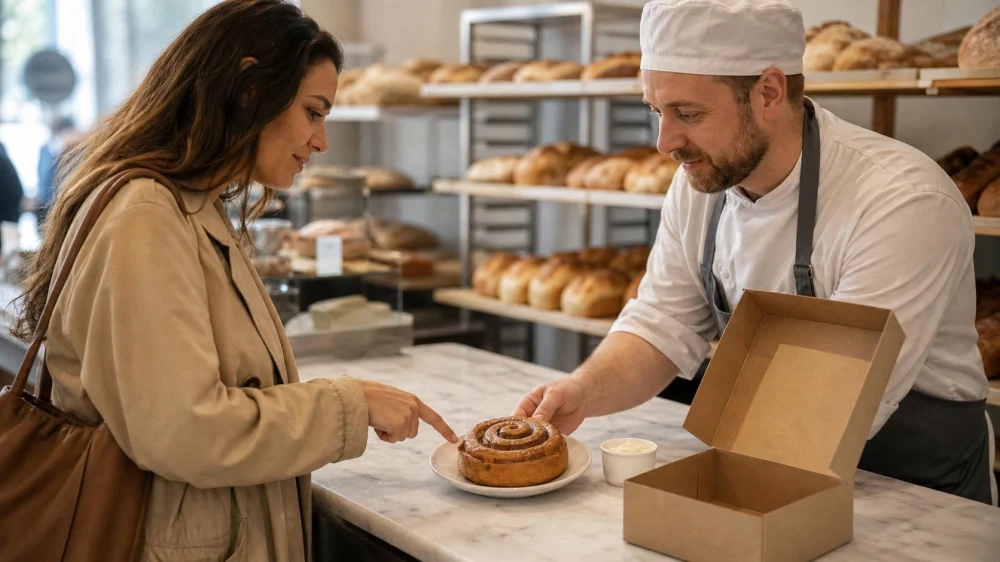
Bakery Cinnamon Roll Guide: Icing, Reheating, and Storage
A bakery cinnamon roll can be soft, sticky, heavily iced, lightly glazed, filled with nuts, or designed for reheating at home. Choosing well means looking beyond size. Ask how the roll was made, what the topping contains, when it tastes best, and how to transport it without turning the box into a pool of icing.
Choose the Style
Compare the dough, spiral, filling, and topping. A brioche-like roll may be rich and tender, while a leaner dough can feel breadier and chewier. Some shops bake individual rolls with caramelized edges; others cut them from a shared pan for softer sides. Decide whether you prefer a tight cinnamon spiral, raisins or nuts, cream-cheese frosting, or a simple glaze.

Julius Sturgis Pretzel Bakery / pretzel factory lititz pa
LititzLancaster CountyPennsylvania
219 E Main St, Lititz, PA 17543, USA
Ask About Freshness
Ask when the batch was baked and whether another batch is expected. Warm does not always mean freshly baked; a roll may have been reheated. That can still be enjoyable when disclosed and handled properly. If buying for tomorrow, ask whether an un-iced or par-baked option stores better. Follow the bakery’s product-specific guidance rather than judging only by surface softness.
L’Ami Bakery & Cafe / bakery in h mart
48-18 Northern Blvd, Long Island City, NY 11101, USA
Check Ingredients
Cinnamon rolls commonly contain wheat, milk, eggs, and sometimes nuts, but recipes vary. Fillings, glazes, and release sprays can add ingredients not obvious from appearance. Tell staff the exact allergy and ask about shared mixers, pans, display tongs, and nearby products. “No nuts in this roll” is different from preparation in an environment with nut contact.
Choose the Icing
Confirm whether icing is applied while warm, served on the side, or available in different amounts. Cream-cheese frosting may require refrigeration under the bakery’s instructions, while a sugar glaze behaves differently. For transport or later reheating, icing on the side can prevent melting and allow each person to choose sweetness. Keep any perishable topping cold during a longer trip.
Plan the Quantity
Large rolls may provide more than one practical serving, especially alongside other brunch foods. Ask for dimensions or weight rather than assuming every roll is identical. For a group, consider a mix of plain and topped rolls and label allergen-sensitive options clearly. Order ahead for a large quantity, and confirm whether the bakery packages each roll separately or together.
Carry Rolls Level
Check that the box bottom is clean, rigid, and fully closed. Carry it from underneath with two hands and place it flat in the vehicle, away from direct sun, pets, and loose objects. A seat can slope enough to slide warm rolls. Use a clean level floor area or insulated carrier when bakery guidance requires temperature control.
Store Them Correctly
Follow the bakery’s advice for room-temperature or refrigerated storage because toppings and fillings change the answer. Keep rolls covered to limit drying and odors. If refrigeration is required, chill promptly. For longer storage, ask whether the rolls freeze well and whether icing should be frozen separately. Label the package with the purchase date and contents.
Reheat Gently
Remove packaging that is not oven- or microwave-safe. Reheat only the portion you will serve, using the bakery’s time and temperature instructions when available. Short intervals reduce the risk of a tough exterior or dangerously hot filling. Let the roll stand briefly, then test the center. Add separate icing after heating unless its instructions say otherwise.
Serve With Balance
Use a serrated knife for a large roll and a clean utensil for icing. Pair the sweetness with fruit, unsweetened coffee or tea, or a savory breakfast item if desired. Keep the ingredient information available for guests. Do not mix serving tools between rolls with different allergens, and avoid leaving perishable frosting at room temperature longer than food-safety guidance allows.
Know When to Discard
Discard a roll with mold, a sour or otherwise abnormal odor, leaking perishable filling, damaged packaging, or unknown time out of required refrigeration. Removing a moldy spot is not enough for a soft baked product. When storage history is uncertain, choose safety over a taste test and contact the bakery if you need product-specific clarification.
For a brunch, write a short serving plan before guests arrive: which rolls contain nuts, which icing needs refrigeration, what will be warmed first, and which clean utensils belong with each option. Warm in small batches so rolls are not repeatedly reheated. Put bakery ingredient cards beside the correct platter and keep backup rolls covered. This organization matters more than elaborate presentation because it preserves texture and gives guests the information they need before choosing.
The best cinnamon roll plan matches the style to the occasion and protects it after purchase. Confirm ingredients and frosting, carry the box level, follow storage guidance, and reheat gently. Those details preserve the spiral’s texture while keeping the topping where it belongs.






 Nagoya Bakery4.0 (25 reviews)
 The Quantum Baker0.0 (0 reviews)
 Valerio's Tropical Bake Shop4.0 (43 reviews)
 Manny's Bakeshop & Restaurant4.0 (19 reviews)
 Nanding's Bakery4.0 (368 reviews)
 Aloha Sunrise Granola5.0 (5 reviews)
 Bakery Custom Cake Handoff: Design, Allergens, and Pickup
 Bread Freezing Plan: Slicing, Wrapping, and Thawing
 Pastry Gift Box Check: Variety, Allergens, and Transport
 Sourdough Loaf Pickup: Bake Time, Slicing, and Storage
 Bakery Celebration Cake Pickup: Size, Travel, and Timing
 Bakery Bread Storage: Crust, Moisture, and Freezing Guide