
Bakery Croissant Guide: Layers, Fillings, and Reheating
On this page
Quick answer
Choose a croissant by the texture and filling you want, then ask when it was baked and how it should be stored. A good laminated pastry is typically crisp outside with distinct, tender interior layers. Carry it without crushing, refrigerate perishable fillings promptly, and reheat an unfilled croissant briefly in an oven rather than a microwave.

Wonder Bagels / wonder bagel 440
Jersey CityHudson CountyNew Jersey
433 Sip Ave, Jersey City, NJ 07306, USA
Know the classic structure
A traditional croissant is made from laminated yeast dough: dough and butter are folded into repeated layers, then proofed and baked. Steam and fermentation help separate those layers. The result is not simply “flaky bread”; it combines a crisp shell, a honeycomb-like interior, buttery aroma, and light chew.
Styles differ. Some bakeries favor a very open interior and brittle crust, while others make a softer, denser pastry that travels well. Browning can range from golden to deep caramel. These differences are preferences, not automatic signs of quality.
Choose at the bakery
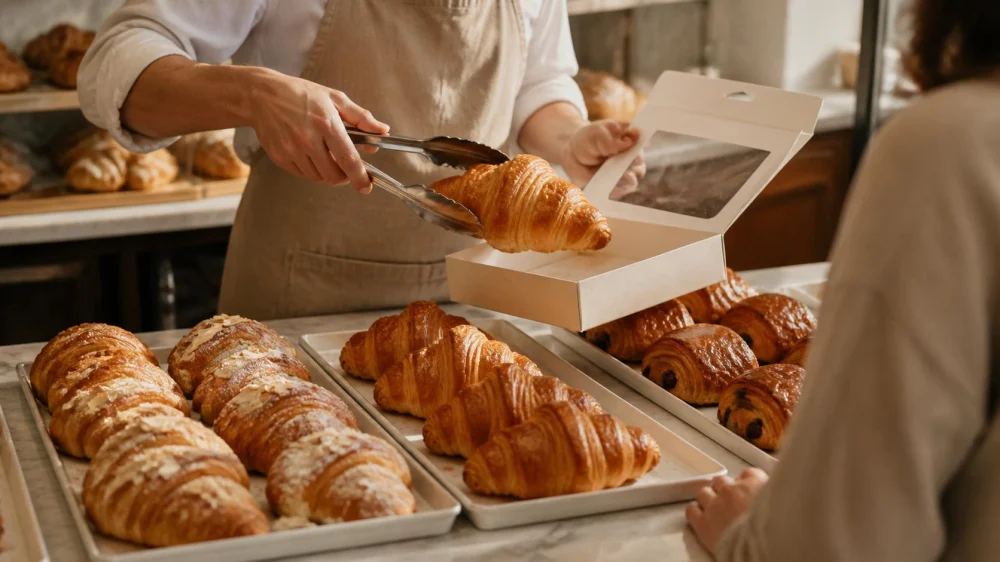
Look for an intact pastry with a dry rather than greasy exterior. Flakes in the display are normal, but a flattened croissant may have been compressed. Ask when the batch was baked if timing matters.
- For immediate eating: choose the freshest batch in the texture you enjoy.
- For travel: select an intact pastry and request a rigid box.
- For next morning: choose an unfilled or shelf-stable option and ask about reheating.
- For sharing: mix plain and filled styles, then label them.
Do not squeeze pastries in a self-service display. Use the supplied utensil and avoid touching items you will not buy.
Compare fillings
Plain butter croissants emphasize lamination and are easiest to reheat. Chocolate-filled versions add sweetness and a firm or melted center depending on temperature. Almond croissants are often made with syrup and almond cream and can be denser and sweeter than plain ones.
Savory fillings may include cheese, vegetables, eggs, or meat. Custard, cream, soft cheese, meat, and egg fillings can require refrigeration. Ask the bakery rather than deciding by appearance. A filling also changes the safest and most effective reheating method.
Ask about allergens
Classic croissants generally contain wheat, milk, and often egg. Almond varieties contain tree nuts, and chocolate, fillings, glazes, and shared equipment can add other allergens. “Plain” does not mean allergen-free.
- Name the exact allergen rather than asking whether an item is “safe.”
- Ask about dough, wash, filling, topping, and shared equipment.
- Confirm whether staff can prevent cross-contact.
- Choose another product when information is uncertain.
People at risk of severe reactions should follow their medical plan and carry prescribed emergency medication.
Carry croissants home
A paper bag preserves some crispness on a short trip, but it offers little protection. Use a shallow box for several pastries, keep heavy items separate, and place filled types upright. Do not leave perishable pastries in a warm parked car.
If hot pastries are sealed while still steaming, condensation can soften the crust. Follow the bakery's packaging advice and avoid reopening food in a dusty or crowded setting.
Store by filling type
Unfilled croissants are best close to baking time. For short storage, use the bakery's direction; excessive open-air exposure dries them, while airtight storage can soften the crust. Freezing an unfilled pastry can preserve it better than several days at room temperature.
Refrigerate croissants with perishable fillings within applicable food-safety time limits, generally keeping the refrigerator at 40°F (4°C) or below. Mark the purchase date and discard pastries left in the temperature danger zone too long. Storage does not make a stale or unsafe product fresh again.
Reheat for better texture
For an unfilled croissant, a conventional or toaster oven usually restores crispness better than a microwave. Preheat, use a moderate temperature, and warm briefly until the center is comfortable. Exact time depends on size, starting temperature, and the oven.
- Remove packaging before heating.
- Check whether a filling can become dangerously hot.
- Use a tray and avoid direct contact with heating elements.
- Let the pastry rest briefly before biting.
- Do not repeatedly cool and reheat perishable fillings.
A microwave can make laminated pastry soft or chewy. If it is the only option, use short intervals and accept that the crust will differ.
Buying checklist
- Choose plain, sweet, or savory.
- Confirm allergens and cross-contact.
- Ask when the pastry was baked.
- Confirm storage for its specific filling.
- Request packaging that prevents crushing.
- Plan refrigeration for perishable items.
- Get product-specific reheating instructions.
Important limitations
This is general food and buying guidance. Ingredients, production methods, shelf life, and local food rules vary. The bakery's label and instructions take priority. Appearance cannot confirm allergen safety or prove that a perishable filling stayed cold enough.
Sources and evidence notes
- USDA Food Safety and Inspection Service: safe temperatures and time limits for perishable food.
- U.S. Food and Drug Administration: refrigerator temperature and allergen information for consumers.
- King Arthur Baking and professional baking texts: general laminated-dough structure, proofing, and reheating principles.
- The selling bakery: primary source for ingredients, cross-contact practices, shelf life, and product-specific handling.
Frequently asked questions
Does a large honeycomb interior prove quality?
It shows a particular lamination and fermentation style, but flavor, even baking, texture, and personal preference also matter.
Can I refrigerate a plain croissant?
You can, but refrigeration may stale bread textures. Ask the bakery whether room-temperature short storage or freezing is better for its product.
Why is an almond croissant heavier?
It often contains syrup and almond cream and may be made from a previously baked croissant, producing a richer, denser result.
Can I reheat a filled croissant?
Usually, but the method depends on the filling. Follow shop directions and check the center because fillings can become much hotter than the crust.
Conclusion
The best croissant is the one whose structure, filling, and timing fit your plan. Ask about ingredients and storage, protect delicate layers on the trip, refrigerate perishable fillings, and use gentle oven heat when reheating is appropriate. Product-specific bakery advice matters more than a universal rule.






 Sidecar Doughnuts & Coffee4.0 (246 reviews)
 The Cake Parlor5.0 (3 reviews)
 Cake By Marce3.0 (58 reviews)
 Safeway Bakery3.0 (4 reviews)
 Jazzie's Sweets5.0 (1 reviews)
 Donut Plus4.0 (97 reviews)
 Why Freshly Baked Breads Are Better for Your Health
 Bakery Bread Guide: How to Choose the Right Loaf
 How to Make Bakery-Style Fresh Fruit Scones
 How to Bake Your Own Homemade Baked Alaska
 The Secret to Perfectly Flaky Pie Crusts Every Time
 How to Make Bakery-Style Eclairs at Home Like a Pastry Chef