
Bakery Day-Old Deals: What to Buy and How to Use Them
On this page
- Quick answer
- Understand what “day-old” means
- Choose items that age well
- Inspect before buying
- Ask about storage and timing
- Refresh texture at home
- Turn leftovers into another dish
- Freeze what you will not use
- Calculate value without overbuying
- Quick shopping checklist
- Frequently asked questions
- Sources and evidence notes
- Next steps
Quick answer
Day-old bakery items can be a smart buy when the product, storage history, and intended use line up. Favor sturdy loaves, rolls, muffins, cookies, and unfrosted cakes; inspect the package; ask when the item was made and how to store it; then use, refrigerate, or freeze it promptly. Skip anything with unclear handling, damaged packaging, or signs of spoilage.
“Day-old” is a quality description, not a universal safety or freshness standard. The bakery’s process, ingredients, packaging, temperature control, and local rules matter. Follow the shop’s label and storage instructions for the exact product.

Julius Sturgis Pretzel Bakery / pretzel factory lititz pa
LititzLancaster CountyPennsylvania
219 E Main St, Lititz, PA 17543, USA
Understand what “day-old” means
A day-old shelf may contain products baked the previous day, items removed from the main display at a set time, or packaged goods nearing the bakery’s quality deadline. It does not necessarily mean every item is exactly 24 hours old. Ask the bakery how it defines the section.
Quality changes are different from spoilage. Bread can become firm because starches reorganize after baking, while a cookie may lose crispness or a muffin may dry at the edges. Those changes can make a product less ideal for the display case without making it unusable. Mold, unusual moisture, off odors, leaking filling, or damaged packaging are different signals and should not be “fixed” by reheating.
Before choosing, find out:
- when the item was baked or first offered for sale;
- whether it was displayed uncovered, boxed, bagged, chilled, or frozen;
- whether it contains cream, custard, cheese, whipped topping, or another perishable filling;
- what the bakery recommends for storage and use;
- whether the discount is final sale;
- whether ingredient and allergen information is available.
Choose items that age well
Lean and crusty breads
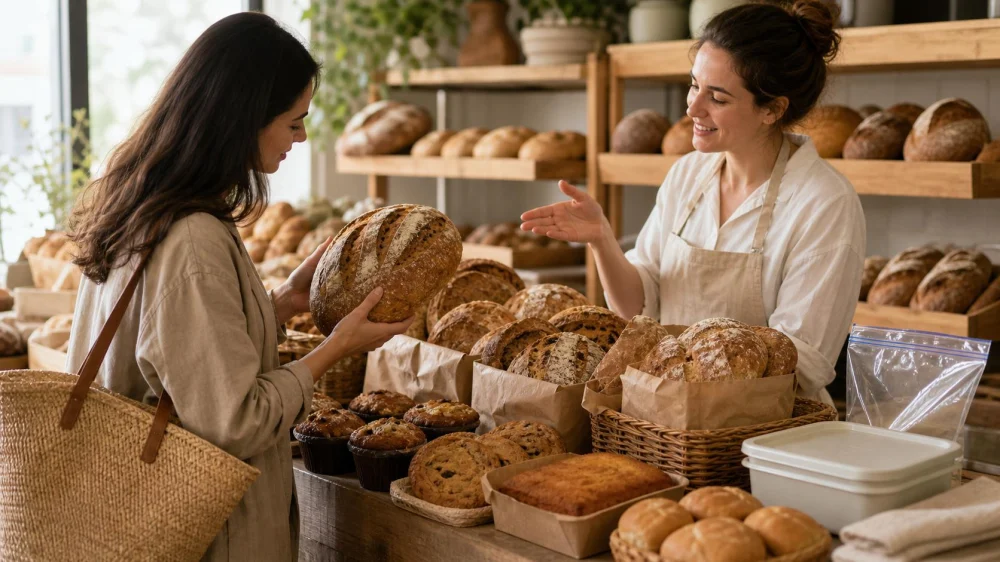
Baguettes, country loaves, and rolls may firm quickly, but they are useful for toast, croutons, breadcrumbs, crostini, stuffing, strata, or bread pudding. A loaf with an intact crust and no visible mold offers several possible uses even when it is no longer ideal for eating plain.
L’Ami Bakery & Cafe / bakery in h mart
48-18 Northern Blvd, Long Island City, NY 11101, USA
Enriched breads
Brioche, challah, cinnamon bread, and soft rolls often retain tenderness longer because of fat, sugar, or eggs. They work well for toast, sandwiches, baked breakfast dishes, or individual freezer portions. Check whether icing or filling changes the storage instructions.
Muffins, scones, and quick breads
These can be good candidates when they are simply a little dry. Gentle warming can improve the eating experience, and individual pieces are easy to freeze. Products with fresh dairy toppings or fillings may require refrigeration; ask rather than inferring from appearance.
Cookies, bars, and brownies
Dense items may hold their quality well. Crisp cookies can soften and chewy cookies can dry, but both may still work in crumb crusts, dessert layers, or ice cream toppings. Keep different textures in separate airtight containers.
Unfrosted cakes
Pound cake and other sturdy cakes can be sliced, toasted lightly, layered with fruit, or frozen. Frosted, filled, or decorated cakes need product-specific handling because ingredients and structures vary.
Items that need more caution
Cream-filled pastries, custard items, cheesecakes, whipped-cream cakes, and products labeled “keep refrigerated” depend on temperature control. Buy them only when the bakery can confirm proper chilled storage and you can transport and refrigerate them promptly. A discount does not extend a use-by date or safe holding time.
Inspect before buying
Look through clear packaging or ask staff to show the item without compromising hygiene. Check the top, bottom, sides, seams, and filling. You are looking for a normal dry or firm quality change, not deterioration.
- Packaging: it should be intact, clean, and suitable for the product, without broken seals, leaks, or heavy condensation.
- Surface: reject visible mold, unexpected wet patches, or unusual discoloration.
- Aroma: a sour, rancid, fermented, or otherwise off odor is a reason not to use the item.
- Filling: look for separation, leaking, or drying that the bakery cannot explain.
- Label: confirm the item name, ingredients or allergen information, storage directions, and date when provided.
Do not cut away mold from bread or a soft baked product and eat the remainder. Visible growth may not show the full affected area. Return the item according to the shop’s policy or discard it.
Ask about storage and timing
At checkout, ask one precise question: “How should I store this when I get home, and when should I use it?” Write the answer on the bag if there is no label. Do not assume that everything sold from a room-temperature display belongs at room temperature afterward.
Foods that require refrigeration should go into a refrigerator at or below 40°F (4°C) promptly. FDA guidance says perishable foods should not remain at room temperature longer than two hours, or one hour when the air temperature is above 90°F (32°C). This limit applies to the total unrefrigerated time you control, including a hot car and serving time.
For ordinary bread and shelf-stable bakery items, a cool, dry storage place and a suitable closed bag or container may preserve quality. Refrigeration can change bread texture, so use the bakery’s directions and choose freezing when longer storage is needed. Never use room-temperature storage for an item labeled for refrigeration.
Label the package at home with the purchase date and intended use. Put food you plan to use first where it is visible. A bargain forgotten behind newer groceries has no value.
Refresh texture at home
Reheating can improve texture, but it cannot reverse spoilage or make mishandled food safe. Refresh only an item that was safe to eat before warming.
- Crusty loaf or roll: lightly dampen the exterior if appropriate, then warm briefly in an oven until the crust revives. Watch closely.
- Soft roll or muffin: use gentle, short warming so it does not dry further.
- Scone: warm it in an oven or toaster oven and serve promptly.
- Cookie: a few minutes of gentle oven heat may restore aroma; allow it to cool if a crisp texture is desired.
- Brownie or dense cake: warm an individual portion rather than repeatedly heating the whole package.
Remove plastic wrap, twist ties, and non-oven-safe liners before heating. Check the shop’s instructions for glazes, fillings, and decorative pieces. Microwave heating can soften an item quickly, but too much time can make bread tough once it cools.
Turn leftovers into another dish
Buy with a second use in mind. This makes the decision more practical than hoping a large bag will be eaten as-is.
- Cube bread for croutons, savory strata, stuffing, or panzanella.
- Dry plain bread fully and process it into breadcrumbs.
- Use brioche or challah for French toast or bread pudding.
- Toast pound-cake slices and serve them with fruit.
- Crumble cookies for a pie crust or a small dessert topping.
- Layer muffin pieces with yogurt and fruit just before serving.
- Turn plain rolls into garlic toast or small sandwiches.
Consider sweetness, salt, spices, nuts, and fillings before assigning a new use. A strongly flavored loaf may not fit a savory dish, and a product containing an allergen remains unsuitable for anyone avoiding that allergen after it is repurposed.
Freeze what you will not use
Freeze early, before the item loses more quality. Slice large loaves and cakes first so you can remove only what you need. Wrap portions tightly, place them in a freezer-safe bag or container, remove excess air, and add the item name and freeze date.
Separate muffins, rolls, cookies, or slices with suitable paper when they may stick. Freeze delicate frosted or filled products only when the bakery recommends it; some fillings separate and decorations can be damaged.
Thaw according to the product and the bakery’s instructions. Items that require refrigeration should thaw in the refrigerator. Do not repeatedly thaw and refreeze portions merely for convenience; portioning before freezing avoids that cycle.
Calculate value without overbuying
A 50% discount is not savings if half the food is discarded. Compare the usable servings, not just the sticker price. Ask whether you will eat, freeze, or repurpose every portion within the appropriate time.
Consider the extra inputs. A very dry loaf may need eggs, milk, fruit, energy, and time to become bread pudding. That can still be worthwhile, but it is a recipe plan rather than an effortless bargain. A smaller full-price item may be the better buy for a one-person household.
Build a “one now, one later” rule: choose one item for immediate use and one that can go straight to the freezer. This keeps experimentation enjoyable without turning the discount shelf into food waste.
Quick shopping checklist
- Ask how the bakery defines “day-old.”
- Confirm when the item was made or moved to the section.
- Read ingredient, allergen, date, and storage information.
- Inspect the complete package and visible product.
- Identify any cream, custard, cheese, or refrigerated filling.
- Decide the first use and a backup use.
- Buy only the quantity you can use or freeze.
- Transport refrigerated items promptly.
- Label portions before storing them.
Frequently asked questions
Is day-old bread safe to eat?
Age alone does not answer the question. Consider ingredients, handling, packaging, storage, visible condition, and the bakery’s directions. Do not use bread with mold or an off odor.
Can reheating make an old pastry safe?
No. Reheating may improve texture, but it does not reliably correct spoilage, mold, allergen cross-contact, or unsafe temperature history.
Should I refrigerate every day-old item?
No. Storage depends on the product. Follow the label or bakery’s instructions. Refrigerate items that require it promptly; consider freezing shelf-stable bread when you need longer storage.
Can I freeze a frosted cupcake?
Possibly, but results depend on the frosting, filling, and decoration. Ask the bakery, freeze individual portions as recommended, and thaw refrigerated products in the refrigerator.
Is a large mixed bag always the best deal?
Only when you can identify the items and use them appropriately. A smaller package with a clear plan can deliver more real value and less waste.
Sources and evidence notes
- U.S. Food and Drug Administration: Are You Storing Food Safely? provides refrigeration temperatures, label guidance, and the two-hour rule for perishables.
- FoodSafety.gov: FoodKeeper App provides product-specific storage guidance for foods and beverages.
- FoodSafety.gov: Food Safety During a Power Outage distinguishes many ordinary baked goods from cream-, custard-, and cheese-filled pastries when refrigeration fails.
The quality and repurposing suggestions are practical options, not extensions of a bakery’s use-by date or storage instructions.
Next steps
On your next bakery visit, choose one discounted item only after deciding its first use, backup use, and storage plan. Ask how the bakery defines “day-old,” read the product information, and inspect the package. Freeze unused portions promptly, then note which products actually delivered good value for the next visit.





 Nagoya Bakery4.0 (25 reviews)
 The Quantum Baker0.0 (0 reviews)
 Valerio's Tropical Bake Shop4.0 (43 reviews)
 Manny's Bakeshop & Restaurant4.0 (19 reviews)
 Nanding's Bakery4.0 (368 reviews)
 Aloha Sunrise Granola5.0 (5 reviews)
 Bakery Celebration Cake Pickup: Size, Travel, and Timing
 Bakery Bread Storage: Crust, Moisture, and Freezing Guide
 Bakery Reservation Notes: Time, Party, Access, and Contact
 Bakery Menu Portion Chec: A Heavenly Delights Bakery Reader Guide
 Bakery Service Charge Check: Bill, Tips, and Group Split
 Bakery Texture Guide: A Practical US Checklist