
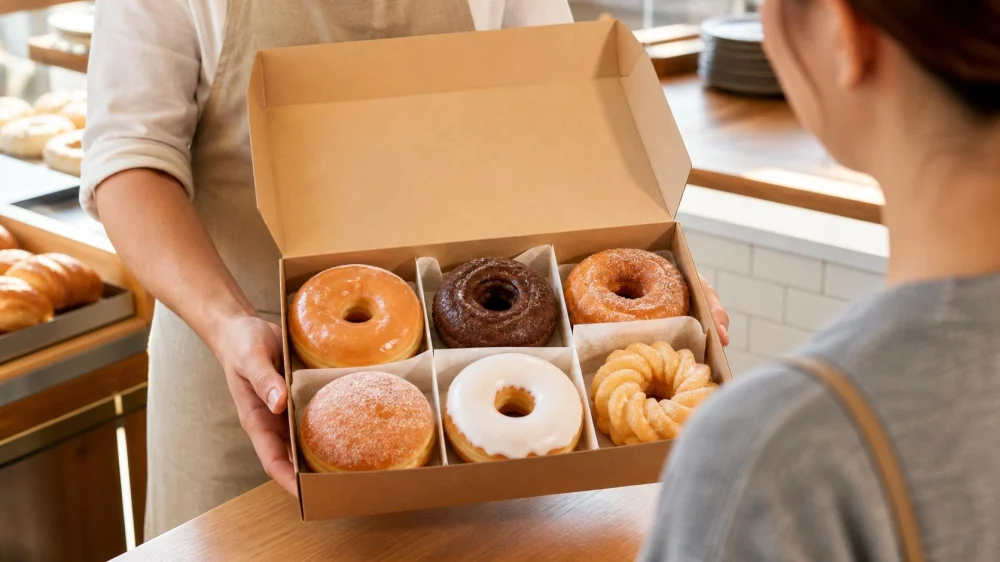
Bakery Doughnut Guide: Style, Freshness, and Carrying
A doughnut can be airy or dense, glazed or filled, yeast-raised or cake-style—and each behaves differently in a box. Choosing the right style, asking when it was finished, and arranging it correctly for the trip home preserves more of the texture the baker intended.
Quick answer
Choose yeast-raised doughnuts for a light, stretchy bite and cake doughnuts for a tighter, tender crumb. Ask which items were finished most recently and which fillings require refrigeration. Keep wet glazes, powdered finishes, and heavily topped pieces from touching. Carry the box flat in a cool vehicle and serve promptly; doughnuts usually lose their best texture faster than plain bread.

Julius Sturgis Pretzel Bakery / pretzel factory lititz pa
LititzLancaster CountyPennsylvania
219 E Main St, Lititz, PA 17543, USA
Compare common doughnut styles
Yeast-raised doughnuts depend on fermentation for their open interior and slight chew. They are often rings or filled rounds. The crust should feel thin rather than leathery, and the crumb should spring back gently.
Cake doughnuts use chemical leavening and have a closer crumb. They can carry spices and coatings well, but overmixing or age may make them dry or crumbly.
Old-fashioned styles usually have ridged or cracked surfaces that catch glaze. Crullers may be delicate and egg-rich, with a light interior. Baked doughnuts can resemble small ring cakes more than fried doughnuts. None is inherently the “correct” type; choose the texture you want.
Ask what the bakery means by its names. Regional terms and house recipes vary, and a display label may describe shape rather than dough.

L’Ami Bakery & Cafe / bakery in h mart
48-18 Northern Blvd, Long Island City, NY 11101, USA
Read freshness through texture
A fresh raised doughnut should compress gently without feeling greasy or tough. A cake doughnut should hold together while remaining tender. Glaze should suit the style: a thin shell may crack cleanly, while a soft icing may remain tacky.
Freshness cannot be judged by warmth alone. A doughnut may be room temperature but recently finished, while reheating can disguise a dry crumb for a few minutes. Ask when the batch was made and when the bakery considers it best.
Watch for unintended signs such as a rancid oil odor, wet filling leaking through the dough, excessive surface oil, foreign material, or visible contamination. Stop eating and tell the bakery if quality or safety seems wrong.
Choose fillings and finishes
Jams provide acidity and usually stay distinct from the dough. Custards and creams add richness but may require cold holding. Chocolate, nut, or seed-based fillings can be dense, so a smaller filled doughnut may feel more substantial than a plain ring.
Glaze adds a thin sweet shell; frosting adds more body; granulated sugar stays crisp only while dry; powdered sugar transfers easily; and crunchy toppings soften when they contact wet icing. Fresh fruit can release moisture during storage.
Ask whether a filled doughnut contains whole pieces, alcohol flavoring, gelatin, nuts, dairy, eggs, soy, or other ingredients relevant to your group. A flavor name alone is not a complete ingredient statement.
Build a practical assortment
For a mixed group, start with familiar plain or glazed pieces, then add a few chocolate, fruit, spice, and filled options. Count pieces only after deciding whether people are sampling halves or choosing one whole doughnut.
Keep strong flavors from overwhelming the box. Powdered doughnuts can dust every neighbor, and sticky toppings may pull away when stacked. Ask the bakery to use paper dividers or a second box when finishes conflict.
Label filled and dietary-specific items at pickup. Position matters: note a simple clockwise order, use the bakery’s insert, or add labels to the outer box without touching food. Do not rely on memory when several filled rounds look identical.
Carry the box without damage
- Check that the box closes without pressing tall toppings.
- Keep the box horizontal with a clean nonslip surface underneath.
- Place it on the vehicle floor or another level area, not on a sloped seat.
- Keep it out of direct sun and away from a heater.
- Drive directly to the destination when items require refrigeration.
- Lift from the bottom rather than squeezing the sides.
Do not seal warm doughnuts in an airtight container unless the bakery recommends it; trapped steam can dissolve glaze and soften crust. Conversely, leaving the box open in moving air dries the crumb.
Serve and store leftovers
Follow the bakery’s same-day and refrigeration instructions. Place the box away from sun, heat, pets, and cleaning products. Use clean utensils to divide pieces and keep the original label or receipt with the assortment.
Plain doughnuts may tolerate short room-temperature storage, while dairy- or egg-rich fillings can need prompt refrigeration. Do not apply a single rule to the whole box. Refrigeration can firm the dough, so ask how the bakery recommends bringing chilled items to serving texture.
Freeze only styles the baker says freeze well. Wrap pieces separately after they are fully cool, and thaw without exposing crisp toppings to condensation. Quality after freezing varies.
Ingredient and quality limits
This guide covers selection and handling, not individualized nutrition or allergy clearance. Recipes, fryer oils, shared equipment, fillings, and storage requirements vary. People with food allergies or medical dietary needs should verify ingredients and cross-contact procedures directly with the bakery. Separate packaging does not prove that an item was made in a separate environment.
Use the bakery’s time and temperature instructions for perishable fillings. If those instructions are missing, ask before leaving rather than guessing from appearance.
Frequently asked questions
Are warm doughnuts always fresher?
No. Warmth can indicate a recent batch, but freshness also depends on frying, cooling, finishing, and holding. Ask when the batch was made.
Why did the glaze disappear in the box?
Warmth and condensation can dissolve it, while contact with another doughnut can pull it away. Cool, single-layer packing helps.
Can filled doughnuts stay on the counter?
It depends on the filling and bakery process. Follow the specific storage instruction given for that item.
Should doughnuts be reheated?
Only if the bakery recommends it. Heat can improve some plain styles briefly but melt finishes or make fillings dangerously hot.
Next steps
Choose the texture you want, ask which batch is best now, confirm filling storage, and build a box whose finishes will not damage one another. Carry it flat and serve it on the bakery’s timeline. The best assortment is not the largest one—it is the one that arrives looking and tasting as intended.





 Nagoya Bakery4.0 (25 reviews)
 The Quantum Baker0.0 (0 reviews)
 Valerio's Tropical Bake Shop4.0 (43 reviews)
 Manny's Bakeshop & Restaurant4.0 (19 reviews)
 Nanding's Bakery4.0 (368 reviews)
 Aloha Sunrise Granola5.0 (5 reviews)
 Bakery Custom Cake Handoff: Design, Allergens, and Pickup
 Bread Freezing Plan: Slicing, Wrapping, and Thawing
 Pastry Gift Box Check: Variety, Allergens, and Transport
 Sourdough Loaf Pickup: Bake Time, Slicing, and Storage
 Bakery Celebration Cake Pickup: Size, Travel, and Timing
 Bakery Bread Storage: Crust, Moisture, and Freezing Guide