
Bakery Doughnut Guide: Raised, Cake, and Filled Styles
On this page
- Quick answer
- What to expect from yeast-raised doughnuts
- What to expect from cake doughnuts
- How filled doughnuts are different
- Rings, twists, fritters, and specialty shapes
- Glazes, sugars, frostings, and toppings
- Use appearance and timing wisely
- Build a balanced doughnut box
- Ask about ingredients and cross-contact
- Carry and store doughnuts carefully
- Frequently asked questions
- Conclusion and next steps
Quick answer
Choose yeast-raised doughnuts for a light, airy chew; cake doughnuts for a tighter, tender crumb; and filled doughnuts when you want a creamy, fruit, or custard center. Then consider sweetness, glaze, toppings, size, and when the box will be eaten. Ask the bakery which items need refrigeration, how fillings are identified, and what ingredient or cross-contact information is available before ordering for a group.
Bakery terms are descriptive, not universal formulas. Recipes, frying method, fermentation, size, filling, and finishing can make two doughnuts with the same name taste and feel very different.

Julius Sturgis Pretzel Bakery / pretzel factory lititz pa
LititzLancaster CountyPennsylvania
219 E Main St, Lititz, PA 17543, USA
What to expect from yeast-raised doughnuts
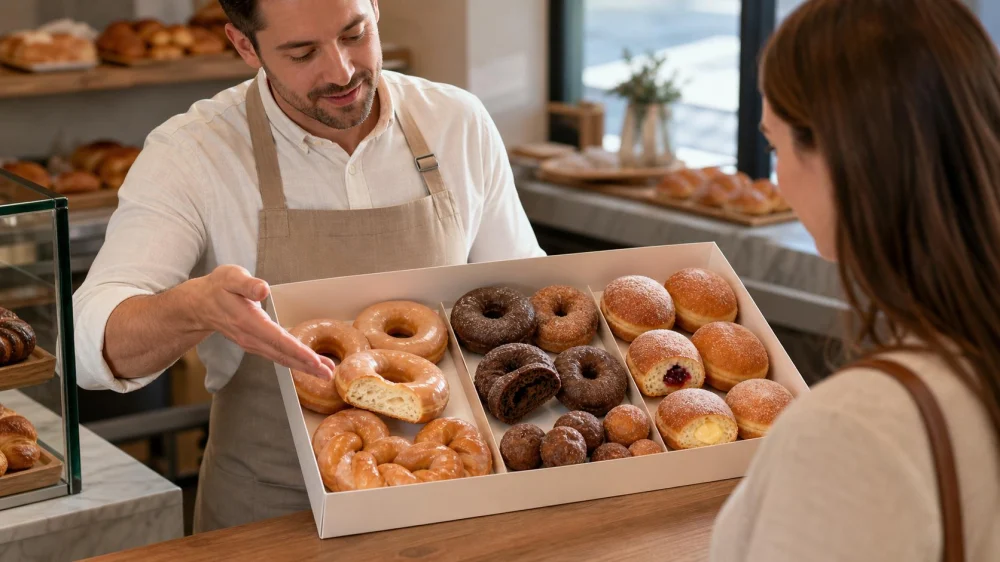
Yeast-raised dough rests and ferments before frying or baking. The interior is often airy, stretchy, and light, with larger irregular pockets. A thin glaze can settle into the surface while leaving the crumb prominent.
Raised doughnuts are appealing when you want lift and chew without the density of cake. They can compress under heavy items, so place them near the top of a box and avoid stacking elaborate toppings against them.

L’Ami Bakery & Cafe / bakery in h mart
48-18 Northern Blvd, Long Island City, NY 11101, USA
What to expect from cake doughnuts
Cake doughnuts use chemical leavening rather than yeast and usually have a closer, more crumbly or tender interior. They can support cinnamon sugar, thick glaze, crumbs, or simple icing and often feel more substantial per bite.
Plain, old-fashioned, chocolate, spice, and seasonal flavors commonly appear in this category, but names and shapes vary. Ask whether a “cruller” or “old-fashioned” item is yeast-raised or cake-style if texture matters to you.
How filled doughnuts are different
Filled doughnuts are commonly made without a center hole so jam, cream, custard, curd, chocolate, or another mixture can be injected or piped inside. The quantity and placement of filling affect every bite.
Ask how each flavor is marked, especially when several look alike. Some cream, custard, dairy, egg, or fresh-fruit fillings require refrigerated storage or a shorter serving window. Follow the bakery’s specific instructions rather than judging safety by smell or appearance.
Rings, twists, fritters, and specialty shapes
- Ring: even exposure during cooking and easy to share by tearing, though toppings can flake.
- Twist: long shape with ridges that hold glaze or sugar.
- Fritter: irregular dough with folded fruit or other pieces and crisp edges.
- Doughnut holes: small pieces useful for sampling and groups.
- Long bar: rectangular raised dough often glazed or filled.
- Specialty shape: may have varied thickness, so crispness and softness differ within one item.
Glazes, sugars, frostings, and toppings
A thin glaze adds a crisp or sticky sweet shell. Granulated or powdered sugar gives a dry finish but can shed in the box. Frosting creates a thicker layer and holds sprinkles or crumbs, while drizzles add concentrated flavor in smaller amounts.
Fresh fruit, cereal, cookies, nuts, and candy increase weight and may soften, fall off, or transfer to neighboring items. For travel, choose some simpler finishes and ask the bakery to separate fragile or allergen-sensitive products where its procedures allow.
Use appearance and timing wisely
Ask when the doughnuts were made and when the bakery expects them to taste best. A fresh raised doughnut often feels light and resilient, while a cake doughnut may remain enjoyable longer because its intended crumb is denser. Glaze condition also changes with humidity and packaging.
Appearance cannot prove safe handling. Decline items with damaged packaging, obvious contamination, off odors, or filling held outside the bakery’s stated temperature controls.
Build a balanced doughnut box
For a group, mix texture and intensity rather than ordering only the most decorated choices. A practical assortment might include:
- one or two plain or lightly sugared cake doughnuts;
- classic glazed raised rings;
- one chocolate or spice option;
- clearly identified fruit and cream-filled choices;
- a nut-free selection if the bakery can support the request;
- smaller pieces for guests who want to sample.
Confirm guest count, dietary needs, serving time, and whether the bakery recommends cutting any larger item.
Ask about ingredients and cross-contact
Doughnuts commonly contain wheat, milk, egg, and soy. Fillings and toppings may add peanuts, tree nuts, sesame, or other allergens. Shared fryers, glazing racks, utensils, displays, and prep areas can create cross-contact.
Tell staff about an allergy before ordering and ask them to check current recipes and handling procedures. A topping-free doughnut is not automatically free from the topping’s allergen, and a vegan label does not answer every allergen question.
Carry and store doughnuts carefully
Keep the bakery box flat, shaded, and away from heat. Do not place heavy bags on top. Separate very sticky, powdered, or heavily topped items with bakery-approved liners so finishes do not transfer.
Serve plain and glazed doughnuts within the bakery’s recommended window. Follow refrigeration instructions for filled items, use a covered container, and avoid repeated warming and cooling. Refrigeration can firm the crumb and dull glaze, so only refrigerate items that require it or when the bakery recommends it.
Frequently asked questions
Are all ring doughnuts yeast-raised?
No. Both yeast-raised and cake doughnuts can be shaped as rings. Ask the bakery about the dough style.
Why do filled doughnuts need extra care?
The filling changes moisture, structure, allergens, and sometimes temperature requirements. Follow the bakery’s storage and serving guidance.
Which doughnut travels best?
Simple cake and lightly glazed raised styles are often easier to transport than tall frosting, loose toppings, or soft fillings, but packaging matters.
Can I freeze bakery doughnuts?
Ask the bakery because fillings and finishes respond differently. Freeze only suitable products while fresh, wrap well, and thaw according to guidance.
Conclusion and next steps
Start with the crumb you prefer—airy raised, tender cake, or filling-focused—then choose sweetness, finish, and portion. For a box, balance simple and decorated styles and label similar fillings clearly. Ask about current ingredients, shared equipment, refrigeration, and the best serving time, then keep the box level and protected on the trip home.





 Nagoya Bakery4.0 (25 reviews)
 The Quantum Baker0.0 (0 reviews)
 Valerio's Tropical Bake Shop4.0 (43 reviews)
 Manny's Bakeshop & Restaurant4.0 (19 reviews)
 Nanding's Bakery4.0 (368 reviews)
 Aloha Sunrise Granola5.0 (5 reviews)
 Bakery Reservation Notes: Time, Party, Access, and Contact
 Bakery Menu Portion Chec: A Heavenly Delights Bakery Reader Guide
 Bakery Service Charge Check: Bill, Tips, and Group Split
 Bakery Texture Guide: A Practical US Checklist
 Bakery Cake Quote: Size, Design, Pickup, and Allergen Notes
 Bakery Bread Crumb Check: Freshness, Cutting, and Serving