
Bakery Macaron Guide: Shells, Fillings, and Freshness
Table of contents
Quick answer
A well-made French macaron has smooth, delicate shells, a small ruffled “foot,” and a filling that softens the interior without making it wet. Ask when the batch was filled, how it should be stored, and when to bring it to serving temperature. Keep the box level, protect it from heat and humidity, and confirm nut, egg, dairy, and cross-contact details.

Julius Sturgis Pretzel Bakery / pretzel factory lititz pa
LititzLancaster CountyPennsylvania
219 E Main St, Lititz, PA 17543, USA
What to look for
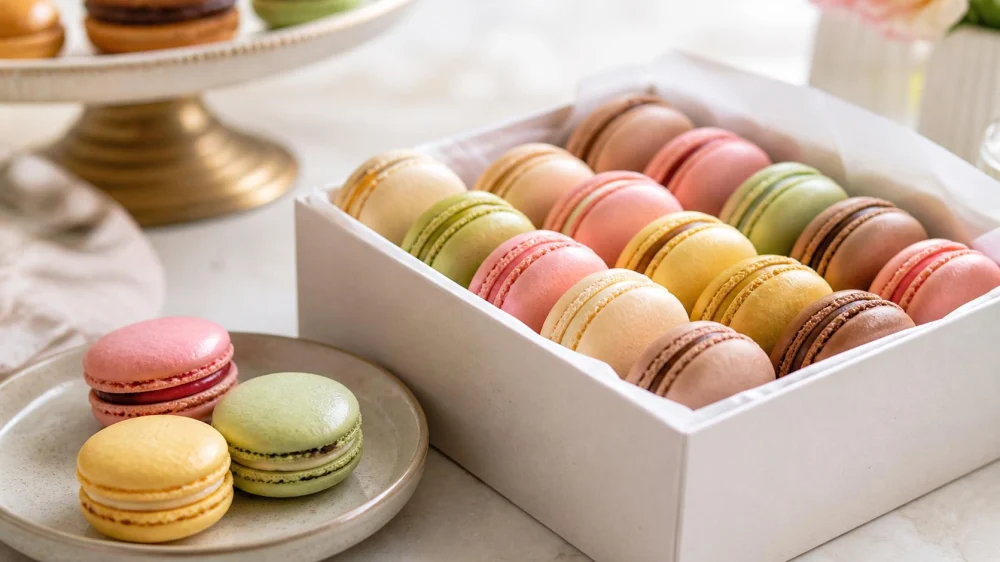
Macarons are sandwich cookies made from almond-based meringue shells and a filling. Colour and size vary by bakery, so appearance alone is not a quality score. Useful cues include:
- shells that are intact rather than crushed or leaking;
- a thin crisp exterior with a tender, slightly chewy centre;
- filling spread evenly to the edge without excessive bulging;
- flavour that tastes clear rather than only sweet;
- a box sized to prevent sliding during transport.
Hollow space, browning, or a very crisp texture may reflect recipe, age, or storage. Ask the bakery what texture it intends.
L’Ami Bakery & Cafe / bakery in h mart
48-18 Northern Blvd, Long Island City, NY 11101, USA
Choose fillings and flavours
Ganache and buttercream tend to travel more firmly than very soft curds or jams, although formulation matters. For an assortment, combine familiar flavours with one or two adventurous choices and label them clearly. Pair intensity: dark chocolate or coffee can balance sweet shells, while citrus and berry add acidity.
If the box is a gift, ask whether any filling contains alcohol, caffeine, floral extracts, or ingredients that recipients may avoid.
Carry and store them well
- Keep the box flat and shaded during the trip.
- Use an insulated bag when the bakery recommends refrigeration or the weather is hot.
- Follow the bakery’s storage window because fillings differ.
- Refrigerate perishable varieties promptly in a closed container.
- Before serving, use the bakery’s suggested tempering time so the filling is not too firm.
- Do not leave a chilled assortment at room temperature longer than the bakery or food-safety guidance allows.
Allergen questions
Traditional French macarons commonly contain almonds and egg, and fillings may contain milk, soy, other tree nuts, peanuts, wheat-containing inclusions, or sesame. A naturally flourless recipe is not automatically safe for someone with coeliac disease or wheat allergy because shared equipment and toppings can introduce cross-contact.
Ask staff to verify the current recipe, decorative elements, and handling process. When risk cannot be confirmed, choose another product.
Limitations
“Macaron” styles and storage needs vary. This guide does not establish a universal shelf life or allergen guarantee. Humidity, filling water content, packaging, and refrigeration all change texture. The bakery’s batch-specific instructions should take priority.
FAQ
Are macarons the same as macaroons?
No. French macarons are almond-meringue sandwich cookies; macaroons are usually dense coconut cookies.
Should macarons be crunchy?
The exterior may be lightly crisp, but the centre is commonly tender and chewy. Ask what the bakery intends.
Can I freeze them?
Some fillings freeze well and others do not. Use the bakery’s packaging and thawing instructions.
Why do flavours taste better later?
Resting can allow moisture and flavour to move from filling into shell, but excessive time can make the shell soggy.
Sources and evidence notes
The texture and service guidance reflects common professional pastry practice. Ingredient, refrigeration, shelf-life, and cross-contact information must be confirmed with the bakery for the specific batch.
Next steps
Ask for the flavour list, filling types, allergen details, storage window, and serving-temperature advice. Choose a snug box, carry it flat and cool, and let the cookies temper only for the recommended time.


 Nagoya Bakery4.0 (25 reviews)
 The Quantum Baker0.0 (0 reviews)
 Valerio's Tropical Bake Shop4.0 (43 reviews)
 Manny's Bakeshop & Restaurant4.0 (19 reviews)
 Nanding's Bakery4.0 (368 reviews)
 Aloha Sunrise Granola5.0 (5 reviews)
 Bakery Custom Cake Handoff: Design, Allergens, and Pickup
 Bread Freezing Plan: Slicing, Wrapping, and Thawing
 Pastry Gift Box Check: Variety, Allergens, and Transport
 Sourdough Loaf Pickup: Bake Time, Slicing, and Storage
 Bakery Celebration Cake Pickup: Size, Travel, and Timing
 Bakery Bread Storage: Crust, Moisture, and Freezing Guide