
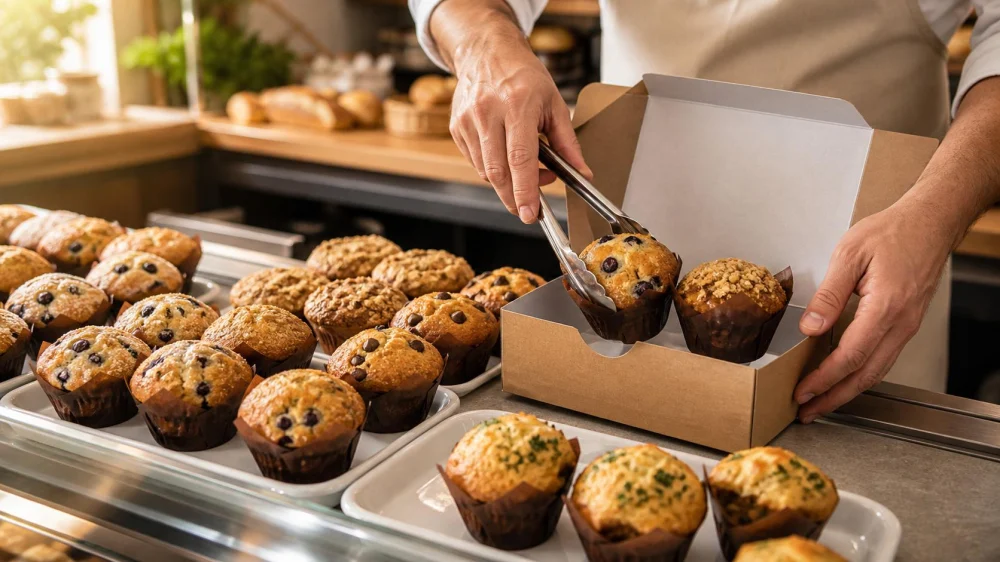
Bakery Muffin Guide: Texture, Size, and Storage
On this page
Quick answer
Choose a bakery muffin by the crumb, sweetness, mix-ins, and portion you actually want. Ask when it was baked, what allergens it contains, and whether any filling requires refrigeration. Carry muffins upright in a shallow box, store them according to bakery directions, and freeze extras early rather than letting them dry out for days.

Emilia's kitchen & Bakery / emelys bakery
East NorthportSuffolk CountyNew York
396 Larkfield Rd, East Northport, NY 11731, USA
Choose the muffin style
“Muffin” covers a wide range. A breakfast-style muffin may be lightly sweet with fruit, bran, oats, or nuts. A dessert-style muffin may be larger, sweeter, and topped with streusel, glaze, or chocolate. Savory versions can include cheese, vegetables, herbs, or meat.
Start with the intended occasion. A modest plain or fruit muffin may pair with breakfast, while a large filled muffin can function more like dessert. For a group, choose a mix only after checking dietary needs and how each flavor will be identified.

Nothing Bundt Cakes / nothing bundt cakes marlton
South PlainfieldMiddlesex CountyNew Jersey
4919 Stelton Rd, South Plainfield, NJ 07080, USA
Read texture clues
A well-made muffin generally has a tender crumb that holds together without being rubbery or gummy. The top may be soft, crisp, or crumb-covered depending on the recipe. Fruit adds moisture; bran can make the crumb hearty; nuts and seeds add crunch.
- Tall domed top: often offers more browned edge and a softer center.
- Streusel top: adds sweetness and crunch but sheds during transport.
- Filled center: can be rich and may change storage needs.
- Whole-grain crumb: may be denser without being stale.
Appearance alone cannot prove freshness. Ask rather than squeezing or opening products in the display.
Compare portion sizes
Bakery muffins can be several times the size of a small home-baked muffin. Compare actual weight or nutrition information when available, not the word “muffin.” A jumbo product can be shared or divided before serving.
- Decide whether the muffin is a snack, meal component, or dessert.
- Check calories, added sugar, sodium, and saturated fat if relevant to your needs.
- Consider pairing a smaller portion with fruit or another food.
- Cut on a clean surface rather than tearing portions in a shared box.
Nutrition needs are personal. Someone managing diabetes, kidney disease, food allergies, or another medical condition should follow their clinician's guidance.
Check ingredients and allergens
Most conventional muffins contain wheat and often milk or egg. Nuts, peanuts, soy, sesame, and other allergens may appear in batter, toppings, fillings, or shared equipment. Vegan, gluten-free, or sugar-free labels answer only specific questions and do not guarantee suitability for every diet.
- Name the allergen and ask about batter, toppings, and fillings.
- Ask whether utensils, pans, displays, and prep areas are shared.
- Keep flavors separated and labeled after purchase.
- Do not rely on visual identification for severe allergies.
Ask about freshness
Ask when the muffins were baked and how long the bakery recommends keeping them. A day-old muffin is not automatically unsafe and may be offered at a discount, but it can be drier. Cream cheese, custard, meat, or other perishable fillings may impose stricter limits.
Reject products with visible mold, damaged packaging, an unexpected off odor, or signs that a perishable filling was not kept cold. Mold can extend beyond what is visible in soft baked goods, so cutting away the spot is not a reliable solution.
Transport without crushing
Use a shallow box that keeps muffins upright. Place very soft, glazed, or crumb-topped varieties where they will not rub against the lid. Keep heavy bread and other purchases separate.
For a warm-weather trip, place muffins with perishable fillings in an insulated cooler with frozen packs and drive directly to refrigeration. Keep the package dry and prevent direct contact between food and loose ice.
Store muffins correctly
For plain muffins, follow the bakery's room-temperature directions and use a clean container that limits drying. Trapped condensation can make surfaces sticky and encourage spoilage, so cool any warm product before sealing unless the bakery says otherwise.
Refrigerate perishable-filled muffins promptly at 40°F (4°C) or below. For longer storage, freeze appropriate muffins individually wrapped inside a freezer-safe container. Label the flavor and date. Quality declines over time even while frozen.
Refresh before serving
A brief gentle warm-up can improve a plain muffin's aroma and softness. Remove non-oven-safe packaging and follow bakery directions. Split the muffin only after warming if you want to retain moisture.
- Use short microwave intervals to avoid a tough texture.
- Use moderate oven heat when restoring a crisp top.
- Check filled centers because they can become very hot.
- Do not repeatedly warm and cool a perishable product.
Important limitations
This guide provides general buying and storage information. Recipes, product temperatures, local food rules, and shelf life vary. The bakery's label and handling instructions take priority. “Fresh” is not a regulated guarantee of nutrition, allergen safety, or a particular bake time in every context.
Sources and evidence notes
- U.S. Food and Drug Administration: food allergen labeling and refrigerator-temperature guidance.
- USDA Food Safety and Inspection Service: perishable-food time and temperature recommendations.
- USDA MyPlate: context for portions and balancing grain foods with an overall eating pattern.
- The selling bakery: product-specific authority for ingredients, cross-contact, bake time, storage, and reheating.
Frequently asked questions
Is a bran muffin always a healthier choice?
No. Ingredients and portion size vary widely. Review available nutrition information and choose according to your overall needs.
Can I cut mold off a muffin and eat the rest?
No. Muffins are porous, and contamination may extend beneath the visible area. Discard the affected product and check nearby items.
Should muffins be refrigerated?
Plain muffins may be stored at room temperature for a limited period, while perishable fillings require refrigeration. Follow the bakery's specific direction.
When should I freeze extras?
Freeze them while still fresh and within the bakery's safe-storage window. Early freezing generally preserves quality better than waiting several days.
Conclusion
A useful muffin choice balances flavor, texture, portion, ingredients, and timing. Ask direct questions, protect the tops during transport, refrigerate perishable fillings, and freeze extras early. Treat the bakery's product-specific instructions as the final word rather than applying one storage rule to every muffin.




 Sidecar Doughnuts & Coffee4.0 (246 reviews)
 The Cake Parlor5.0 (3 reviews)
 Cake By Marce3.0 (58 reviews)
 Safeway Bakery3.0 (4 reviews)
 Jazzie's Sweets5.0 (1 reviews)
 Donut Plus4.0 (97 reviews)
 Why Freshly Baked Breads Are Better for Your Health
 Bakery Bread Guide: How to Choose the Right Loaf
 How to Make Bakery-Style Fresh Fruit Scones
 How to Bake Your Own Homemade Baked Alaska
 The Secret to Perfectly Flaky Pie Crusts Every Time
 How to Make Bakery-Style Eclairs at Home Like a Pastry Chef