
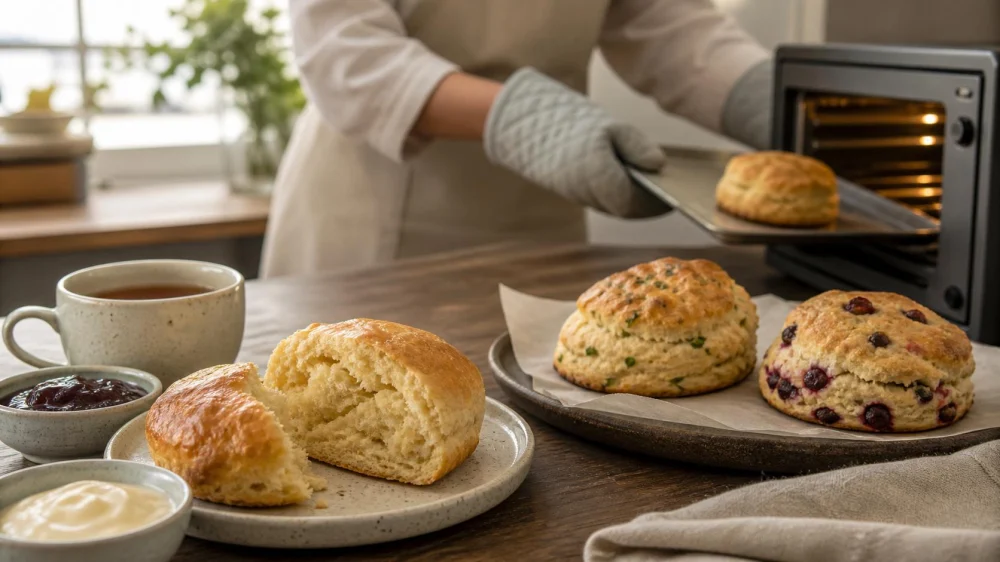
Bakery Scone Guide: Texture, Pairings, and Reheating
A good scone sits between bread, biscuit, and pastry without needing to imitate any of them. Some are tender and lightly sweet; others are layered, savory, glazed, or filled with fruit. Knowing the bakery’s style helps you choose a scone, pair it well, and warm it without turning the crumb dry.
Quick answer
Ask whether the scone is meant to be tender, flaky, cakey, or crisp-edged, then choose a flavor that fits how you will serve it. Carry glazed and savory pieces separately. For reheating, follow the bakery’s instructions and use gentle dry heat for plain scones; microwaving can soften the crust and then toughen the crumb. Store only as long and at the temperature the filling or topping allows.

Julius Sturgis Pretzel Bakery / pretzel factory lititz pa
LititzLancaster CountyPennsylvania
219 E Main St, Lititz, PA 17543, USA
Recognize different scone styles
The word “scone” covers several traditions and house interpretations. A British-style scone may be relatively plain, round, and designed for splitting with cream and jam. Many American bakery scones are triangular, richer, sweeter, and flavored throughout. Some bakers laminate the dough for visible layers, while others aim for a uniform tender crumb.
Shape does not determine quality. A rustic edge can be intentional, and an irregular fruit scone may bake differently from a plain one. Ask the bakery how it describes the texture and serving style rather than comparing every scone to one fixed standard.
Size varies widely. A large triangular scone can be multiple snack portions, while a small round scone may be intended for a breakfast set. Check the actual item instead of relying only on the name.

L’Ami Bakery & Cafe / bakery in h mart
48-18 Northern Blvd, Long Island City, NY 11101, USA
Check crumb, crust, and moisture
The crust should support the scone without becoming a hard shell. Inside, the crumb may be layered, short and tender, or softly cakey. It should not taste raw or pasty at the center. A fruit inclusion can create a moist pocket without making the entire crumb underbaked.
Common quality clues include:
- clean dairy, grain, spice, fruit, cheese, or herb aromas appropriate to the recipe;
- a crumb that breaks cleanly rather than compressing into paste;
- evenly distributed additions instead of a heavy wet layer at the bottom;
- glaze that is set enough for the intended packaging;
- no rancid, fermented, chemical, or otherwise unexpected odor.
A scone becomes drier as it sits, but reheating cannot fully restore lost moisture. Ask when the batch was baked and choose the quantity you can serve promptly.
Choose flavors and additions
Plain and lightly sweet scones leave room for butter, cream, jam, or curd. Fruit scones add acidity and moisture; chocolate adds richness; spice flavors work well with mild tea or coffee; and savory cheese or herb scones can accompany soup, eggs, or salad.
More inclusions are not always better. Large frozen fruit pieces can create wet zones, while excessive chips or nuts can interrupt the crumb. Glaze adds sweetness and moisture but makes stacking difficult. If you plan to add a sweet spread, a less-sweet base may create better balance.
Confirm whether dried fruit has been soaked, whether savory pieces contain meat, and whether glazes or fillings need refrigeration.
Pair spreads and drinks
Use the scone’s flavor as the starting point:
- Plain: butter, clotted-style cream, jam, citrus curd, tea, or coffee.
- Berry or citrus: a mild cream, light jam, or unsweetened drink.
- Chocolate or heavily glazed: little or no extra spread and a less-sweet drink.
- Cheese or herb: soup, eggs, salad, or a savory spread.
Serve spreads in small amounts first. Adding too much can hide the crumb and make the scone difficult to hold. Split gently along a natural seam when possible rather than crushing it with a dull knife.
Order and carry without damage
Tell the bakery whether the scones are for immediate eating, a meeting, a gift, or the next morning. Ask which varieties keep their texture best for that timeline and whether the shop offers warming instructions.
Pack glazed, powdered, and savory pieces separately when flavors or finishes can transfer. Keep scones in a single layer or use dividers; heavy loaves and drink containers should never sit on top. Carry the box level and away from direct sun or a vehicle heater.
For a group, label flavors on the outer packaging and keep the ingredient information. Similar-looking cheese, nut, fruit, and plain scones can be difficult to distinguish after leaving the bakery.
Reheat and store carefully
Follow the bakery’s directions because recipe, size, glaze, and filling change the result. In general, a short period of gentle oven or toaster-oven heat can refresh a plain scone’s exterior. Protect it from direct heating-element contact and check early; a few extra minutes can dry it.
A microwave warms quickly but often softens the crust and can make the crumb firm as it cools. Use only the baker’s suggested time, especially for filled or glazed pieces. Never heat a scone in packaging that is not intended for heating.
Keep room-temperature scones covered but not compressed. Refrigerate items with perishable fillings or toppings as instructed, and freeze only when the bakery says the style will hold up. Thaw wrapped pieces before a brief refresh to reduce condensation on the surface.
Ingredient and quality limits
This guide addresses bakery selection and handling, not individualized dietary advice. Scones commonly contain wheat, milk, eggs, and other allergens, but formulas and shared equipment vary. People with allergies, intolerances, or medical dietary needs should ask about full ingredients and cross-contact procedures. A vegan, gluten-free, or nut-free label should be confirmed under the bakery’s current definitions and process.
Do not use reheating to make spoiled or improperly stored food safe. If a scone contains a perishable filling, follow the bakery’s time and temperature instructions.
Frequently asked questions
Should a scone be dry?
It may be crumbly or firm enough for spreads, but it should not be stale, dusty, or unpleasantly hard. Intended textures differ by style.
Can I microwave a bakery scone?
Ask the bakery. A very short microwave warm-up may suit some pieces, but it softens crust and can overheat fillings.
Why did my glaze stick to the bag?
The glaze may not have fully set, or warmth and humidity may have softened it. A rigid box with clearance protects the finish better.
Can scones be frozen?
Many plain scones freeze acceptably, but fruit, glaze, and fillings change the result. Follow the baker’s recommendation for that recipe.
Next steps
Ask what texture the bakery intends, when the batch was baked, how each filling should be stored, and how the scone should be warmed. Choose pairings that support rather than bury the flavor, carry the box level, and buy for the serving time you actually have.






 Nagoya Bakery4.0 (25 reviews)
 The Quantum Baker0.0 (0 reviews)
 Valerio's Tropical Bake Shop4.0 (43 reviews)
 Manny's Bakeshop & Restaurant4.0 (19 reviews)
 Nanding's Bakery4.0 (368 reviews)
 Aloha Sunrise Granola5.0 (5 reviews)
 Bakery Custom Cake Handoff: Design, Allergens, and Pickup
 Bread Freezing Plan: Slicing, Wrapping, and Thawing
 Pastry Gift Box Check: Variety, Allergens, and Transport
 Sourdough Loaf Pickup: Bake Time, Slicing, and Storage
 Bakery Celebration Cake Pickup: Size, Travel, and Timing
 Bakery Bread Storage: Crust, Moisture, and Freezing Guide