
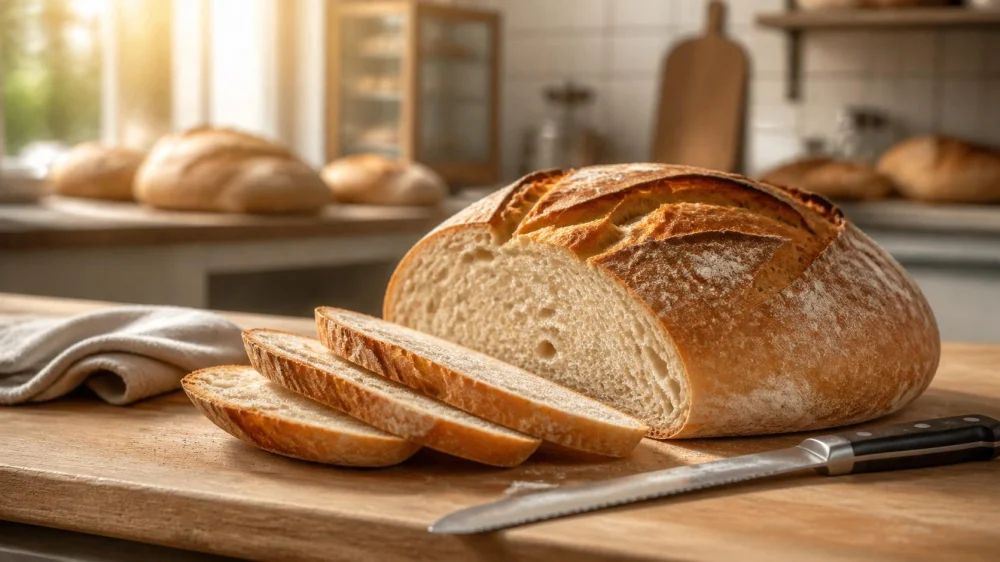
Bakery Sourdough Loaf: Crust, Crumb, Storage, and Uses
On this page
Quick answer
Choose a sourdough loaf for how you plan to eat it, not by crust colour alone. Ask when it was baked, whether the crumb is open or close, and how tangy it tastes. Keep a same-day loaf in breathable wrapping, freeze slices for longer storage, and refresh the crust briefly in a warm oven when appropriate.

La Bon Bake Shoppes / labon bakery
Franklin TownshipSomerset CountyNew Jersey
456 Elizabeth Ave Suite 4, Somerset, NJ 08873, USA
What makes one sourdough loaf different from another
Sourdough describes fermentation with a maintained culture, but it does not guarantee one flavour or texture. Flour blend, hydration, fermentation time, shaping, scoring, steam, loaf size, and bake profile affect acidity, crust thickness, crumb openness, moisture, and keeping quality. A dramatic open crumb can look appealing yet be awkward for spreads or sandwiches.
This guide is for customers buying a sourdough loaf from a bakery in the United States. It does not judge a bakery's fermentation claims or prescribe a medical diet. Recipes, allergen controls, weights, baking schedules, slicing options, and storage advice vary by business.

Best Bagel lV, NH / best bagel ii
PlaistowRockingham CountyNew Hampshire
37 Plaistow Rd Unit 8, Plaistow, NH 03865, USA
Practical checklist
- Your planned use: tearing at dinner, toast, sandwiches, soup, croutons, breadcrumbs, or freezing for later.
- The flour blend, inclusions, loaf weight, salt level, acidity, crust thickness, and whether the crumb is open or close.
- Bake date and approximate cooling time, especially if you want the bakery to slice the loaf.
- Wheat, rye, sesame, nuts, dairy, eggs, soy, and other ingredients or shared-equipment cross-contact relevant to you.
- Whole or sliced service, slice thickness, bag type, carrying conditions, and expected time before eating.
- The bakery's current storage and reheating advice rather than a generic rule from another loaf.
- Price, loaf size, preorder requirements, pickup window, and whether a specific style can sell out.
Step-by-step plan
- Describe your intended use and preferred flavour. A close, even crumb may suit sandwiches, while a robust crust and irregular crumb may suit tearing and dipping.
- Ask when the loaf was baked and allow adequate cooling before slicing. Cutting a very hot loaf can compress a crumb that is still setting.
- Confirm the ingredient list and cross-contact practices before relying on the loaf for an allergy or dietary restriction.
- Inspect the loaf without squeezing it hard. Look for an intact crust and a shape consistent with that bakery's style; colour alone does not prove quality.
- Carry it where it will not be crushed or trapped beside hot, wet, or strongly scented foods.
- For short storage, follow the bakery's wrapping guidance. Avoid sealing a still-warm loaf in plastic because trapped moisture softens the crust.
- For longer storage, slice once fully cool, wrap portions well, label the date, freeze, and remove only what you need. Refresh or toast according to the bakery's advice.
If you want the same loaf again, note its exact name, flour or inclusion style, bake day, size, slicing choice, tang, crust, crumb, and how it performed for your intended use. Reconfirm availability and ingredients because bakery schedules and formulas can change.
Limits and important notes
A dark crust is not automatically burnt, and a pale crust is not automatically underbaked; style and flour matter. Large holes do not prove superior fermentation. Sourdough is generally made with gluten-containing grain unless a bakery explicitly identifies and controls a different recipe. Fermentation does not make an ordinary wheat loaf safe for coeliac disease.
Ask bakery staff when an ingredient, allergen, storage, or bake-time detail affects safety. Do not eat bread with visible mould, an unexpectedly rotten odour, or contamination from damaged packaging. Seek emergency help for breathing difficulty, throat tightness, faintness, or rapidly spreading swelling after eating.
Frequently asked questions
Should a bakery slice a fresh sourdough loaf?
Only after it has cooled enough for the crumb to set. Ask the bakery whether that day's loaf is ready for its slicer.
Why did the crust soften overnight?
Moisture moves from crumb to crust and can be trapped by wrapping. The bakery may recommend brief oven refreshing.
Is a very open crumb always better?
No. Open crumb is one style and may be inconvenient for butter, fillings, or compact sandwiches.
Can I refrigerate sourdough bread?
Refrigeration can speed staling in many breads. Ask the bakery and consider freezing well-wrapped portions for longer storage.
Does sourdough contain less gluten?
Fermentation changes dough, but a wheat or rye sourdough still contains gluten and is not automatically suitable for gluten-related medical needs.
Sources and evidence
Use the bakery's current product description, ingredient and allergen information, bake schedule, loaf weight, and storage directions. General bread-science principles explain cooling, moisture migration, staling, and freezing, but the actual formula and bake determine how a particular loaf behaves.
Conclusion and next steps
Match the loaf's crumb and crust to the job, confirm its bake time and ingredients, and let it cool before slicing. Keep only the near-term portion at room temperature under the bakery's guidance and freeze the rest in labelled portions. That simple plan protects both texture and value.






 Main Street Donuts4.0 (150 reviews)
 William Greenberg Desserts4.0 (37 reviews)
 Cinnabon4.0 (7 reviews)
 Kroger Clackamas Bakery3.0 (26 reviews)
 Liberated Foods LLC5.0 (6 reviews)
 Cupcake Creations at Home5.0 (2 reviews)
 The Secret to Making a Soft and Fluffy Cake Every Time
 How to Create the Perfect Bakery-Style Fruit Galette
 How to Make Bakery-Style Lemon Cheesecake with a Zesty Flavor
 How to Make the Best Homemade Cherry Galette – Easy Baking Guide
 Bakery-Style Peach Cobbler Recipe That Everyone Will Love
 The Best Bakery Breads for Toast: A Guide for the Perfect Morning