Gluten-Free Bakery Order: Ask About Ingredients and Process
On this page
Quick answer
For celiac disease or another medical need, ask whether the bakery makes a verified gluten-free claim for the exact item and how it controls flour dust, shared mixers, pans, ovens, cooling racks, counters, utensils, fryers, display cases, storage, and service. Check every filling, frosting, topping, decoration, release spray, and packaged ingredient. “Wheat-free,” “flourless,” or “made with gluten-free ingredients” may not describe the finished product or cross-contact controls.
Julius Sturgis Pretzel Bakery / pretzel factory lititz pa
LititzLancaster CountyPennsylvania
219 E Main St, Lititz, PA 17543, USA
Understand the claim
FDA defines voluntary “gluten-free” claims on packaged food: qualifying food must meet ingredient conditions and contain less than 20 parts per million of gluten. FDA recommends restaurant gluten-free claims be consistent with that definition, but bakery items served after an order may not come with a package label.
Ask what the bakery means by its exact wording, whether the item is made in a dedicated facility or shared kitchen, whether it is tested or certified, and how current records support the claim. A certification logo has its own standard; verify the program rather than relying on appearance.
L’Ami Bakery & Cafe / bakery in h mart
48-18 Northern Blvd, Long Island City, NY 11101, USA
Check every ingredient
- Flours, oats, starches, malt, flavorings, extracts, and spice blends
- Chocolate, sprinkles, decorations, food colors, and edible images
- Fillings, custards, jams, cream cheese, frostings, and glazes
- Nuts, seeds, coconut, dried fruit, and candy mix-ins
- Pan release, dusting material, crumbs, and finishing powders
- Packaging and labels from all suppliers, including seasonal substitutions
Oats require particular verification because growing, transport, and processing can introduce wheat, rye, or barley. Ingredients and suppliers change, so read source labels for each order.
Ask about the bakery process
- Where and when are gluten-free items mixed and shaped?
- Are flour dust and airborne particles present in that space?
- Are mixers, bowls, scales, pans, mats, racks, brushes, fryers, and utensils dedicated or validated as clean?
- How are ingredients and finished products covered, labelled, and stored?
- Are ovens shared, and how are items protected before, during, and after baking?
- How does staff prevent display-case, knife, tong, glove, and packaging mix-ups?
- Who verifies the order at handoff?
A shared commercial kitchen may or may not have adequate controls. Ask for facts and compare them with the individual's clinical plan.
Place the order
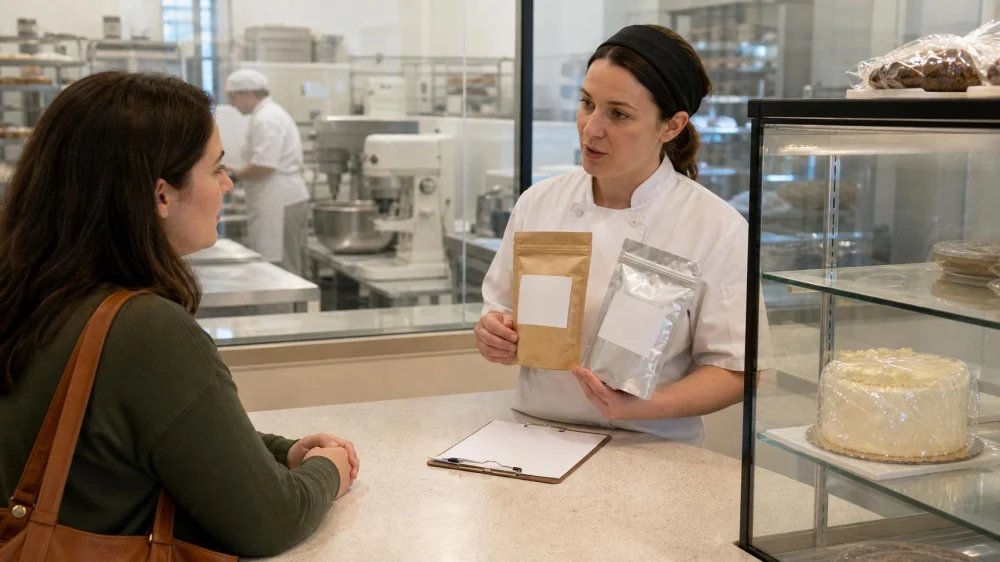
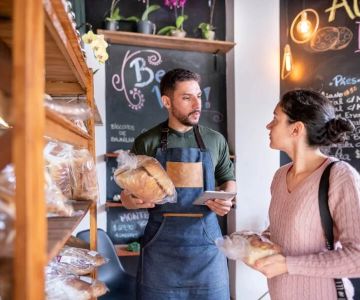
Order directly with a knowledgeable staff member outside rush time. State celiac disease or the medical reason, not only “gluten-free preference.” Keep the item simple, get the agreed process in writing, and ask that the order be wrapped, labelled, and stored separately. At pickup, confirm the name, item, label, seal, and absence of unapproved decorations before leaving.
If staff are uncertain or the process does not meet your needs, choose a sealed, clearly labelled product or another bakery. Do not ask staff to improvise a medical-safety protocol during a busy service.
Gluten-free checklist
- Exact claim and its basis understood
- Current labels checked for every component
- Oats, malt, flour dust, and substitutions discussed
- Mixing, pans, ovens, racks, and storage reviewed
- Display and service cross-contact addressed
- Order marked and wrapped separately
- Final item verified at pickup
- Personal medical plan and backup choice ready
Limitations
“Gluten-free” is not the same as allergen-free, dairy-free, vegan, or low carbohydrate. Celiac disease, wheat allergy, and non-celiac gluten sensitivity are different conditions. An FDA threshold is a regulatory definition, not an instruction to estimate safe exposure at a counter. Individual medical advice comes from a qualified clinician.
FAQ
Is flourless cake gluten-free?
Not automatically. Other ingredients and the process can contain or contact gluten.
Can a shared oven be used?
Practices vary. Ask how items are protected and how the bakery substantiates its finished-product claim.
Are oats naturally gluten-free?
Oats do not inherently contain wheat gluten, but cross-contact is common. Look for appropriate gluten-free sourcing.
Does wheat-free mean safe for celiac disease?
No. Rye, barley, malt, and cross-contact also matter.
What if the decoration changes?
Recheck every added component. A last-minute topper or sprinkle can change the answer.
Evidence notes
FDA's gluten-free labeling rule defines qualifying packaged foods and uses a limit below 20 ppm; FDA also recommends restaurant menu claims be consistent with that definition. Its guidance describes cross-contact through shared production equipment. See FDA gluten and food labeling guidance and FDA gluten-free Q&A.
Conclusion
A gluten-free bakery order depends on the finished product, not only a flour choice. Verify the claim, labels, shared process, storage, and final handoff, and decline the order when the bakery cannot explain its controls.


 Nagoya Bakery4.0 (25 reviews)
 The Quantum Baker0.0 (0 reviews)
 Valerio's Tropical Bake Shop4.0 (43 reviews)
 Manny's Bakeshop & Restaurant4.0 (19 reviews)
 Nanding's Bakery4.0 (368 reviews)
 Aloha Sunrise Granola5.0 (5 reviews)
 Bakery Custom Cake Handoff: Design, Allergens, and Pickup
 Bread Freezing Plan: Slicing, Wrapping, and Thawing
 Pastry Gift Box Check: Variety, Allergens, and Transport
 Sourdough Loaf Pickup: Bake Time, Slicing, and Storage
 Bakery Celebration Cake Pickup: Size, Travel, and Timing
 Bakery Bread Storage: Crust, Moisture, and Freezing Guide