
A Cozy Kitchen Guide to Bakery Muffins Without Special Tools
- Why Muffin Tins Are Not Required for Great Muffins #no-muffin-tin
- Best Kitchen Alternatives for Baking Muffins #alternatives
- Perfect Batter Technique for Bakery Texture #batter-technique
- Temperature and Oven Tricks for Rising Muffins #oven-tricks
- Creative Shapes and Containers for Baking #creative-methods
- Real Home Baker Story and Experiment #real-story
- Common Mistakes That Ruin Muffins #mistakes
- Flavor Variations for Bakery-Style Results #flavors
- Storage and Freshness Tips #storage
- Final Baking Strategy for Consistent Results #strategy
Why Muffin Tins Are Not Required for Great Muffins
Breaking the traditional baking rule
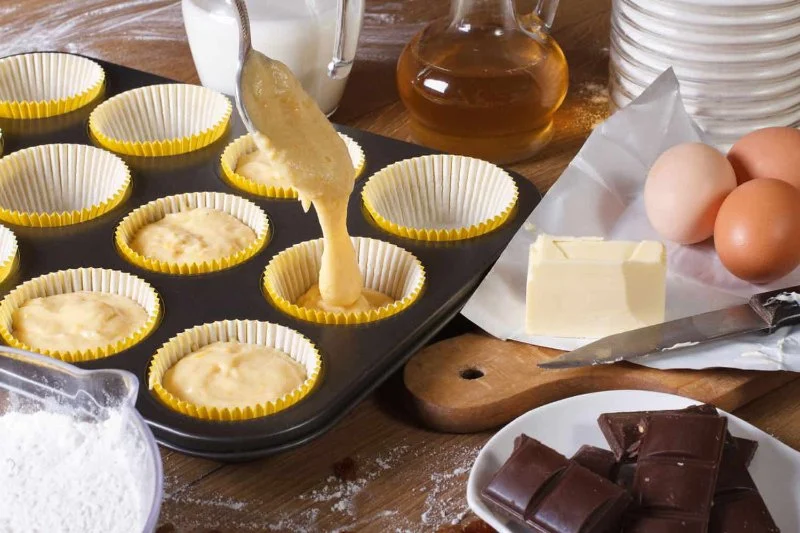
Learning how to make bakery-style muffins without a muffin tin starts with a simple realization: professional bakery muffins don’t rely on one specific pan. What matters most is batter structure, heat control, and moisture balance.
Many home bakers assume a muffin tin is essential, but in reality, it only helps shape consistency—not flavor or texture.

Julius Sturgis Pretzel Bakery / pretzel factory lititz pa
LititzLancaster CountyPennsylvania
219 E Main St, Lititz, PA 17543, USA
What actually defines bakery-quality muffins
Bakery-style muffins are defined by their domed tops, moist crumb, and slightly crisp edges. These characteristics come from technique rather than equipment.

L’Ami Bakery & Cafe / bakery in h mart
48-18 Northern Blvd, Long Island City, NY 11101, USA
Best Kitchen Alternatives for Baking Muffins
Everyday items that work surprisingly well
If you don’t have a muffin tin, you can still bake muffins using oven-safe ramekins, ceramic cups, or even folded parchment molds. These substitutes maintain structure while allowing heat circulation.
This approach is widely used in small cafés that prioritize flexibility over expensive baking equipment.
Why spacing matters in alternative containers
When baking muffins without a muffin pan, spacing becomes important. Containers should be placed with enough room for heat to circulate evenly.
Perfect Batter Technique for Bakery Texture
The secret behind fluffy muffins
The key to easy muffin recipes that taste bakery-level lies in minimal mixing. Overmixing activates gluten, which leads to dense muffins instead of soft ones.
A good rule is to stop mixing as soon as dry and wet ingredients combine, even if small lumps remain.
Ingredient temperature consistency
Room-temperature ingredients help create a smoother batter and improve rise during baking.
Temperature and Oven Tricks for Rising Muffins
High-heat start method
One of the most effective muffin batter techniques is starting at a high temperature for the first 5–7 minutes, then lowering it. This creates the signature bakery dome.
The sudden heat expansion pushes the batter upward before it sets.
Why oven positioning matters
Placing muffins in the center rack ensures even heat distribution, preventing uneven browning.
Creative Shapes and Containers for Baking
Improvised baking tools that work
In many home kitchens, baking muffins in cups or ramekins is a common workaround. Silicone molds and even parchment paper molds can also be used effectively.
These methods are especially helpful for those exploring no muffin pan baking method techniques.
A café-inspired approach
Some boutique bakeries actually use individual ceramic cups to create rustic, handcrafted muffin presentations that customers love.
Real Home Baker Story and Experiment
A weekend baking experiment that went viral
A home baker in Chicago shared her attempt to recreate bakery muffins without equipment during a snowstorm weekend. She used coffee mugs and parchment liners instead of a muffin tin.
The result surprised her—muffins turned out taller and softer than expected, proving that technique outweighs tools.
Her experiment became popular online because it challenged the idea that baking requires expensive equipment.
Common Mistakes That Ruin Muffins
Overmixing the batter
One of the biggest mistakes in homemade muffin baking hacks is overmixing, which leads to tough and rubbery textures.
Incorrect baking temperature
Too low a temperature prevents proper rising, while too high burns the exterior before the inside cooks.
Flavor Variations for Bakery-Style Results
Simple upgrades that change everything
Adding ingredients like blueberries, chocolate chips, or lemon zest can elevate basic muffins into bakery-quality treats.
The balance between sweetness and moisture is key to maintaining structure.
Storage and Freshness Tips
Keeping muffins soft longer
Proper storage ensures muffins stay fresh for days. Airtight containers help preserve moisture and prevent dryness.
Reheating muffins briefly in the oven can restore their original softness.
Final Baking Strategy for Consistent Results
Building a repeatable baking routine
The best results come from consistency in measurements, mixing technique, and baking temperature control.
Once you master these basics, making bakery-style muffins without a muffin tin becomes a simple and enjoyable routine.
For home bakers looking to explore more professional baking methods, ingredient guides, and kitchen-tested tools,
With the right technique, even the simplest kitchen setup can produce muffins that rival professional bakeries in taste, texture, and appearance.





 Nagoya Bakery4.0 (25 reviews)
 The Quantum Baker0.0 (0 reviews)
 Valerio's Tropical Bake Shop4.0 (43 reviews)
 Manny's Bakeshop & Restaurant4.0 (19 reviews)
 Nanding's Bakery4.0 (368 reviews)
 Aloha Sunrise Granola5.0 (5 reviews)
 Bakery Custom Cake Handoff: Design, Allergens, and Pickup
 Bread Freezing Plan: Slicing, Wrapping, and Thawing
 Pastry Gift Box Check: Variety, Allergens, and Transport
 Sourdough Loaf Pickup: Bake Time, Slicing, and Storage
 Bakery Celebration Cake Pickup: Size, Travel, and Timing
 Bakery Bread Storage: Crust, Moisture, and Freezing Guide