
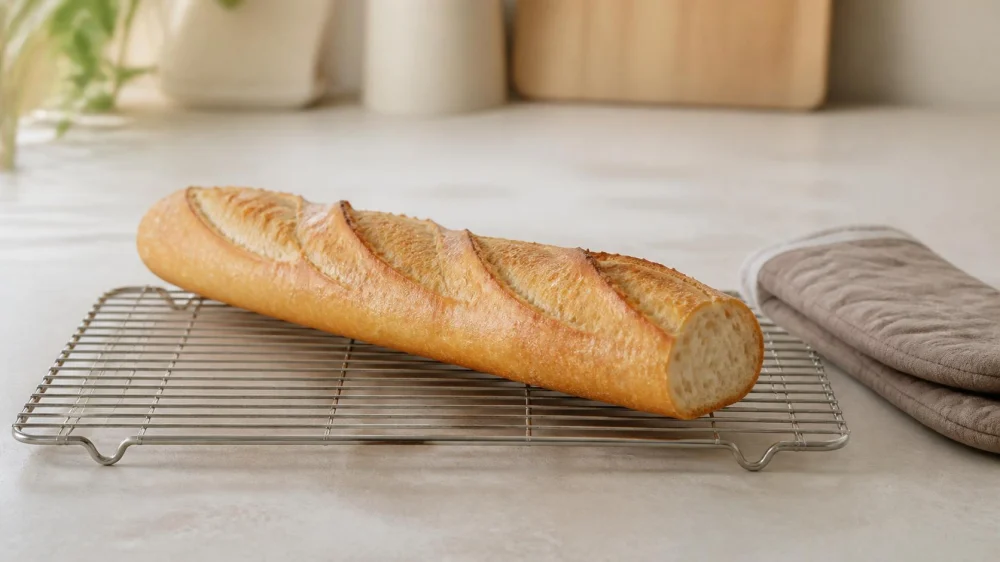
How to Refresh a Bakery Baguette Without Drying It Out
On this page
Quick answer
A bakery baguette is best refreshed with brief, even oven heat rather than a long bake or repeated microwaving. Check whether the loaf is merely stale or actually spoiled, lightly address surface dryness only when appropriate, warm just what you will serve, and let steam escape before cutting. Results depend on the loaf, storage history, and your oven.

Violette Gluten Free Bakery / violette bakers
CambridgeMiddlesex CountyMassachusetts
1782 Massachusetts Ave, Cambridge, MA 02140, USA
What refreshing can and cannot fix
Refreshing uses heat to make the crust feel crisper and the crumb feel softer for a short time. It can improve a sound loaf that has lost its just-baked texture, but it cannot reverse mold, contamination, severe freezer damage, or flavor deterioration. The effect is temporary because moisture continues moving as the bread cools.
This guide is for customers in the United States handling a plain bakery baguette at home. Enriched, filled, gluten-free, par-baked, frozen, or unusually large loaves may need different treatment. Follow the bakery's storage and reheating directions when provided, and check the appliance manual before adding water or using special modes.

AshleysSweetTreatsInc. / ashley sweet treats
Mount VernonWestchester CountyNew York
28 W Sandford Blvd, Mt Vernon, NY 10550, USA
Check the loaf before reheating
- Look for mold, unusual discoloration, off odors, damp patches, or contamination; discard the loaf when safety is uncertain.
- Identify whether the baguette is from today, stored overnight, refrigerated, or frozen, because each condition changes timing.
- Check whether the loaf is whole or cut; exposed crumb loses moisture faster and can harden sooner.
- Decide how much will be eaten now. Reheating the same bread repeatedly usually reduces quality.
- Use a clean sheet pan or rack and confirm the oven is fully preheated before the loaf goes in.
- Plan the rest of the meal so the bread can be served soon after warming rather than waiting uncovered.
- Keep filled breads separate and follow their ingredient-specific temperature and storage guidance.
A practical oven-refreshing method
- Preheat the oven to a moderate temperature according to the bakery's advice or the appliance manual; avoid guessing with maximum heat.
- For a sound but dry whole baguette, apply only a very light film of water to the exterior if the bakery recommends it. Do not soak the cut crumb.
- Place the loaf where air and heat can circulate evenly. Keep it away from heating elements and combustible paper not rated for the oven.
- Warm it briefly, checking early. The goal is a crisp exterior and warm crumb, not a deeply rebaked loaf.
- Remove the baguette with dry oven mitts and rest it on a rack for a few minutes so surface steam can escape.
- Cut with a stable board and a suitable bread knife, keeping fingers clear of the blade and hot crust.
- Serve promptly. Cool unused bread fully before storing it again, and avoid sealing warm bread where condensation will collect.
If you buy the same loaf often, note its size, starting condition, oven setting, warming time, and result. That small record is more useful than copying a fixed time from a different oven or baguette. Confirm the bakery's directions again when the recipe, size, packaging, or storage method changes.
Storage, safety, and quality limits
A microwave may soften bread briefly but often leaves crust chewy and can create very hot spots. A toaster oven or air fryer can brown small pieces quickly, so follow the appliance instructions and watch closely. Never heat bread in plastic or packaging unless it is explicitly labeled for that use. Do not taste bread to test suspected mold or spoilage.
Discard bread with visible mold or an unexplained off odor; removing one affected area does not reliably make the rest suitable. Ask the bakery about ingredients and shared equipment when allergies matter. For filled or potentially hazardous bakery products, use the seller's current refrigeration and reheating guidance rather than this plain-bread method.
Frequently asked questions
Should I wet a baguette before reheating it?
A very light exterior moisture step can help some dry, whole loaves, but it is not universal. Follow bakery or recipe guidance and never soak the crumb.
Why did the crust become too hard?
The oven may have been too hot, the loaf may have stayed in too long, or the bread may already have been very dry. Check earlier next time.
Can I refresh only half a baguette?
Yes. Warm only the portion you expect to eat and protect the exposed cut face from excessive drying.
Is refrigeration the best way to store a baguette?
Not always. Refrigeration can accelerate some staling changes, while freezing may suit longer storage. Use the bakery's advice for that loaf.
Can a refreshed baguette be reheated again?
It can be warmed again if it was handled safely, but repeated heating generally worsens texture. Smaller planned portions are usually better.
Sources and evidence
Use the bakery's current label or staff guidance for ingredients, storage, and reheating, plus the oven manufacturer's instructions for rack position and safe operation. General baking practice supports short reheating, controlled moisture, and prompt serving, but the actual loaf and appliance determine the result.
Conclusion and next steps
Inspect the baguette first, warm only the amount you will serve, use moderate oven heat, and check early. Rest it briefly before cutting and enjoy it promptly. If the loaf is moldy, smells wrong, contains a temperature-sensitive filling, or comes with specific bakery directions, choose safety and product-specific guidance over a generic texture fix.






 Main Street Donuts4.0 (150 reviews)
 William Greenberg Desserts4.0 (37 reviews)
 Cinnabon4.0 (7 reviews)
 Kroger Clackamas Bakery3.0 (26 reviews)
 Liberated Foods LLC5.0 (6 reviews)
 Cupcake Creations at Home5.0 (2 reviews)
 The Secret to Making a Soft and Fluffy Cake Every Time
 How to Create the Perfect Bakery-Style Fruit Galette
 How to Make Bakery-Style Lemon Cheesecake with a Zesty Flavor
 How to Make the Best Homemade Cherry Galette – Easy Baking Guide
 Bakery-Style Peach Cobbler Recipe That Everyone Will Love
 The Best Bakery Breads for Toast: A Guide for the Perfect Morning