
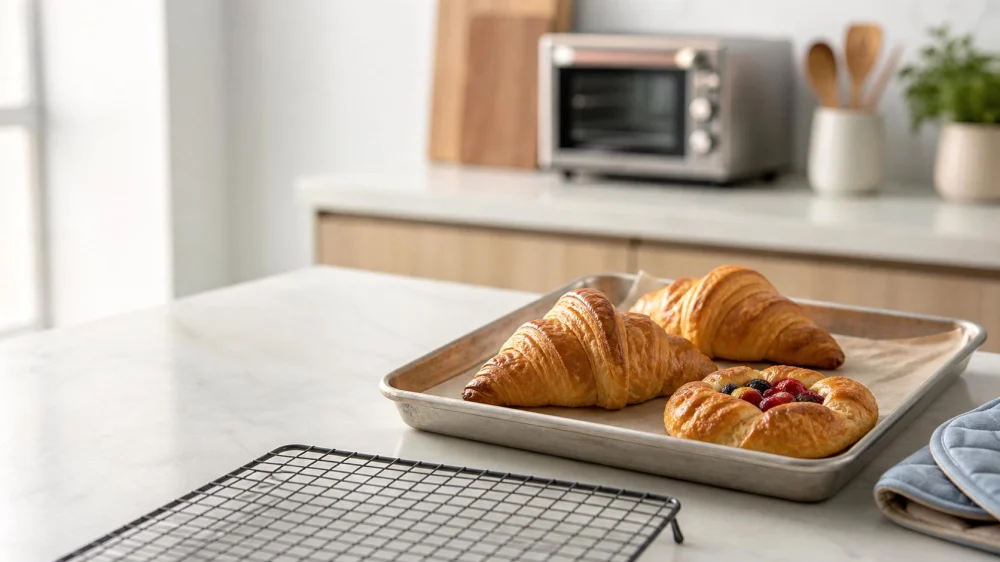
How to Reheat Bakery Pastries Without Ruining Them
On this page
Quick answer
For most plain croissants, Danish pastries and turnovers, use moderate dry oven heat on a tray and check early; this restores a crisp exterior more evenly than a microwave. Protect exposed icing or delicate toppings, and use lower heat for filled pastries. Follow the bakery’s instructions first, refrigerate perishable fillings promptly, and never use reheating to make improperly stored food safe.
Bova's Bakery / bova's bakery boston ma
BostonSuffolk CountyMassachusetts
134 Salem St, Boston, MA 02113, USA
Why pastry texture changes
Pastry staling is a set of moisture and starch changes that can make baked goods firm, leathery or soggy even before they spoil. Moisture moves from fillings into crusts, exposed surfaces dry, and cold storage can change starch texture. Gentle heat can improve eating quality, but it cannot return every pastry to its original state.
Layered pastry relies on thin crisp sheets separated by fat and air. Too much steam softens those layers; excessive heat melts icing, scorches sugar, dries crumb and overheats filling before the center is ready.
Before reheating
- Identify the filling. Plain butter pastry behaves differently from custard, cream cheese, meat, fruit or chocolate filling.
- Check storage history. Do not reheat food left out beyond authoritative safety guidance or stored under uncertain conditions.
- Read bakery instructions. Packaging or staff advice should override a generic method.
- Remove unsuitable packaging. Never heat plastic, coated paper, foil or decorative picks unless explicitly rated for the appliance.
- Let the appliance preheat. Stable heat makes timing more predictable.
- Reheat only what you will serve. Repeated heat-and-cool cycles reduce quality and complicate safe handling.
Best for oven reheating: plain laminated pastries, scones, biscuits and many fruit turnovers. Not ideal without specific instructions: whipped-cream items, cold-set desserts, heavily glazed pastries or products with unknown fillings.
A reliable oven or toaster-oven method
- Place a rack near the center and preheat to a moderate temperature recommended by the bakery or product instructions.
- Set pastries in a single layer on a clean sheet pan or suitable rack with room for air movement.
- Loosely shield dark edges or toppings with foil if they brown faster, keeping foil away from heating elements.
- Warm in short intervals and inspect frequently. Size, filling, starting temperature and appliance calibration change the time.
- For perishable filled products, verify safe internal heating according to authoritative food-safety guidance rather than judging only the crust.
- Rest briefly on a rack so steam can escape, then serve when the filling will not burn the mouth.
A toaster oven is efficient for one or two pieces, but its elements sit close to the food. Watch sugar, icing and parchment clearances carefully and follow the appliance manual.
Adjust by pastry type
Croissants and laminated Danish pastry
Use dry, moderate heat and a short rest on a rack. Avoid sealing them in foil unless preventing over-browning, because trapped steam softens the crust.
Scones and biscuits
Warm gently. A light foil cover can reduce surface drying, but uncover briefly if you prefer a firmer exterior. Serve added butter or cream separately.
Fruit turnovers and hand pies
Use lower, steadier heat so the center warms before the edges darken. Fruit filling can become much hotter than the crust; rest and test cautiously.
Cinnamon rolls and iced buns
Ask whether icing should be removed, added later or protected. An oven can dry soft dough, while a carefully controlled microwave may better suit a single soft roll.
Custard, cream or cheese-filled pastries
These require refrigeration and handling based on the specific product. Some are designed to be eaten cold and should not be reheated. Contact the bakery when instructions are unclear.
When a microwave helps—and when it does not
A microwave heats water quickly and can soften a roll, but it does not crisp pastry. It may make laminated dough chewy, create hot filling pockets and melt icing. Use reduced power and short intervals only when the product instructions support it.
- Use a microwave-safe plate, not a bakery box or foil liner.
- Heat one piece at a time for better control.
- Rotate and rest the pastry so heat redistributes.
- Check filling temperature carefully before serving to a child.
- Consider a short oven finish only if safe handling and product instructions permit it.
Food-safety boundaries
Reheating does not reliably remove toxins that may form during improper storage. Discard pastries with mould, damaged packaging, unexplained odour, pest contact or unknown time at room temperature. Do not taste food to determine whether it is safe.
Keep perishable fillings refrigerated at safe temperatures, and follow official guidance for holding, reheating and leftovers. People who are pregnant, older, very young or immunocompromised may need extra caution with certain fillings and storage histories.
Sources and evidence notes
This guide reflects general baking science, appliance safety and food-handling principles. Exact temperature and time are intentionally not universal because pastry size, formula, filling, storage and equipment differ. Bakery directions, appliance manuals and official food-safety guidance take priority.
Frequently asked questions
Should I spray pastries with water?
Not routinely. Water can soften crisp layers and spot icing. Use only when a trusted recipe or bakery specifically recommends it for that product.
Can I reheat pastries in an air fryer?
Possibly, if the appliance and pastry instructions allow it. Strong moving heat can scorch sugar or blow parchment, so use conservative settings and watch closely.
Why did my croissant turn greasy?
Excess heat or long warming can melt and release fat before the structure crisps. Use moderate heat and shorter checks.
Can I reheat from frozen?
Follow the bakery’s freezing and reheating directions. Some items reheat well from frozen; filled products may need controlled thawing for even, safe heating.
How many times can I reheat a pastry?
For quality and handling simplicity, warm only the portion you will eat. Follow official leftover guidance for perishable fillings.
Conclusion and next steps
Start by identifying the pastry and filling, then use the bakery’s directions. For a plain crisp pastry, choose moderate dry heat, check early and rest on a rack. For soft, iced or perishable-filled items, adjust the method or keep them cold. Good reheating preserves texture; safe storage determines whether the pastry should be eaten at all.






 Sweet Don Don's Fudge and Confections0.0 (0 reviews)
 Fresh Baguette4.0 (196 reviews)
 Cham Bakery4.0 (75 reviews)
 Kim's Orient Express4.0 (260 reviews)
 Cupcakes and Curiosities4.0 (88 reviews)
 NY Bagel Fullerton4.0 (122 reviews)
 The Best Bakery Breads to Serve with Stew or Chili
 How to Make Bakery-Style Banana Bread with a Perfectly Moist Texture
 How to Make Bakery-Style Croissants with Puff Pastry
 How to Create Beautiful Cake Layers for Any Celebration
 How to Make Bakery-Style Peach Cobbler with a Crispy Topping
 Top Bakery Trends to Watch in 2025 | Innovative Baking Insights