
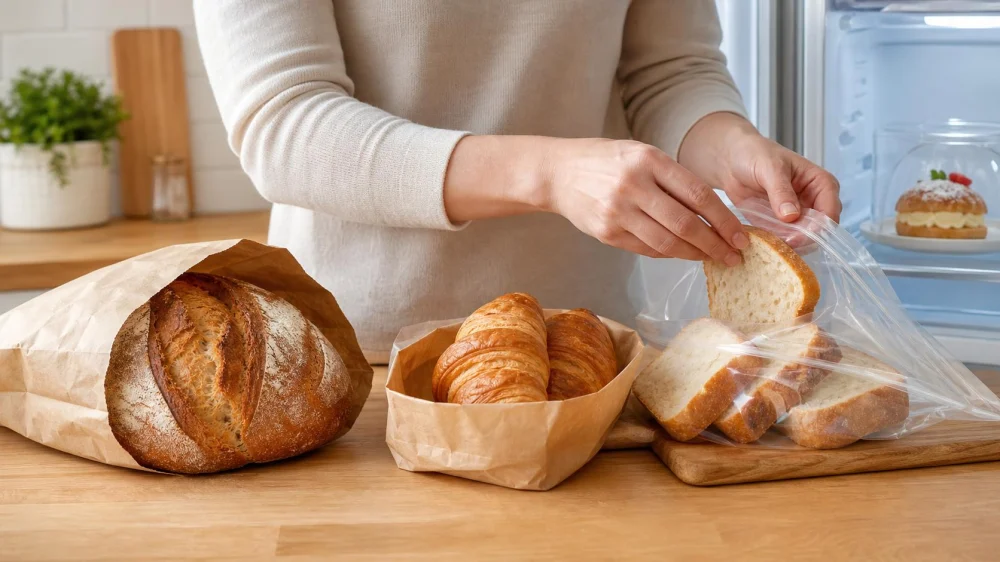
How to Store Bakery Bread and Pastries for Freshness
On this page
- Quick answer
- Freshness versus food safety
- Sort bakery items before storing
- Store bread and rolls
- Store crisp and soft pastries
- Handle cream-filled and refrigerated items
- Freeze bakery items well
- Refresh texture before serving
- A practical storage checklist
- Limitations and discard signs
- Frequently asked questions
- Sources and evidence notes
- Next steps
Quick answer
Store plain bread and rolls at room temperature in packaging that limits drying, and freeze what you will not eat soon. Keep crisp pastries loosely protected until serving so trapped moisture does not soften them. Refrigerate bakery items labeled “keep refrigerated,” especially those with custard, cream, cheesecake, or cream cheese components. For every item, the bakery’s label and instructions take priority.

Julius Sturgis Pretzel Bakery / pretzel factory lititz pa
LititzLancaster CountyPennsylvania
219 E Main St, Lititz, PA 17543, USA
Freshness versus food safety
Freshness storage is the way a food is wrapped and held to preserve texture and flavor; it is not the same as safe storage, which controls conditions that can allow harmful microorganisms to grow.
A dry loaf becoming firm is usually a quality issue. A cream-filled pastry left warm for too long can be a safety issue even when it looks and smells normal. Identify which problem you are managing before choosing the counter, refrigerator, or freezer.
L’Ami Bakery & Cafe / bakery in h mart
48-18 Northern Blvd, Long Island City, NY 11101, USA
Sort bakery items before storing
Do not put the entire bakery box in one storage category. Separate items using these practical groups:
- Plain bread and rolls: baguettes, sandwich loaves, dinner rolls, and unfilled buns.
- Dry or crisp pastries: croissants, palmiers, and similar laminated products without perishable filling.
- Soft cakes and cookies: products whose main risk is drying or absorbing odors.
- Perishable filled or topped items: products with custard, whipped cream, cheesecake filling, cream cheese frosting, or another component requiring refrigeration.
- Special-label items: anything sold chilled, marked “keep refrigerated,” or supplied with bakery-specific directions.
When ingredients or required storage are unclear, ask the bakery before leaving. Do not infer safety from the display method alone.
Store bread and rolls
- Let warm bread finish cooling. Sealing warm bread traps condensation, which creates a damp surface and hurts the crust.
- Protect the cut face. Place a crusty loaf cut-side down on a clean board for a short same-day hold, or cover the exposed end.
- Choose packaging for the texture. Paper helps a crisp crust breathe but allows faster drying. A bag or sealed container slows moisture loss but softens crust.
- Keep it away from heat and sunlight. Use a clean, dry counter or bread box, not the top of a warm appliance.
- Freeze the surplus early. Slice first if you want to remove individual portions.
Room-temperature storage is best for bread you expect to eat promptly. Refrigeration often makes ordinary bread seem stale faster, although a bakery may still require refrigeration for a special formula or filling.
Store crisp and soft pastries
Crisp pastry and soft cake need different moisture control. A tightly sealed warm croissant can lose its crisp layers; an uncovered slice of pound cake can dry out.
- For crisp unfilled pastries: cool completely, then use a paper bag or a container that is not heavily moisture-trapping for a short hold.
- For soft cakes, muffins, and cookies: use a covered container once fully cool to reduce drying and odor transfer.
- For mixed assortments: separate crisp items from moist brownies, frosted cakes, and strongly flavored products.
- For decorated items: protect the surface from contact and follow the bakery’s temperature instructions.
Best for same-day eating is the original texture-preserving method recommended by the bakery. Long counter storage is not ideal for products whose ingredients or handling instructions are unknown.
Handle cream-filled and refrigerated items
Keep products that require refrigeration at 40°F (4°C) or below. Refrigerate them within two hours of purchase or serving, or within one hour when the surrounding temperature is above 90°F (32°C). These general limits apply to perishable food; the product label may require stricter handling.
- Buy refrigerated bakery items near the end of a shopping trip.
- Carry them directly home, using an insulated cooler with cold packs when travel or errands make prompt refrigeration uncertain.
- Cover them to prevent drying, crushing, and contact with other refrigerator foods.
- Return leftovers to refrigeration promptly rather than leaving the whole box on a party table.
- If time or temperature history is uncertain, choose safety and discard the item.
Freeze bakery items well
Freezing is useful when you cannot finish an item while its quality is still good. It stops further staling much more effectively than waiting until the product is already dry.
- Cool the food completely.
- Divide it into serving-size portions.
- Wrap closely, then place it in a freezer-safe bag or container to limit air exposure.
- Mark the product and freeze date on the outside.
- Thaw according to bakery directions; thaw perishable products in the refrigerator.
Delicate glazes, whipped toppings, meringues, and custard textures may change after freezing. Ask the bakery whether a special-order cake or pastry is freezer-friendly before relying on this method.
Refresh texture before serving
A short warm-up can restore some crispness to plain bread and unfilled pastry. Use a moderate oven and watch closely; sugary coatings and thin edges can burn quickly. Do not reheat food in paper, plastic, or packaging unless the manufacturer says it is oven-safe.
Reheating does not make improperly stored perishable food safe. It is a texture step, not a rescue method. Chilled cream, custard, or frosted items should be served according to their label rather than heated by default.
A practical storage checklist
- Read the label and keep the receipt or bakery instructions.
- Ask whether the filling, frosting, or topping requires refrigeration.
- Separate crisp, soft, and refrigerated products.
- Cool warm products before wrapping.
- Write the purchase date on repackaged items.
- Freeze extra bread or pastry before quality declines.
- Use clean containers and avoid cross-contamination.
- Discard products with mold, unusual moisture, off odors, damaged packaging, or an unsafe time-temperature history.
Limitations and discard signs
There is no single shelf-life promise for all bakery products. Ingredients, water activity, preservatives, preparation, packaging, and home temperature all matter. The bakery’s dated label and storage directions are more specific than a general guide.
Do not simply cut visible mold from soft bread, cake, or pastry and eat the remainder; contamination can extend below the visible surface. Never taste a questionable food to decide whether it is safe. People who are pregnant, older, very young, or immunocompromised should be especially cautious with uncertain refrigeration histories.
Frequently asked questions
Should bakery bread go in the refrigerator?
Usually not for texture alone: ordinary bread commonly firms faster in the refrigerator. Keep a short-term supply at room temperature and freeze extra portions. Refrigerate when the bakery label, ingredients, or filling requires it.
Can croissants stay in the bakery box overnight?
Unfilled croissants can often be held briefly in a clean, cool, dry place, but a box may allow drying. Filled products may require refrigeration. Confirm the filling and bakery instructions.
How do I keep a crusty loaf from becoming soft?
Let it cool fully and avoid trapping excess moisture. Paper or a breathable cover helps preserve crust briefly, while freezing is better for longer storage.
Can I refrigerate a cream pastry after it sat out all afternoon?
Refrigeration does not reverse unsafe warm holding. If a perishable product exceeded the applicable two-hour limit—or one hour above 90°F—discard it.
Sources and evidence notes
This guide separates common bakery quality practice from food-safety rules. U.S. temperature and time guidance follows the FDA’s consumer storage guidance and USDA food-safety basics. Product-specific labels and bakery instructions should control when they are more restrictive.
Next steps
Before putting away your next bakery order, identify each item as dry, soft, crisp, or refrigeration-required. Keep only the near-term portion accessible, freeze suitable extras promptly, and save the bakery’s handling instructions. That simple sort protects both the intended texture and the safety of perishable fillings.




 Nagoya Bakery4.0 (25 reviews)
 The Quantum Baker0.0 (0 reviews)
 Valerio's Tropical Bake Shop4.0 (43 reviews)
 Manny's Bakeshop & Restaurant4.0 (19 reviews)
 Nanding's Bakery4.0 (368 reviews)
 Aloha Sunrise Granola5.0 (5 reviews)
 Pastry Gift Box Check: Variety, Allergens, and Transport
 Sourdough Loaf Pickup: Bake Time, Slicing, and Storage
 Bakery Celebration Cake Pickup: Size, Travel, and Timing
 Bakery Bread Storage: Crust, Moisture, and Freezing Guide
 Bakery Reservation Notes: Time, Party, Access, and Contact
 Bakery Menu Portion Chec: A Heavenly Delights Bakery Reader Guide