
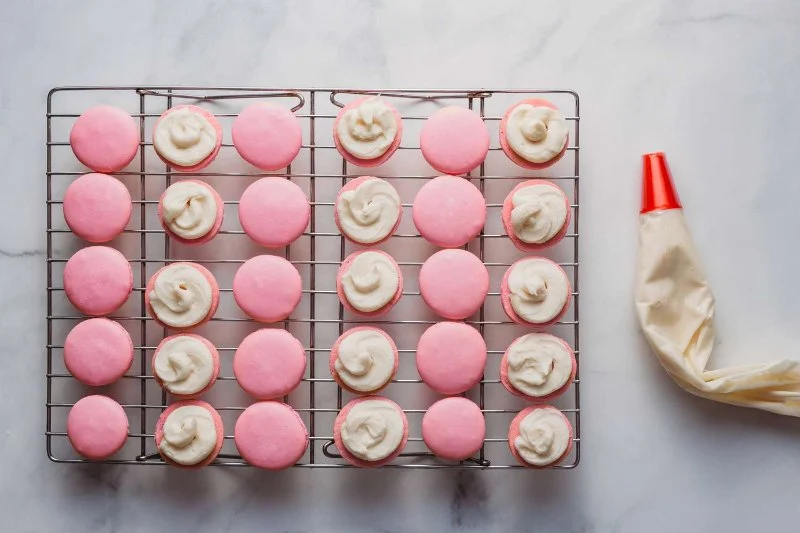
French Macarons That Actually Work: Crisp Shells, Smooth Tops, and Real Feet
- Ingredients-That-Make-or-Break-the-Shell
- The-Meringue-Choice-French-vs-Italian-and-Why-It-Matters
- Macaronage-The-Moment-You-Stop-Stirring
- Drying-and-Resting-How-to-Get-That-Crisp-Outer-Shell
- Baking-Setup-Oven-Temperature-Trays-and-Timing
- Real-Story-The-TikTok-Macaron-Disaster-and-the-Fix
- Troubleshooting-Flat-Cracked-Hollow-or-No-Feet
- Fillings-Storage-and-That-Bakery-Style-Bite
- Upgrading-Your-Results-Tools-That-Make-a-Noticeable-Difference
Ingredients That Make or Break the Shell
If you’ve ever wondered why bakery-style macarons have that delicate snap—the crisp outer shell that gives way to a soft center—it usually comes down to boring things that feel unfairly important: ingredient prep and precision. Macarons are not hard because they’re fancy; they’re hard because they’re picky. Once you accept that, the whole process gets calmer.

Julius Sturgis Pretzel Bakery / pretzel factory lititz pa
LititzLancaster CountyPennsylvania
219 E Main St, Lititz, PA 17543, USA
1. Almond Flour: Texture Is Everything
For almond flour macarons, choose a fine, blanched almond flour. If it feels gritty between your fingers, it will show up as bumpy shells. I like to sift almond flour with powdered sugar twice. The first sift catches big bits, the second one improves consistency. That second sift is one of those small “bakery tricks” that doesn’t look impressive but absolutely changes the finish.

L’Ami Bakery & Cafe / bakery in h mart
48-18 Northern Blvd, Long Island City, NY 11101, USA
2. Powdered Sugar: Not All Brands Behave the Same
Powdered sugar often includes anti-caking agents. Some brands create slightly drier batter, which can help a crisp outer shell—until you overdo it and the batter turns stubborn. If you notice your batter thickening faster than expected, it’s not always your mixing. Sometimes it’s the sugar brand.
3. Egg Whites: Age Them, But Don’t Overthink It
Aging egg whites helps water evaporate, making your meringue more stable. If you’re baking the same day, separate them and let them sit uncovered in the fridge overnight, then bring to room temperature. If you forget, room-temp egg whites still work; just focus on achieving the right macaron batter consistency and a strong meringue.
The Meringue Choice: French vs. Italian and Why It Matters
There’s a lot of debate online about the “best” French macaron recipe method. Most home bakers in the U.S. start with French meringue because it’s simpler. Italian meringue is more stable but adds steps. Your choice affects shell texture, feet reliability, and how forgiving your batter is.
1. French Meringue: Faster, Touchier, Great for Learning
You whip egg whites, then gradually add granulated sugar until glossy, stiff peaks form. The risk is under-whipping (weak structure) or over-whipping (dry, clumpy meringue). For bakery-style macarons, you want stiff peaks that still look smooth, not stiff peaks that look like shredded foam.
2. Italian Meringue: More Stable, Slightly More Equipment
You pour hot sugar syrup into whipping egg whites. This creates a sturdier meringue that can be easier to control in humid climates. If you live somewhere muggy, Italian meringue often makes “macaron feet” more consistent.
3. My Personal Take
If you bake macarons once a year, French meringue is fine. If you’re chasing that crisp outer shell regularly—especially in summer humidity—Italian meringue can feel like switching from a bicycle to a car. More setup, fewer surprises.
Macaronage: The Moment You Stop Stirring
Macaronage is where most macarons live or die. It’s the mixing stage where you fold the dry ingredients into the meringue until the batter flows correctly. Online videos make it look like “just stir until it’s shiny.” In real life, it’s about texture, not time.
1. What You’re Actually Trying to Achieve
The batter should move like slow lava and settle back into itself. When you lift the spatula, the ribbon should fall and disappear into the batter after about 10–20 seconds. That’s the classic “figure 8” test, but don’t obsess over the number. Look at how it settles.
2. Why This Controls Shells and Feet
Too thick, and you’ll get peaks and uneven tops. Too thin, and you’ll get flat shells and weak feet. The ideal macaron batter consistency creates enough structure to rise, then enough relaxation to smooth out into a glossy circle.
3. A Quick Reality Check That Helps
I stop mixing earlier than I think I should, then fold 3–5 more times. That pause is my guardrail. Most over-mixed batter happens because you keep going “just a little more” until it suddenly looks perfect—and then it’s already past perfect.
Drying and Resting: How to Get That Crisp Outer Shell
If your goal is crisp outer shell macarons, resting is not optional. Resting forms a skin on top so steam escapes from the bottom during baking, which creates the lift and the feet. Skip the skin and the shells often crack.
1. Resting Time Depends on Your Kitchen, Not a Timer
Macaron resting time can be 20 minutes in a dry home or 60+ minutes in humid weather. Touch the top lightly. If it doesn’t stick to your fingertip, you’re ready.
2. Why the Skin Matters for Texture
A proper skin helps the top stay smooth while the inside expands. That’s the path to a crisp exterior and chewy interior. Without it, the top can burst because pressure has nowhere to go.
3. Humidity Workarounds That Don’t Feel Like Cheating
If it’s humid, run a dehumidifier nearby or turn on your AC. Some bakers use a fan on low across the trays. You’re not “hacking” the recipe—you’re controlling the environment, like a bakery does every day.
Baking Setup: Oven Temperature, Trays, and Timing
Ovens are the sneaky villain of macaron baking. Even good batter can fail in a temperamental oven. Getting the oven temperature for macarons right is often the difference between cracked tops and clean shells.
1. Use an Oven Thermometer
Most home ovens lie. If you set 300°F and it’s actually 325°F, you’ll get rapid rise, cracked tops, and lopsided feet. An inexpensive oven thermometer is one of the best upgrades you can make.
2. Double-Tray Method for Gentler Bottom Heat
Place your macaron tray on top of a second empty tray. This buffers bottom heat and reduces browning or hollow shells caused by the bottoms setting too quickly.
3. Timing Is a Range, Not a Rule
Start checking at 12 minutes, but many batches finish around 14–18 minutes depending on size. A shell is done when it doesn’t wobble when you gently nudge the top. If it slides, it needs more time.
Real Story: The TikTok Macaron Disaster and the Fix
A friend of mine tried a viral “macarons in one bowl” trend she saw blowing up on social media. The video promised perfect macarons in minutes. The first batch looked like pancake drops with cracked tops and zero feet. She was convinced macarons were a scam invented to sell pastry classes.
1. What Went Wrong (It Wasn’t Her)
The viral method cut corners where macarons can’t be rushed: the meringue was under-whipped, and the batter was over-mixed to compensate. No skin formed during resting because the recipe insisted you could bake immediately. That’s basically asking for cracks.
2. The Fix That Changed Everything
We did three adjustments: properly whipped stiff peaks, careful macaronage, and resting until the top was dry. Same ingredients, different technique. Her next batch had smooth tops, visible feet, and that bakery-style snap.
3. The Takeaway
Macarons reward method, not shortcuts. Viral recipes are fun, but bakery-style macarons come from repeatable fundamentals.
Troubleshooting: Flat, Cracked, Hollow, or No Feet
This is the section I wish someone had handed me early on. When macarons fail, the symptoms tell you what to change next time. This is the heart of macaron troubleshooting—treat it like feedback, not a disaster.
1. Cracked Tops
Cracks usually mean no skin formed, the oven was too hot, or the batter was under-mixed and trapped air expanded violently. If cracks happen even after resting, reduce oven temp slightly and consider using the double-tray method.
2. No Feet
No feet often points to over-mixed batter, under-whipped meringue, or too short a resting time. Feet need structure plus a dry top. If your tops are dry but feet still don’t show, your meringue strength is the first thing I’d investigate.
3. Hollow Shells
Hollows can come from oven temperature being too high (outside sets before inside expands evenly), or from over-whipped meringue that collapses oddly. It can also happen when you pull them too early. Let them fully set; a slightly longer bake can improve interior structure.
4. Bumpy Tops
Usually almond flour isn’t fine enough or wasn’t sifted well. Sometimes it’s also trapped air bubbles. After piping, tap the tray firmly against the counter a few times to pop bubbles.
Fillings, Storage, and That Bakery-Style Bite
Macaron filling ideas are where you can really make these feel “bakery.” But texture matters as much as flavor. The shell should stay crisp on the outside while the inside becomes tender after maturing.
1. Buttercream vs. Ganache vs. Jam Centers
Buttercream is stable and beginner-friendly. Ganache tastes rich and helps shells mature beautifully. Jam alone can make shells soggy unless you pipe a buttercream ring and add jam in the center—this keeps the crisp outer shell intact longer.
2. The Maturing Step That People Skip
After filling, refrigerate macarons 24 hours in an airtight container. This lets moisture from the filling soften the inner shell while the exterior stays pleasantly snappy. It’s the difference between “homemade cookie sandwich” and “bakery-style macarons.”
3. Serving Tip for the Best Texture
Bring macarons to room temperature for 15–20 minutes before eating. Cold macarons taste muted and feel too firm. Room temp gives you the crisp-chewy-creamy balance everyone chases.
Upgrading Your Results: Tools That Make a Noticeable Difference
You can absolutely make macarons with basic tools, but a few upgrades reduce frustration and make results more consistent—especially if you’re serious about learning how to make bakery-style macarons with a crisp outer shell every time.
1. Digital Scale
Macarons punish “close enough.” A scale removes guesswork and makes your results repeatable.
2. Oven Thermometer
This one improves your success rate immediately. It’s not glamorous, but neither is scraping cracked macarons into the trash.
3. Silicone Mat or Template
Uniform size means uniform baking, which means fewer surprises. If you’ve ever had half your tray perfect and half underdone, uneven size is often the reason.
4. Why This Matters for Buying Decisions
If you’ve been practicing and you’re ready to level up, this is the moment when better tools actually save money. Instead of wasting almond flour on inconsistent batches, you get predictable results and faster improvement.
When you’re ready to take the next step in how to make bakery-style macarons with a crisp outer shell, the smartest move is to use the same approach bakeries use: reliable tools, consistent measurements, and a setup that supports repeatable success. If you want to explore the newest macaron tools—like precision scales, silicone mats, piping sets, and oven thermometers—click here to view the latest products and learn more about what serious home bakers are using right now.



 Nagoya Bakery4.0 (25 reviews)
 The Quantum Baker0.0 (0 reviews)
 Valerio's Tropical Bake Shop4.0 (43 reviews)
 Manny's Bakeshop & Restaurant4.0 (19 reviews)
 Nanding's Bakery4.0 (368 reviews)
 Aloha Sunrise Granola5.0 (5 reviews)
 Bakery Celebration Cake Pickup: Size, Travel, and Timing
 Bakery Bread Storage: Crust, Moisture, and Freezing Guide
 Bakery Reservation Notes: Time, Party, Access, and Contact
 Bakery Menu Portion Chec: A Heavenly Delights Bakery Reader Guide
 Bakery Service Charge Check: Bill, Tips, and Group Split
 Bakery Texture Guide: A Practical US Checklist