
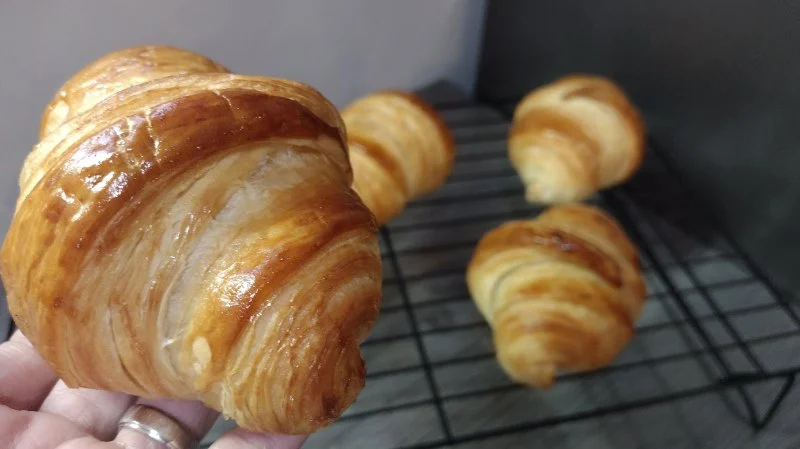
- 1. Why Making Croissant Dough from Scratch Matters
- 2. Essential Ingredients for Flaky Croissant Dough
- 3. Preparing the Dough: The First Step
- 4. The Art of Laminating Croissant Dough
- 5. Baking Tips for Perfectly Flaky Croissants
- 6. Real-Life Croissant Success Stories
- 7. Conclusion: Perfect Your Croissants at Home
1. Why Making Croissant Dough from Scratch Matters
There's something magical about a freshly baked croissant: the crisp, buttery layers that break apart with a satisfying crunch. But the secret to making truly flaky croissants lies in the dough itself. Making croissant dough from scratch might seem like an intimidating task, but with the right technique and patience, anyone can master it. This guide will walk you through the steps of creating the best croissant dough, ensuring a light, airy, and buttery result every time.

Julius Sturgis Pretzel Bakery / pretzel factory lititz pa
LititzLancaster CountyPennsylvania
219 E Main St, Lititz, PA 17543, USA
2. Essential Ingredients for Flaky Croissant Dough
The foundation of perfect croissants lies in the ingredients you use. It’s important to choose high-quality ingredients to ensure your croissant dough turns out as flaky and buttery as possible. Here's a breakdown of the essentials:

L’Ami Bakery & Cafe / bakery in h mart
48-18 Northern Blvd, Long Island City, NY 11101, USA
2.1 Flour
All-purpose flour works fine, but for a more delicate, softer croissant, you may want to use pastry flour. It has lower protein content, which results in a more tender dough.
2.2 Yeast
Active dry yeast or instant yeast are both commonly used in croissant dough. Make sure the yeast is fresh for the best rise. Yeast is responsible for the dough's light texture, allowing the croissants to puff up as they bake.
2.3 Butter
Butter is the star ingredient in croissant dough. Use high-fat European-style butter for the best flavor and flakiness. This butter has a higher butterfat content, which makes for a richer dough and more layers.
2.4 Water and Milk
A mixture of water and milk is used to hydrate the dough. The milk adds a touch of richness, while the water helps the dough stay soft and elastic.
2.5 Sugar and Salt
Sugar adds a hint of sweetness to the dough, while salt balances the flavor and enhances the buttery taste.
3. Preparing the Dough: The First Step
Now that you have your ingredients ready, it's time to prepare the dough. This process involves mixing the ingredients, kneading, and allowing the dough to rise. Here’s how you do it:
3.1 Mixing the Ingredients
Start by combining the dry ingredients—flour, sugar, and salt—in a bowl. In another bowl, dissolve the yeast in warm milk and water. Add the wet ingredients to the dry ingredients and mix until you get a shaggy dough.
3.2 Kneading the Dough
Knead the dough for about 10 minutes until it becomes smooth and elastic. This step is essential for developing the gluten structure that gives the croissants their flaky texture.
3.3 Resting and First Rise
Cover the dough with a damp cloth and let it rest for 1-2 hours, or until it has doubled in size. This first rise allows the yeast to do its magic, creating a light, airy texture in the dough.
4. The Art of Laminating Croissant Dough
Laminating is the process of folding butter into the dough to create multiple layers. This is what gives croissants their signature flakiness. Here’s how you can do it:
4.1 Preparing the Butter Block
Take your cold butter and pound it into a flat square using a rolling pin. You want the butter to be pliable but firm, so it can be easily rolled into the dough without melting.
4.2 Incorporating the Butter
Roll out the dough into a large rectangle and place the butter block in the center. Fold the dough over the butter and seal the edges. This is the first "turn," where you’ll roll the dough out into a long rectangle and fold it like a letter. Repeat this process two more times, giving the dough a total of three turns. Each turn helps create more layers.
4.3 Resting Between Turns
After each turn, refrigerate the dough for 30 minutes to allow it to rest and firm up. This helps keep the butter from melting into the dough and ensures that the layers stay distinct during baking.
5. Baking Tips for Perfectly Flaky Croissants
Once your croissant dough is ready, it’s time to shape and bake it. Here are some expert tips for achieving the perfect croissant:
5.1 Shaping the Croissants
Roll out the dough into a large rectangle and cut it into triangles. Starting from the wide end, roll the dough tightly into a croissant shape. Be sure to tuck the edges in to keep them from unrolling during baking.
5.2 Second Rise
Place the shaped croissants on a baking sheet and let them rise for 1-2 hours, or until they have puffed up significantly. This second rise is essential for achieving the perfect flaky texture.
5.3 Baking Temperature
Preheat your oven to 400°F (200°C) and bake the croissants for 15-20 minutes, or until golden brown and crispy. For an extra golden finish, you can brush the croissants with an egg wash before baking.
6. Real-Life Croissant Success Stories
Many home bakers have successfully made croissants from scratch with a little patience and practice. Here’s a story from one enthusiastic baker who perfected her croissant recipe:
6.1 Case Study: A Beginner's Journey
Jessica, a self-taught baker from California, initially struggled with making croissant dough. After several attempts, she finally got the hang of the lamination process and achieved beautifully flaky croissants. She now bakes them every weekend and shares her experience on her blog, inspiring other bakers to give it a try!
6.2 Case Study: Professional Baker's Insight
John, a professional baker from a local bakery, shared that the key to perfect croissants lies in the butter quality and ensuring the dough stays cold during the laminating process. By following his tips, many at-home bakers have elevated their croissant game.
7. Conclusion: Perfect Your Croissants at Home
Making flaky croissants from scratch is a rewarding and delicious process. While it requires some time and practice, the end result is a batch of buttery, crispy croissants that are perfect for breakfast or as a treat any time of day. If you’re looking for the best ingredients or professional advice on your baking journey, be sure to check out Heavenly Delights Bakery for top-notch products and expert guidance.






 Nagoya Bakery4.0 (25 reviews)
 The Quantum Baker0.0 (0 reviews)
 Valerio's Tropical Bake Shop4.0 (43 reviews)
 Manny's Bakeshop & Restaurant4.0 (19 reviews)
 Nanding's Bakery4.0 (368 reviews)
 Aloha Sunrise Granola5.0 (5 reviews)
 Bakery Reservation Notes: Time, Party, Access, and Contact
 Bakery Menu Portion Chec: A Heavenly Delights Bakery Reader Guide
 Bakery Service Charge Check: Bill, Tips, and Group Split
 Bakery Texture Guide: A Practical US Checklist
 Bakery Cake Quote: Size, Design, Pickup, and Allergen Notes
 Bakery Bread Crumb Check: Freshness, Cutting, and Serving