
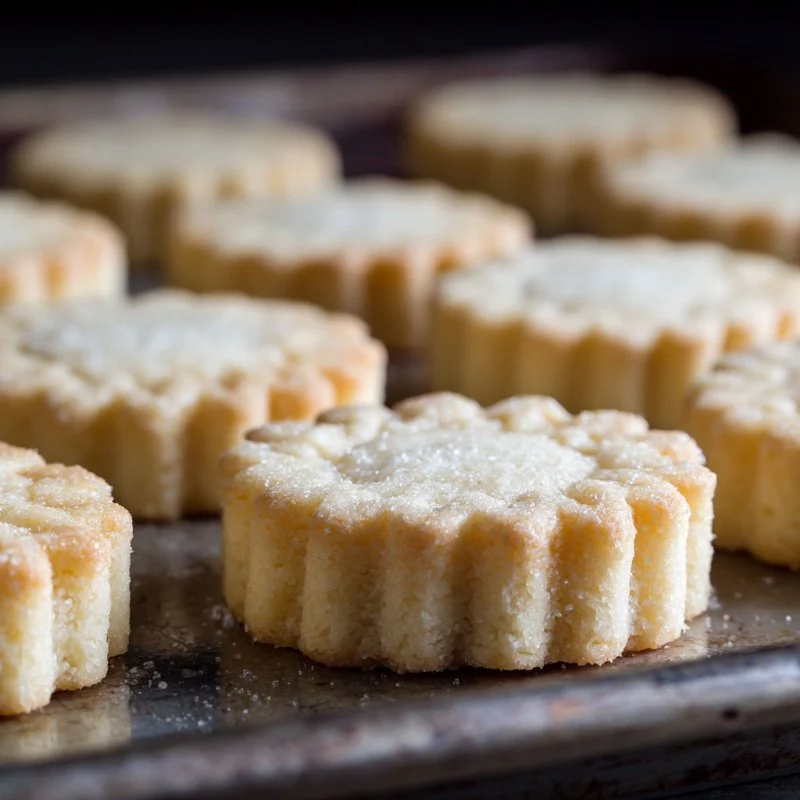
How to Create Bakery-Style Shortbread Cookies That Melt in Your Mouth
- buttery-shortbread-foundation - understanding the role of butter and flour balance in texture
- melt-in-mouth-cookie-science - how fat content and mixing method affect softness
- bakery-style-techniques-home - professional baking secrets adapted for home kitchens
- cookie-dough-resting-methods - why chilling improves structure and flavor
- baking-temperature-perfection - how heat control shapes final cookie texture
- real-baker-experiences-cookie-failures - common mistakes and how to fix them
The Quiet Magic Behind Bakery-Style Shortbread Cookies
There is something almost nostalgic about biting into a perfectly baked shortbread cookie. It doesn’t crumble aggressively, nor does it feel overly sweet. Instead, it dissolves gently, leaving behind a rich buttery finish. When people search for how to make bakery-style shortbread cookies with a melt-in-your-mouth texture, what they are really chasing is that exact moment of softness and balance that professional bakeries seem to achieve effortlessly.
In reality, that texture is not accidental. It is the result of precise ratios, controlled mixing, and patience—three elements that separate average homemade cookies from bakery-quality results. Many home bakers assume it is complicated, but once you understand the science behind it, the process becomes surprisingly intuitive.

Julius Sturgis Pretzel Bakery / pretzel factory lititz pa
LititzLancaster CountyPennsylvania
219 E Main St, Lititz, PA 17543, USA
Understanding What Creates That Melt-in-Your-Mouth Texture
The Role of Butter: More Than Just Flavor
Butter is the backbone of any shortbread cookies recipe. Its fat content coats flour particles, limiting gluten formation and creating a tender bite. The higher the quality of butter, the more pronounced the richness becomes. European-style butter, for example, contains more fat and less water, which often results in a smoother, more luxurious texture.
One home baker once shared that switching from standard supermarket butter to a higher-fat brand completely transformed her cookies. The dough became silkier, and the final bake had a noticeable “bakery finish” even before adding any decoration.

L’Ami Bakery & Cafe / bakery in h mart
48-18 Northern Blvd, Long Island City, NY 11101, USA
Flour and Sugar Balance: The Structural Equation
Flour provides structure, but too much of it leads to dryness. Sugar, on the other hand, adds tenderness by interfering with gluten development. The secret in bakery style cookies lies in balancing these two ingredients so the cookie holds its shape without becoming tough.
Powdered sugar is often preferred over granulated sugar because it blends more evenly and contributes to a finer crumb structure.
How Professional Bakers Achieve Consistency at Scale
In commercial bakeries, consistency is everything. Bakers rely on measured ingredient ratios down to the gram. Even slight deviations can affect the final melt-in-your-mouth cookie texture. Temperature control also plays a major role—dough is often chilled before baking to stabilize fat distribution.
A small bakery in Chicago once became locally famous for its shortbread because the owner refused to rush the resting process. Customers often noticed that cookies tasted better on certain days, which was later revealed to be tied to longer dough resting times during colder seasons.
The Step-by-Step Feel of Making Bakery-Style Shortbread at Home
Mixing Without Overworking the Dough
Overmixing is one of the most common mistakes in home baking. When dough is overworked, gluten develops too strongly, resulting in a tougher texture. The goal is to mix just until ingredients come together.
Think of it like folding fabric rather than kneading bread. The gentler the approach, the more delicate the final cookie.
Chilling for Structure and Flavor Depth
Resting the dough in the refrigerator allows fats to solidify and flavors to deepen. This step is often underestimated, yet it plays a crucial role in achieving bakery-level results.
Many professional bakers recommend at least one hour of chilling, but overnight rest often produces a more refined flavor profile.
Baking at the Right Temperature
Temperature control determines whether cookies spread too much or hold their shape. A moderate oven ensures even baking without drying out the edges.
Interestingly, small variations in oven calibration can significantly affect texture, which is why experienced bakers often rely on visual cues rather than timers alone.
Common Mistakes That Prevent Perfect Texture
Even experienced home bakers occasionally struggle with achieving consistent results. One common issue is using overly warm butter, which leads to greasy dough and flat cookies. Another is skipping the resting phase, which prevents proper flavor development.
A baking enthusiast once shared that her early attempts produced cookies that tasted good but lacked the signature “melting” quality. After adjusting butter temperature and adding a chilling step, the difference was immediate.
Why These Cookies Continue to Be a Bakery Favorite
Bakery-style shortbread cookies remain popular because they offer simplicity with elegance. Unlike complex desserts, they rely on minimal ingredients executed with precision. That balance makes them timeless.
In many European bakeries, shortbread is still considered a test of skill—if a baker can perfect it, they are trusted with more advanced pastries. This speaks to how deceptively simple yet technically demanding these cookies can be.
Bringing Bakery Quality Into Your Own Kitchen
Mastering the art of melt-in-your-mouth cookies is less about equipment and more about technique. With careful attention to ingredient quality, mixing method, and baking control, home bakers can achieve results that rival professional bakeries.
For those who want to explore more baking tools, ingredient guides, and expert-level baking inspiration, Bakery recipes resources can help refine your approach and expand your baking skills.
Once you understand the rhythm behind the process, making bakery-style shortbread cookies becomes less of a recipe and more of a craft—one that improves with every batch you bake.






 Nagoya Bakery4.0 (25 reviews)
 The Quantum Baker0.0 (0 reviews)
 Valerio's Tropical Bake Shop4.0 (43 reviews)
 Manny's Bakeshop & Restaurant4.0 (19 reviews)
 Nanding's Bakery4.0 (368 reviews)
 Aloha Sunrise Granola5.0 (5 reviews)
 Bakery Custom Cake Handoff: Design, Allergens, and Pickup
 Bread Freezing Plan: Slicing, Wrapping, and Thawing
 Pastry Gift Box Check: Variety, Allergens, and Transport
 Sourdough Loaf Pickup: Bake Time, Slicing, and Storage
 Bakery Celebration Cake Pickup: Size, Travel, and Timing
 Bakery Bread Storage: Crust, Moisture, and Freezing Guide