
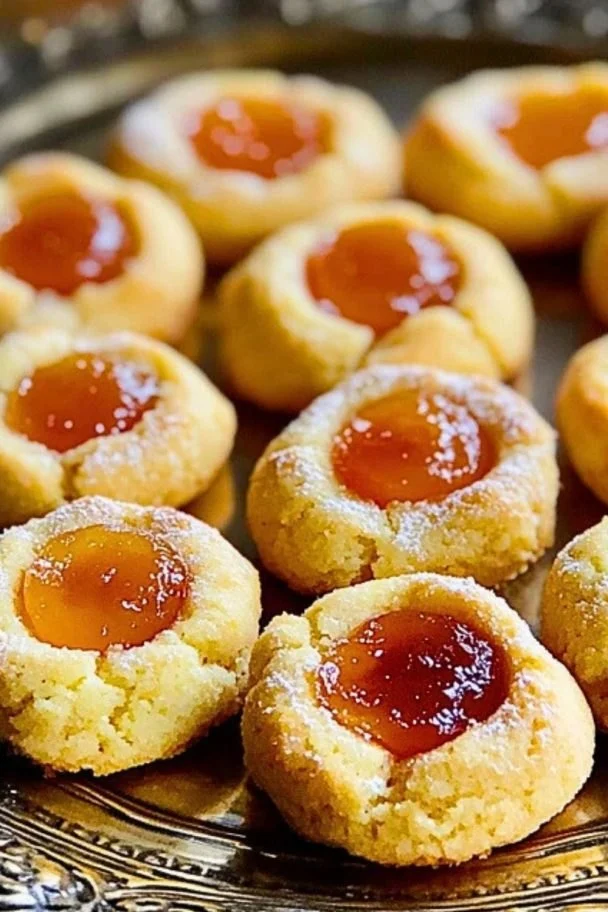
How to Make Bakery-Style Apricot Jam Thumbprint Cookies
- bakery-style-cookie-basics - understanding texture, dough balance, and baking precision
- apricot-jam-filling-technique - how to create the perfect glossy fruit center
- buttery-dough-formula - achieving soft, melt-in-your-mouth cookie texture
- thumbprint-cookie-shaping - forming consistent cookies without cracking or spreading
- bakery-level-flavor-upgrade - small tricks that make cookies taste professional
- real-baking-stories - home baking experiences and bakery inspirations
The Charm Behind Bakery-Style Thumbprint Cookies
Bakery-style cookies have a very specific identity—they are soft but structured, rich but not heavy, and visually simple yet deeply satisfying. Among them, apricot jam thumbprint cookies stand out because they balance buttery dough with bright fruit flavor in a way that feels both nostalgic and elegant.
Many people first encounter these cookies in European-style bakeries or holiday cookie boxes, where each bite carries a contrast of textures: a tender cookie base followed by a burst of sweet-tart apricot jam in the center.
One home baker from Oregon once shared that she started baking these cookies every December after tasting them at a small bakery in Vienna. She said the memory of that flavor stayed with her longer than any other dessert she tried during her trip.

Julius Sturgis Pretzel Bakery / pretzel factory lititz pa
LititzLancaster CountyPennsylvania
219 E Main St, Lititz, PA 17543, USA
Building the Perfect Bakery-Style Cookie Dough
Why butter quality changes everything
The foundation of apricot jam thumbprint cookies is a rich, buttery dough. High-quality butter creates a smooth texture and helps the cookies maintain structure while still melting in your mouth.
Unlike standard drop cookies, thumbprint cookies require a dough that is firm enough to shape but soft enough to crack slightly at the edges during baking. This balance is what defines bakery-level results.

L’Ami Bakery & Cafe / bakery in h mart
48-18 Northern Blvd, Long Island City, NY 11101, USA
Balancing sweetness and texture
Too much sugar makes cookies spread, while too little makes them dry. Professional bakers often use powdered sugar instead of granulated sugar for a finer crumb structure.
A small but important detail is resting the dough before shaping. This allows the butter to solidify slightly, making it easier to form clean thumbprints without tearing the surface.
Creating the Perfect Apricot Jam Center
Why apricot jam works so well
Apricot jam is naturally bright, slightly tart, and smooth enough to bake without burning or separating. It creates a glossy center that contrasts beautifully with the soft cookie base.
In bakery kitchens, chefs often reduce the jam slightly before filling cookies. This intensifies flavor and prevents excessive spreading during baking.
Homemade vs store-bought jam approach
Homemade jam gives deeper fruit flavor and less sugar intensity, while high-quality store-bought jam offers consistency and convenience. Either can work, but texture control is key.
A pastry chef in New York once explained that the secret is not the jam brand—it’s the reduction process. Even simple jam becomes bakery-level when gently thickened on low heat before use.
Shaping Thumbprint Cookies Like a Bakery
Why shaping consistency matters
Uniform cookie size ensures even baking. If some cookies are larger than others, they may brown unevenly or lose their signature soft center.
The “thumbprint” indentation should not be too deep or too shallow. Too deep, and the jam may overflow; too shallow, and it will disappear into the dough during baking.
Common shaping mistakes at home
One of the most common mistakes is pressing the dough while it is too warm. This leads to cracks and uneven edges. Chilling the dough briefly helps maintain clean shapes.
Another issue is overfilling the center. A small teaspoon of jam is usually enough for a perfect bakery-style finish.
Real Baking Story: The Cookie That Became a Family Tradition
A family in Chicago once shared how they accidentally discovered their holiday tradition. During a rainy weekend, they attempted apricot jam thumbprint cookies after finding a recipe online. The first batch spread too much, the second burned slightly, but the third batch finally came out perfectly golden.
That small success turned into a yearly ritual. Every December, they now bake dozens of cookies together, each family member responsible for shaping or filling the dough. What started as a simple baking experiment became a shared memory tied to flavor and warmth.
Stories like this show how bakery-style cookies often carry emotional value beyond their ingredients.
Achieving Bakery-Level Texture at Home
Temperature control in baking
Oven temperature plays a crucial role in cookie texture. Slightly lower heat allows cookies to bake evenly without over-browning the edges before the center sets.
Many home bakers underestimate how even a 10–15 degree difference can affect final texture, especially in butter-based cookies.
The importance of resting and cooling
Allowing cookies to cool on the tray for a few minutes helps them set properly. Moving them too early can cause breaking or flattening.
This step is often overlooked but is essential for achieving bakery-style structure and appearance.
Flavor Variations Inspired by Bakeries
Expanding beyond apricot
While apricot jam is classic, bakeries often experiment with raspberry, strawberry, or even citrus marmalade. Each variation changes the flavor profile while keeping the same base technique.
Adding subtle enhancements
Some bakers add a touch of vanilla extract or almond essence to the dough for deeper aroma. Others sprinkle powdered sugar after baking for a delicate finish.
These small touches elevate homemade cookies closer to professional bakery standards.
Understanding What Makes Bakery Cookies Stand Out
Precision without losing homemade warmth
The difference between homemade cookies and bakery-style cookies is often precision. Bakers measure ingredients carefully, control temperature, and maintain consistency across batches.
However, the best bakery cookies still feel warm and personal. They are not overly perfect—they carry slight imperfections that make them feel handcrafted.
Ingredient quality over complexity
Simple recipes succeed when ingredients are high quality. Butter, flour, and jam all play a role in final taste, and even small upgrades can dramatically improve results.
This is why professional bakers often focus less on complicated steps and more on ingredient sourcing.
Bringing Bakery Results Into Your Kitchen
Making bakery-style apricot jam thumbprint cookies at home is less about difficulty and more about attention to detail. Small decisions—like dough temperature, jam consistency, and baking time—add up to a noticeable difference.
Once you master the base recipe, it becomes easy to experiment with flavors and textures while keeping that signature bakery feel.
For those who enjoy exploring premium baking ingredients and tools that improve consistency, platforms like Gaias Candy offer inspiration for sourcing better-quality baking essentials and flavor ideas.
Why These Cookies Stay Popular Across Generations
These cookies continue to appear in bakeries and home kitchens because they combine simplicity with elegance. They are easy to recognize, comforting to eat, and flexible enough for seasonal variations.
From holiday cookie boxes to everyday tea-time treats, apricot jam thumbprint cookies remain a timeless example of how basic ingredients can create something memorable when handled with care.





 Nagoya Bakery4.0 (25 reviews)
 The Quantum Baker0.0 (0 reviews)
 Valerio's Tropical Bake Shop4.0 (43 reviews)
 Manny's Bakeshop & Restaurant4.0 (19 reviews)
 Nanding's Bakery4.0 (368 reviews)
 Aloha Sunrise Granola5.0 (5 reviews)
 Pastry Gift Box Check: Variety, Allergens, and Transport
 Sourdough Loaf Pickup: Bake Time, Slicing, and Storage
 Bakery Celebration Cake Pickup: Size, Travel, and Timing
 Bakery Bread Storage: Crust, Moisture, and Freezing Guide
 Bakery Reservation Notes: Time, Party, Access, and Contact
 Bakery Menu Portion Chec: A Heavenly Delights Bakery Reader Guide