
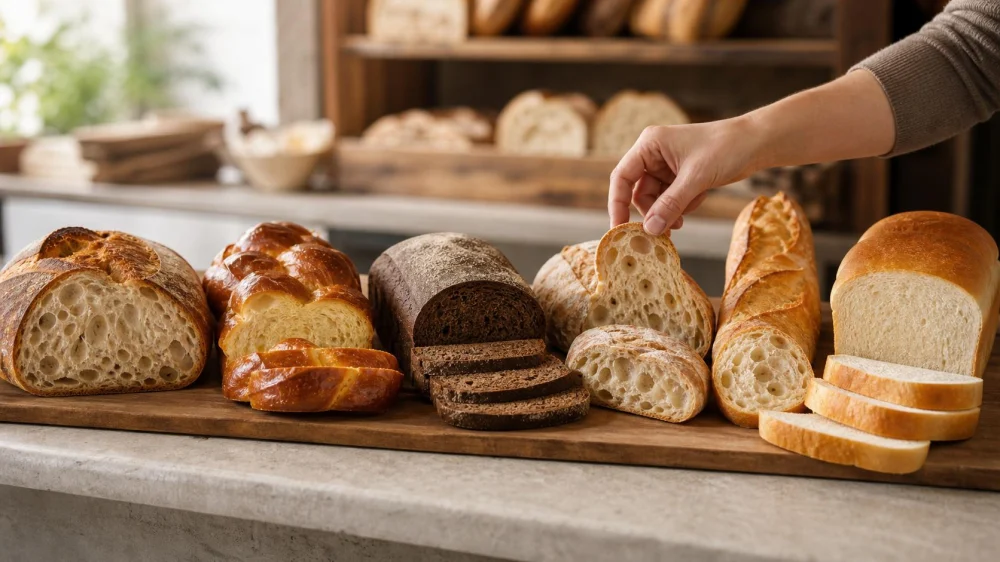
Bakery Bread Guide: How to Choose the Right Loaf
On this page
- Quick answer
- Bread terms that help you choose
- Sourdough
- Brioche and enriched breads
- Rye and whole-wheat breads
- Ciabatta and baguette
- Soft sandwich loaves
- Choose by meal and texture
- Bakery counter checklist
- Ingredients, allergens, and dietary limits
- Important limitations
- Frequently asked questions
- Sources and evidence notes
- Next steps
Quick answer
Choose bakery bread by matching crumb, crust, flavor, and slice shape to the meal. Sourdough suits toast and sturdy sandwiches; brioche is soft and rich; rye adds earthy flavor; ciabatta handles juicy fillings; baguette is best when a crisp crust matters; and a soft sandwich loaf is practical for everyday slices. Always confirm ingredients and allergens with the bakery.

Palermo Custom Cakes & Bakery / palermo bakery elizabeth nj
Little FerryBergen CountyNew Jersey
399 Liberty St, Little Ferry, NJ 07643, USA
Bread terms that help you choose
Crumb is the interior structure of bread, including its softness, density, and hole pattern. The crust is the baked outer layer. An enriched dough contains added fat, dairy, eggs, or sugar beyond a basic flour-water-salt formula.
These terms are more useful than judging a loaf by color alone. A dark loaf is not automatically whole grain, and an open crumb is not automatically better. The right structure depends on whether you need clean toast, a sauce-catching side, or a sandwich that will not leak.

Paris Baguette / paris baguette west new york nj
West New YorkHudson CountyNew Jersey
17 Ave at Port Imperial, West New York, NJ 07093, USA
Sourdough
Sourdough is leavened through a fermented starter containing yeast and lactic-acid bacteria. Flavor ranges from mild to tangy, while the crust and chew depend on the flour and baking method.
- Best for: toast, grilled sandwiches, soup, and fillings that need a sturdy slice.
- Not ideal for: diners who want a very soft, neutral loaf or delicate fillings that squeeze out.
- Ask the bakery: Is it mild or tangy? Is it naturally leavened only? Which flour is used?
Sourdough fermentation does not make wheat bread gluten-free. People with celiac disease or wheat allergy need a product specifically suitable for their condition and protected from cross-contact.
Brioche and enriched breads
Brioche is a tender enriched bread commonly made with butter and eggs. It has a fine crumb and mild richness; other enriched loaves may use milk, oil, sugar, or different combinations.
- Best for: breakfast toast, bread pudding, soft buns, and sandwiches where richness complements the filling.
- When to avoid: when you need a lean loaf, a very crisp crust, or must exclude egg or dairy.
- Decision rule: use thick slices for soaking and thinner slices for rich sandwiches.
Rye and whole-wheat breads
Rye bread can contain a little or a large proportion of rye flour, so loaves vary from light and springy to dark and dense. Whole-wheat bread uses flour containing the entire wheat kernel, but sweetness, seeds, and softness vary by formula.
- Rye is useful for: savory sandwiches, smoked or pickled flavors, and diners who enjoy an earthy profile.
- Whole wheat is useful for: everyday toast and sandwiches when a wheaty flavor and whole-grain ingredient are wanted.
- Check before buying: ask for the ingredient list rather than relying on names such as “wheat,” “multigrain,” or “dark.”
“Multigrain” means more than one grain is present; it does not by itself mean every grain is whole.
Ciabatta and baguette
Ciabatta typically has a flour-dusted crust, chewy texture, and irregular open crumb. Its broad shape works well for pressed sandwiches, although very large holes can release thin sauces.
A baguette is long and narrow with a high crust-to-crumb ratio. It is a strong choice for tearing alongside a meal or building smaller crusty sandwiches. Choose it when crispness matters and plan to eat it promptly, because its narrow shape can dry relatively quickly.
Soft sandwich loaves
A pan-baked sandwich loaf provides uniform slices and a close crumb. It is easy to toast, pack, and spread without ingredients falling through large holes.
- Best for: lunch boxes, thin fillings, grilled cheese, and consistent portions.
- Not ideal for: a meal where a bold crust or pronounced fermented flavor is the main attraction.
- Check: slice thickness, sweetness, seeds, dairy, egg, and whether the loaf is sold pre-sliced.
Choose by meal and texture
- For a juicy sandwich: choose a sturdy crumb, such as ciabatta or a robust sourdough, and consider toasting the cut surface.
- For delicate tea sandwiches: choose a close, soft crumb with thin, even slices.
- For soup or stew: select a chewy loaf with enough crust to hold up when dipped.
- For French toast: an enriched, slightly dry, thick-cut loaf absorbs custard while retaining structure.
- For a cheese board: a neutral baguette or mild sourdough lets toppings lead.
- For freezing by portion: favor a shape that can be sliced cleanly before freezing.
Bakery counter checklist
- Describe the meal, number of servings, and when you will eat the bread.
- Say whether you prefer soft, chewy, crisp, mild, tangy, sweet, or seedy.
- Ask when the loaf was baked and how the bakery recommends storing it.
- Confirm whether it can be sliced and what thickness suits your use.
- Request an ingredient or allergen check when dietary needs matter.
- Buy a smaller loaf or half loaf when freshness matters more than volume.
Ingredients, allergens, and dietary limits
Common bread ingredients can include wheat, milk, egg, sesame, soy, and tree nuts, depending on the formula and toppings. A bakery may also handle these ingredients in shared mixers, ovens, cooling racks, slicers, or display areas.
For a food allergy, ask about the exact loaf and cross-contact practices each time; recipes and production schedules can change. “Vegan,” “gluten-free,” “wheat-free,” and “sourdough” describe different things and are not interchangeable. If the staff cannot verify a requirement that is medically necessary, choose a product with reliable labeling from a suitable facility.
Important limitations
Bread names are not fully standardized descriptions of texture or ingredients. Two bakeries can produce very different sourdough, rye, or multigrain loaves. Regional traditions, flour choice, hydration, fermentation, shaping, and baking all affect the result.
This guide helps with selection, not diagnosis or personalized nutrition. People managing celiac disease, food allergy, diabetes, kidney disease, or another medical condition should follow advice from their qualified clinician and verify product details.
Frequently asked questions
Which bakery bread is best for sandwiches?
There is no universal best. Use soft sandwich bread for neat slices, sourdough for sturdy fillings, ciabatta for pressed sandwiches, and rye when its flavor complements the filling.
Is sourdough always healthier than regular bread?
No single bread name determines overall nutrition. Ingredients, portion, whole-grain content, sodium, added sugars, and your needs all matter. Compare available labels or ask the bakery for details.
Does dark bread mean whole grain?
No. Color can come from flour type, malt, molasses, seeds, or baking. Check whether whole-grain flour is listed rather than using color as proof.
Can a bakery slice a crusty loaf?
Many can, but warm or highly open-crumb loaves may slice poorly. Ask whether the bread should cool first and which slice setting matches your use.
Sources and evidence notes
The definitions and comparisons above reflect common baking terminology and typical bakery practice; individual formulas vary. Ingredient and allergen decisions should rely on the bakery’s current recipe, package label, and cross-contact information—not on appearance or the product name alone.
Next steps
Choose the meal first, then name the texture you need. At the bakery, compare two suitable loaves by crumb, crust, flavor, slice size, ingredients, and storage advice. That short conversation is more reliable than choosing the most familiar name or the darkest crust.






 Philly Pretzel Factory Home Office2.0 (18 reviews)
 Tal Bagels3.0 (366 reviews)
 Spread Bagelry3.0 (225 reviews)
 Little Barb's Bakery4.0 (105 reviews)
 Hurts Donut Company4.0 (1631 reviews)
 Country Fresh Batter Inc.4.0 (10 reviews)
 The Best Baking Recipes for Low-Sugar Treats – Healthy & Delicious Ideas
 How to Make the Best Rhubarb Pie from Scratch
 How to Make the Best Churros at Home
 How to Bake the Best Classic Chocolate Chip Muffins at Home
 How to Make Bakery-Style Poppy Seed Muffins: A Simple and Delicious Recipe
 How to Make Delicious Scones with Fresh Cream and Jam: A Simple Guide